
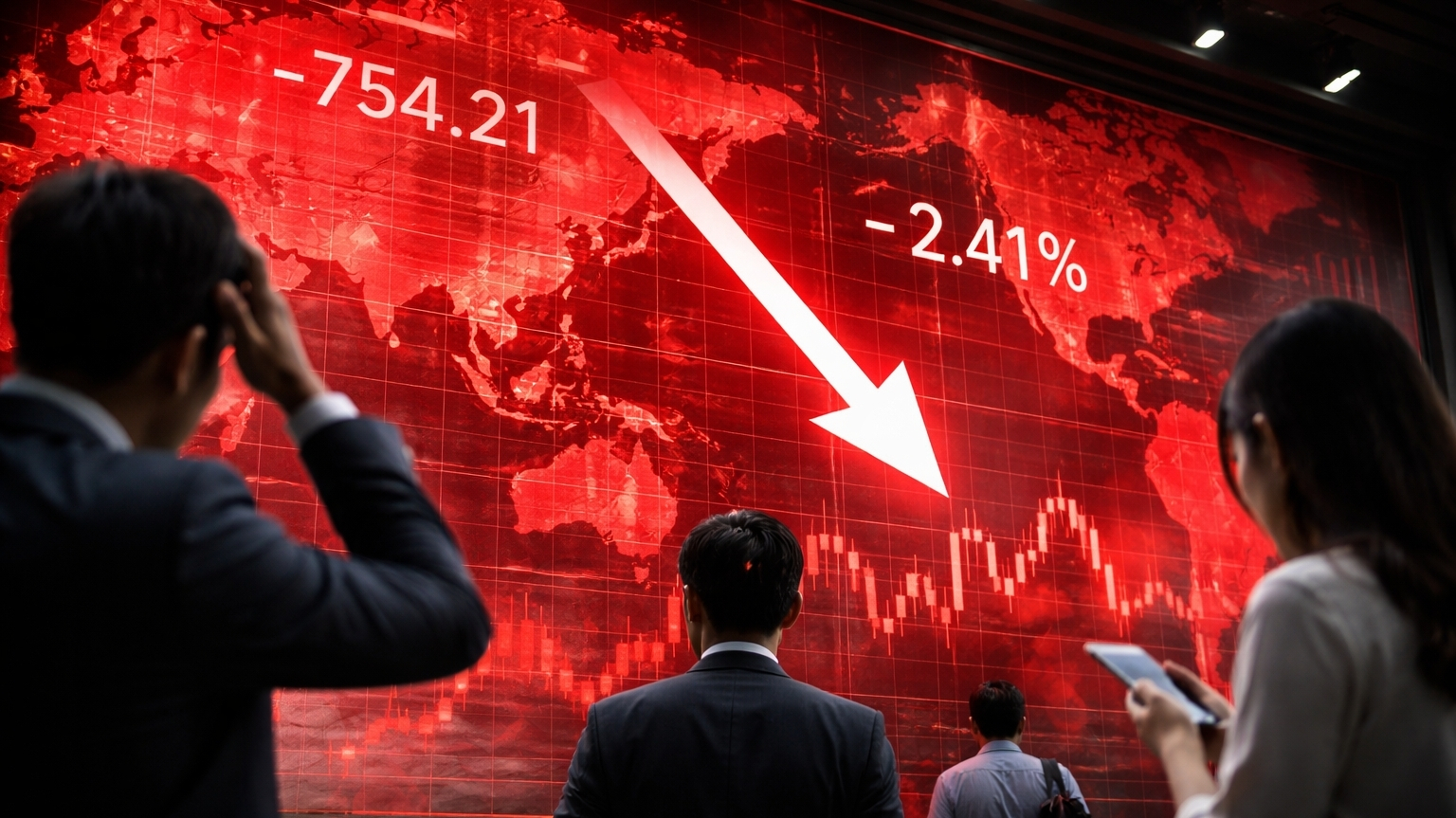

I still remember opening my phone early in the morning, expecting the usual mix of green and red across the Asian markets, but what I saw instead felt different—almost unsettling—because everything was red, as if the entire region had decided to move in one direction at once.
It wasn’t just one country or one sector; from Tokyo to Hong Kong, from Seoul to Mumbai, the drop felt synchronized, like a silent agreement between markets that something wasn’t right beneath the surface.
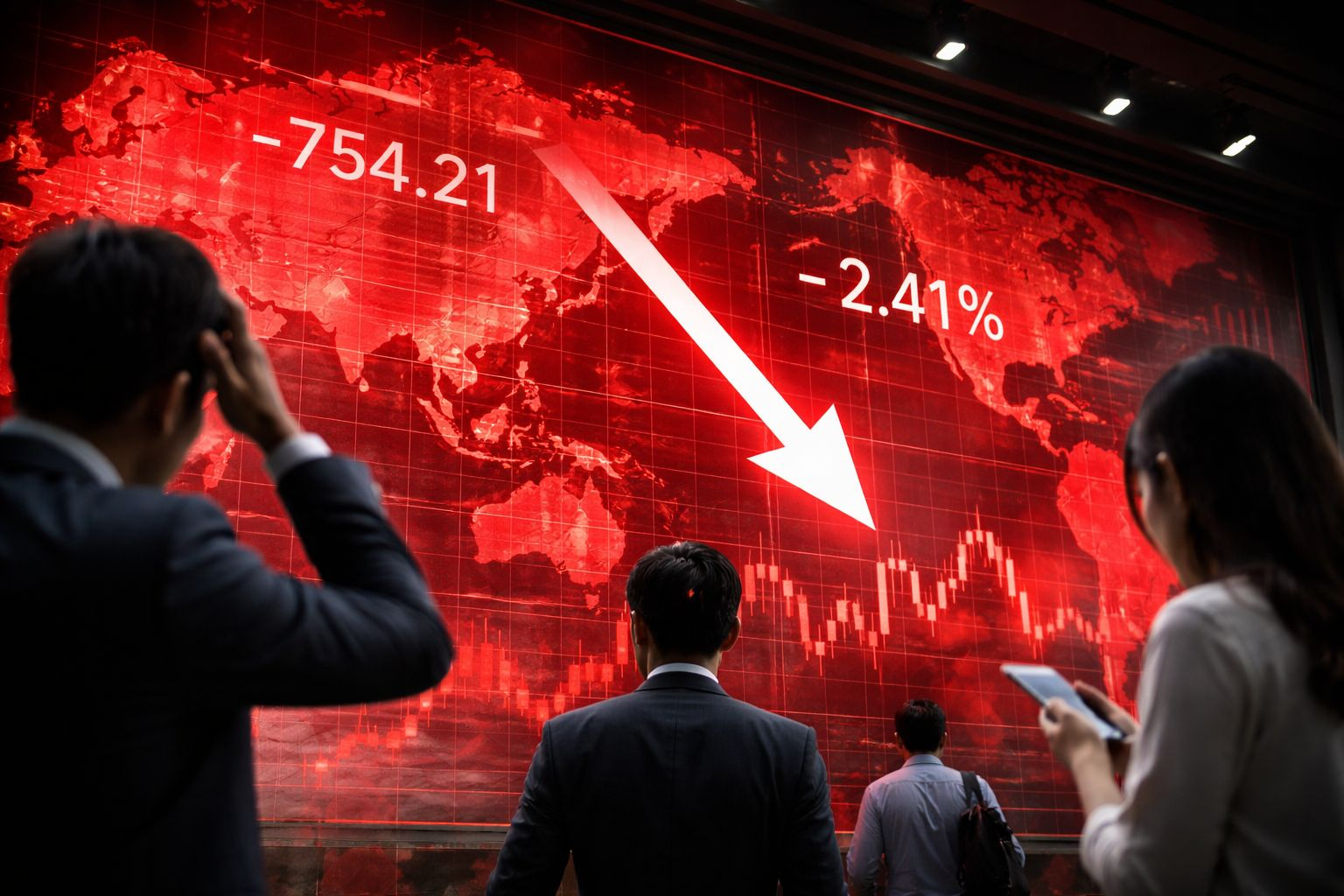
At first, I thought maybe it was just another temporary correction, the kind we see often in volatile environments, but the consistency of the decline across multiple indices made it clear that this wasn’t random noise—it was something deeper.
When markets across an entire region fall together, it usually means the cause is not local, and that’s exactly what seems to be happening here, where global pressure is beginning to weigh heavily on Asian economies.
One of the biggest forces behind this kind of movement is fear—specifically, fear of tightening financial conditions, rising interest rates, and the possibility that global liquidity is slowly drying up.
I have seen this pattern before, where capital that once flowed easily into emerging and growth-driven markets suddenly starts pulling back, not because those markets changed overnight, but because global money became more cautious.
Foreign investors, who play a huge role in Asian equities, often move quickly when risk increases, and when they start exiting, the impact spreads fast across multiple countries.
At the same time, currency pressures begin to appear, and weaker local currencies make investors even more hesitant, creating a feedback loop that accelerates the decline.
What makes this situation more intense is how connected markets have become, where a policy shift in one part of the world can ripple through Asia within hours.
For example, even the expectation of tighter monetary policy in major economies can trigger selling in Asian stocks, not because those companies suddenly became weaker, but because future capital becomes more expensive.
There is also a psychological layer to all of this, something that doesn’t always show up in charts but plays a massive role in market behavior—once traders start seeing red across multiple markets, confidence begins to crack.
And when confidence breaks, decisions become faster, sometimes even irrational, as people prioritize safety over opportunity.
I have noticed that during these moments, even fundamentally strong companies get sold off, simply because they are part of the broader system, and in a risk-off environment, correlation increases dramatically.
It almost feels like the market stops caring about individual stories and starts reacting as one collective entity driven by fear.
Another factor that cannot be ignored is economic uncertainty within Asia itself, where growth expectations in key economies are being questioned, adding another layer of pressure.
Slower manufacturing activity, concerns about exports, and internal policy challenges all contribute to a fragile sentiment that can easily tip into selling.
When global concerns meet local vulnerabilities, the result is often exactly what we are seeing now—a synchronized decline that spreads faster than most people expect.
I think what makes this moment interesting is not just the fall itself, but what it represents—a shift in how capital is thinking about risk in the current environment.
Markets are no longer reacting only to data, but to expectations of what might happen next, and that uncertainty is often more powerful than reality.
At times like this, I remind myself that markets move in cycles, and what feels like a coordinated collapse today can eventually become a coordinated recovery tomorrow.
But the key difference is timing, because while fear spreads quickly, confidence takes time to rebuild.
For now, Asia’s red map is telling a story—not just of falling prices, but of shifting global sentiment, tightening liquidity, and a market that is trying to adjust to a new reality.
And as I kept staring at that screen filled with red, I realized something simple yet powerful—this isn’t just about Asia, it’s a reflection of a world where everything is connected, and when pressure builds in one place, it eventually shows up everywhere.#AsiaStocksPlunge #USJoblessClaimsNearTwo-YearLow