
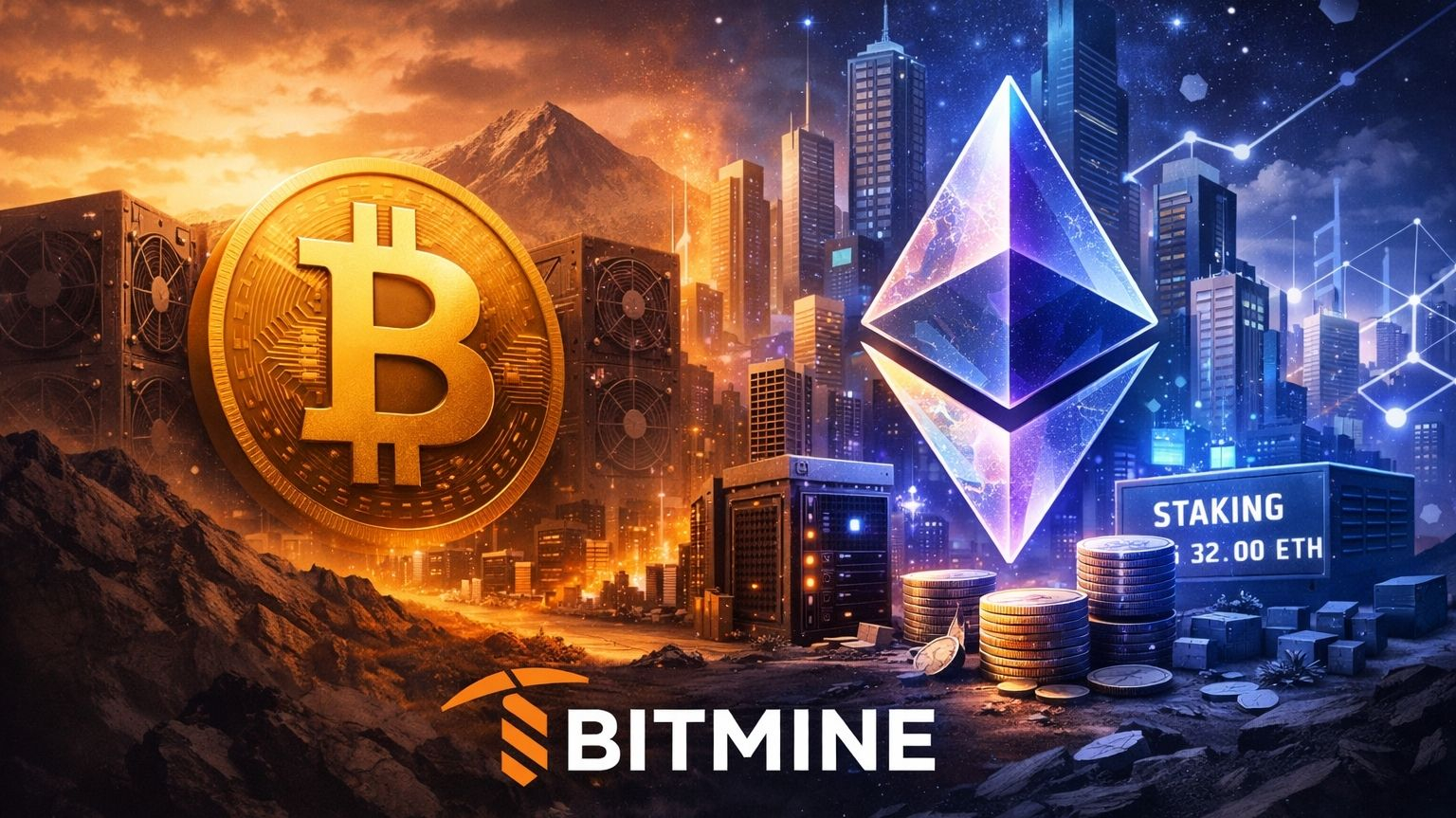

$ETH I still remember the first time I realized that crypto wasn’t just about price—it was about direction, and direction often reveals itself quietly before the charts ever do.
Back then, everyone around me was obsessed with Bitcoin,$BTC treating it like the only serious bet in the entire ecosystem, the digital gold that defined everything else.
And honestly, for a long time, that made sense, because Bitcoin was simple, predictable, and almost philosophical in the way it positioned itself against traditional finance.
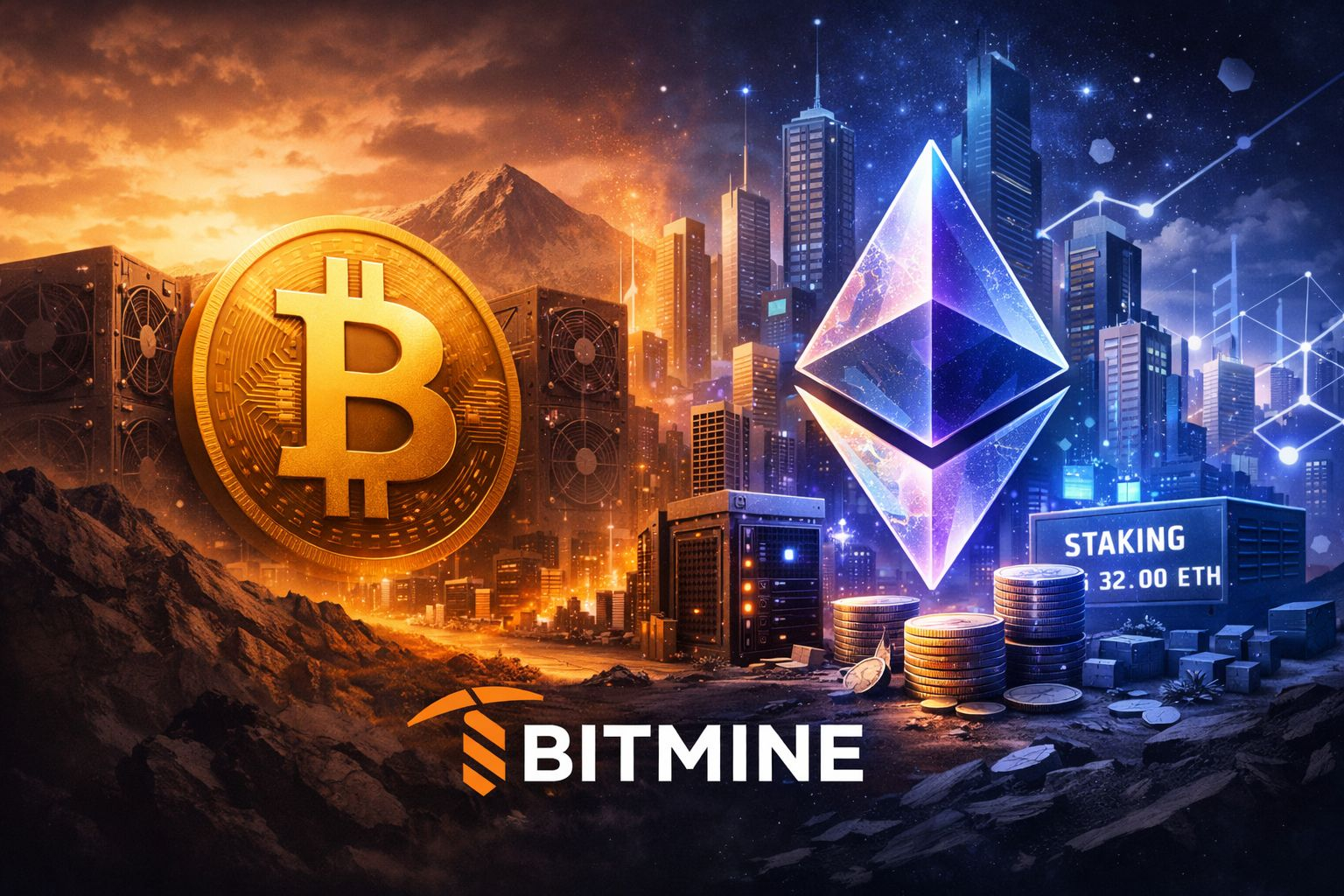
But over time, I started noticing something different happening beneath the surface, something less loud but far more strategic, especially when institutions began shifting their focus toward Ethereum.
That’s why when I saw Bitmine increasing its Ethereum stake, it didn’t feel like just another portfolio adjustment—it felt like a signal.
Not the kind of signal that trends on social media, but the kind that slowly reshapes how capital flows in the long run.
Because when a company rooted in mining, a business traditionally tied to Bitcoin, begins doubling down on Ethereum, it tells a deeper story about where value is actually forming.
It tells you that the narrative is no longer just about holding an asset, but about participating in a system.
Bitcoin, for all its strength, represents ownership.
Ethereum, on the other hand, represents activity.
And that distinction is becoming more important than most people realize.
I’ve always thought of Bitcoin as a vault—secure, resilient, and powerful in its simplicity.
But Ethereum feels more like a city.
A place where things are constantly being built, tested, broken, and rebuilt again.
And when Bitmine increases its ETH stake, it’s not just buying into a token—it’s buying into that entire city.
A city where smart contracts run businesses, where decentralized finance moves billions without intermediaries, and where digital identities, assets, and agreements are starting to live natively on-chain.
What’s even more interesting is how this move reflects a broader shift from extraction to participation.
Mining, at its core, is about extracting value from a network.
Staking, however, is about supporting and securing that network while earning from its usage.
That’s a completely different mindset.
It’s less about competition and more about alignment.
When Bitmine stakes Ethereum, it becomes part of the infrastructure itself.
It helps validate transactions, secure the network, and ensure that everything running on Ethereum continues to function smoothly.
And in return, it earns yield—not from speculation, but from real network activity.
That changes everything.
Because now the question is no longer “Will the price go up?” but “Will the network be used more?”
And if you’ve been paying attention, the answer to that is already unfolding.
From decentralized exchanges to NFT ecosystems to enterprise blockchain integrations, Ethereum has quietly become the backbone of a new kind of digital economy.
One that doesn’t just store value, but moves it, transforms it, and gives it new forms.
I think that’s what Bitmine is really betting on.
Not just Ethereum as an asset, but Ethereum as infrastructure.
And infrastructure, historically, has always been where the biggest long-term value sits.
You don’t just invest in roads because people like roads.
You invest in them because everything else depends on them.
In the same way, Ethereum is becoming the layer that other systems rely on.
Finance, identity, ownership, governance—these are all slowly converging onto programmable networks.
And Ethereum, despite its flaws and competition, is still leading that transition.
Of course, this doesn’t mean Bitcoin is losing relevance.
Far from it.
Bitcoin remains the foundation of trust in the crypto space.
It’s the anchor that gives the entire ecosystem credibility.
But what we’re seeing now is not a replacement—it’s an expansion.
A recognition that different layers of the crypto economy serve different purposes.
Bitcoin secures value.
Ethereum deploys it.
And Bitmine, by increasing its ETH stake, seems to understand that both roles matter, but growth is increasingly happening on the deployment side.
There’s also a more subtle layer to this decision that many people overlook.
Control.
In proof-of-work systems like Bitcoin, influence is tied to hardware and energy.
In proof-of-stake systems like Ethereum, influence is tied to ownership and participation.
By accumulating and staking ETH, Bitmine isn’t just earning yield—it’s gaining a form of influence within the network.
A seat, however small, at the table where consensus is formed.
That’s a powerful position to be in, especially as Ethereum continues to evolve.
I’ve seen many cycles in crypto where hype drives decisions.
But this doesn’t feel like hype.
It feels calculated.
Deliberate.
Almost inevitable.
Because if you step back and look at where the world is heading—toward digital ownership, programmable finance, and verifiable systems—it becomes clear that networks like Ethereum are not just optional experiments anymore.
They are becoming essential infrastructure.
And infrastructure attracts serious capital.
The kind that doesn’t move quickly, but moves with intention.
Bitmine increasing its Ethereum stake is a reflection of that intention.
It’s a quiet acknowledgment that the future of crypto isn’t just about holding assets, but about being embedded within the systems that make those assets useful.
I think that’s the real shift we’re witnessing.
From passive belief to active participation.
From speculation to integration.
From assets to ecosystems.
And in that shift, Ethereum stands out not because it is perfect, but because it is adaptable.
Because it keeps evolving, absorbing new ideas, and expanding its capabilities.
That adaptability is what makes it attractive to institutions looking beyond the next cycle.
Looking toward the next decade.
So when I see moves like this, I don’t just think about price charts or short-term gains.
I think about positioning.
About who is aligning themselves with the future before it fully arrives.
And in that context, Bitmine’s decision starts to make a lot more sense.
It’s not abandoning Bitcoin.
It’s complementing it.
Balancing stability with growth.
Store of value with engine of activity.
And maybe, just maybe, that balance is what defines the next phase of crypto.#BitmineIncreasesETHStake #Write2Earn