
Why Iran Can't Trust Anyone — And Why That Makes Complete Sense
Preface✨ A Country Shaped By Betrayal
Every therapist will tell you the same thing: if you were betrayed enough times as a child, you grow up with trust issues as an adult. You're not irrational. You're just calibrated.
Iran is that patient.
Part I✨ The Spice Route That Forgot to Pay Iran
How Portugal, Holland, and Britain perfected the art of "sign the contract, ignore the contract"
Here's a fun historical fact: for centuries, every ship sailing from Asia to Europe had to pass through the Strait of Hormuz. The spices that filled European kitchens, the silk that dressed European aristocrats, the pepper that preserved European meat — all of it squeezed through a 50-kilometer-wide bottleneck controlled, in theory, by Persia.
In theory.
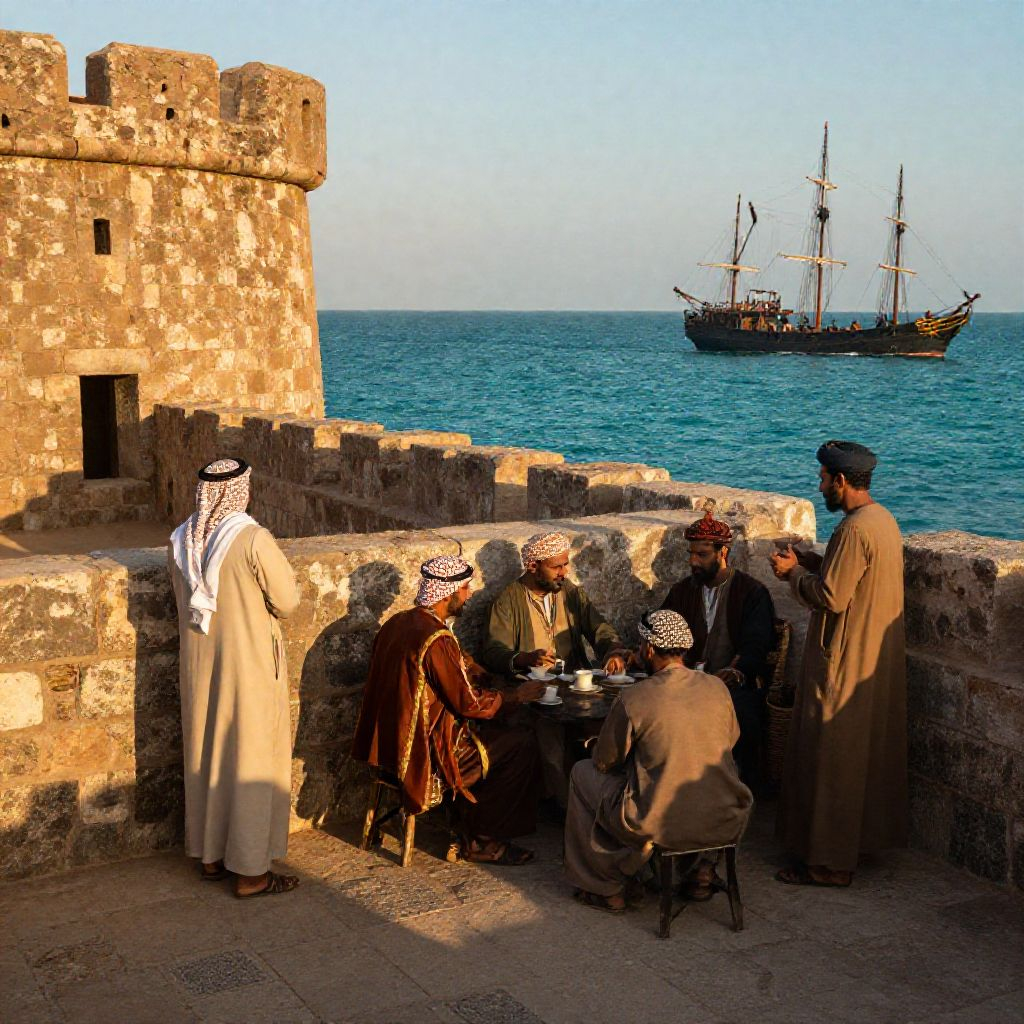
In practice, the Portuguese showed up in the early 1500s and just... took it. Then the Dutch arrived, signed dozens of treaties with the Persians, and promptly ignored every single one of them. The Dutch East India Company (VOC) — the world's first multinational corporation and arguably its first organized crime syndicate — understood that the Persians needed trade, so the Persians would keep negotiating no matter how many agreements the VOC violated.
The lesson Iran learned from the Dutch East India Company wasn't about spices. It was about paper. Paper means nothing. Power is everything.
Part II✨ Five Hundred Years of Being the Designated Victim
From the Ottomans to the Soviets, everyone got a turn
The Iran that exists today was not shaped by the glories of the ancient Persian Empire. It was shaped by the Safavid Dynasty — a 16th-century state forged in the crucible of simultaneous threats from every direction.
To the west: the Ottoman Empire. To the east: the Mughal Empire, then Afghan warlords. To the northwest: Czarist Russia. To the south: European colonial powers.
By the time the Safavids were done "surviving," Iran had lost roughly half its territory. Azerbaijan went to Russia. Territories that were Persian for millennia became someone else's on a map drawn in European capitals.
Then came the 20th century, which somehow managed to be worse. In 1907, Britain and Russia simply divided Iran into spheres of influence — without bothering to ask Iran. In World War II, when Iran's king showed a bit too much fondness for Germany, British and Soviet troops rolled in and occupied the country.
This is the part Western policymakers consistently fail to understand: Iran's paranoia isn't a cultural quirk or a theocratic personality disorder. It is a perfectly rational response to a five-hundred-year empirical record.
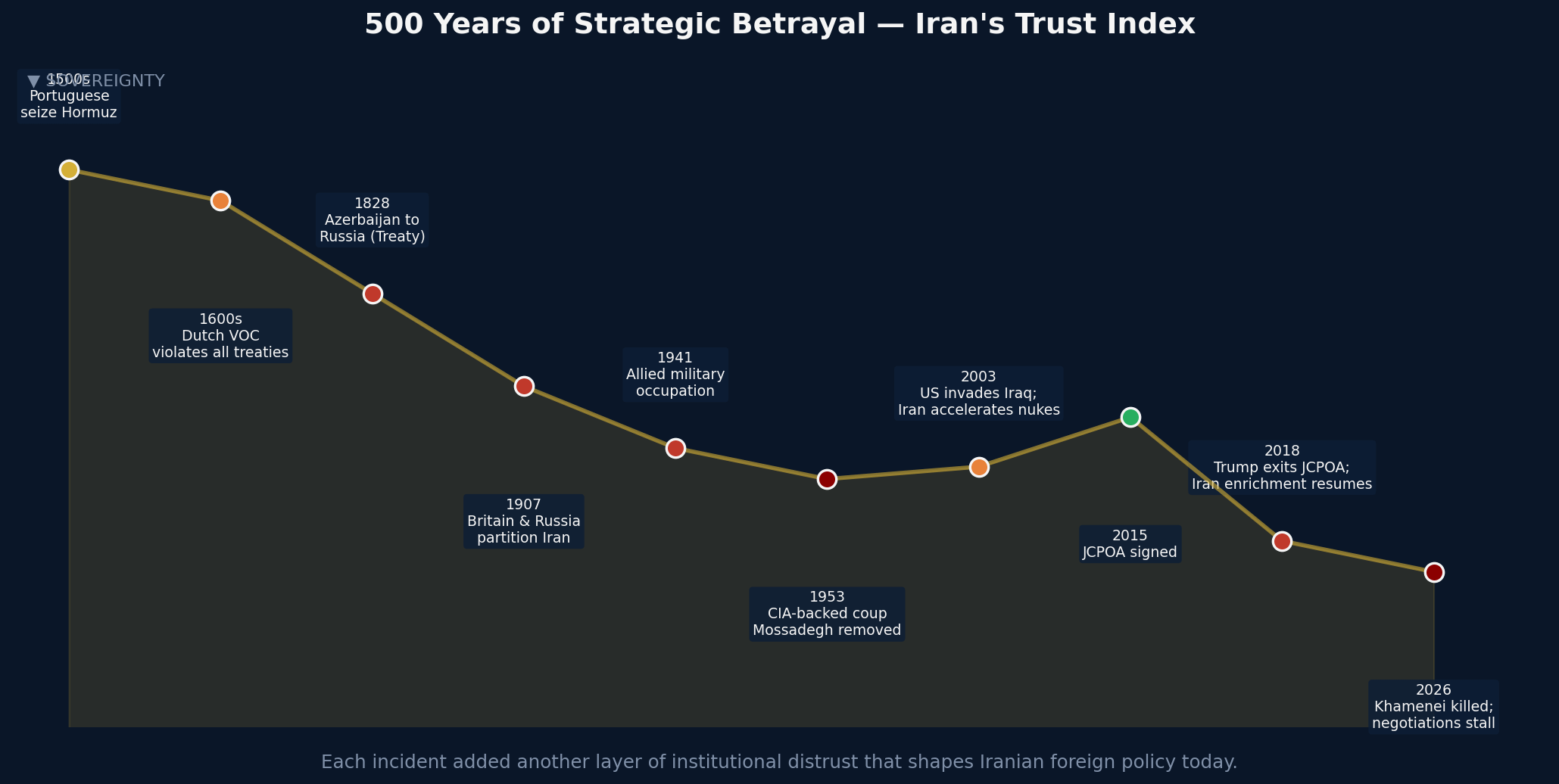
"Every time Iran trusted a great power, it lost territory, sovereignty, or both."
Part III✨ The Nuclear Equation Is Not What You Think
Spoiler: It's not about destroying Israel. It's about not being Libya.
The conventional Western narrative frames Iran's nuclear program as the ideological ambition of a theocratic regime that wants to "wipe Israel off the map." This makes for excellent cable news drama. It also explains almost nothing.
In 2003, Muammar Gaddafi gave up Libya's nuclear weapons program. He received diplomatic recognition, sanctions relief, and a photo op with Tony Blair. Eight years later, NATO bombed him into a drainage ditch.
Kim Jong-un watched that happen. So did Tehran.
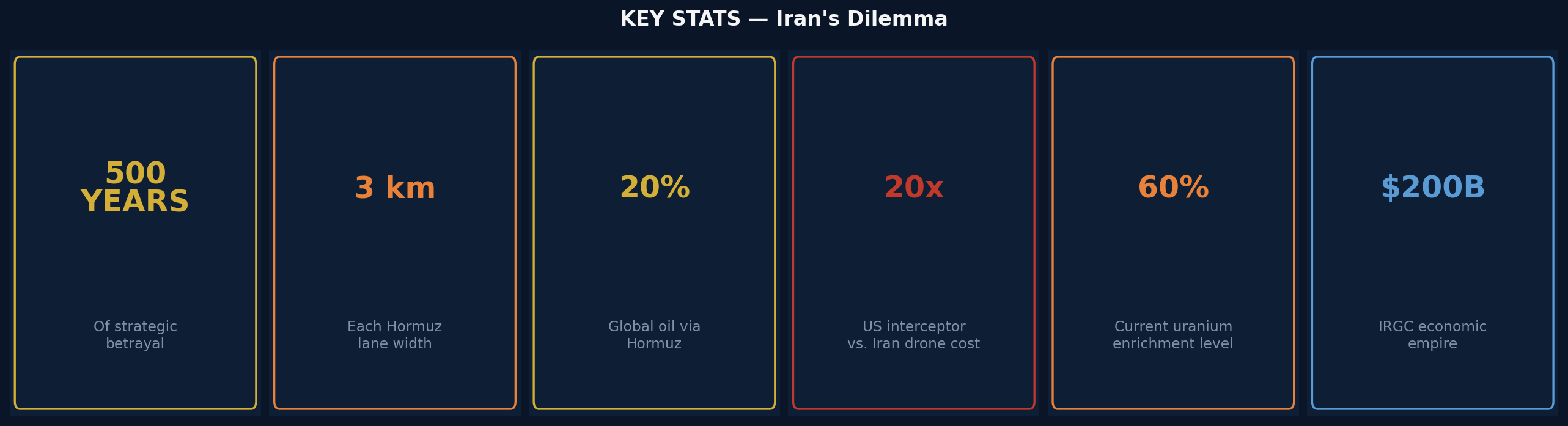
The nuclear weapon, in the Iranian strategic calculus, is not a first-strike instrument. It is the ultimate insurance policy — the one guarantee that no foreign power will ever again roll tanks into your capital and install a puppet government. North Korea has nukes and faces no invasion threat. Iraq didn't have nukes and ceased to exist as a sovereign state. The pattern is not subtle.
This explains why Trump's demand for "zero enrichment" is fundamentally unacceptable to Iran — not because Iran wants to build a bomb tomorrow, but because giving up the capability is giving up the only leverage that history has taught them actually works.
Part IV✨ The 3-Kilometer Equation
The most expensive oil chokepoint in the world costs almost nothing to close
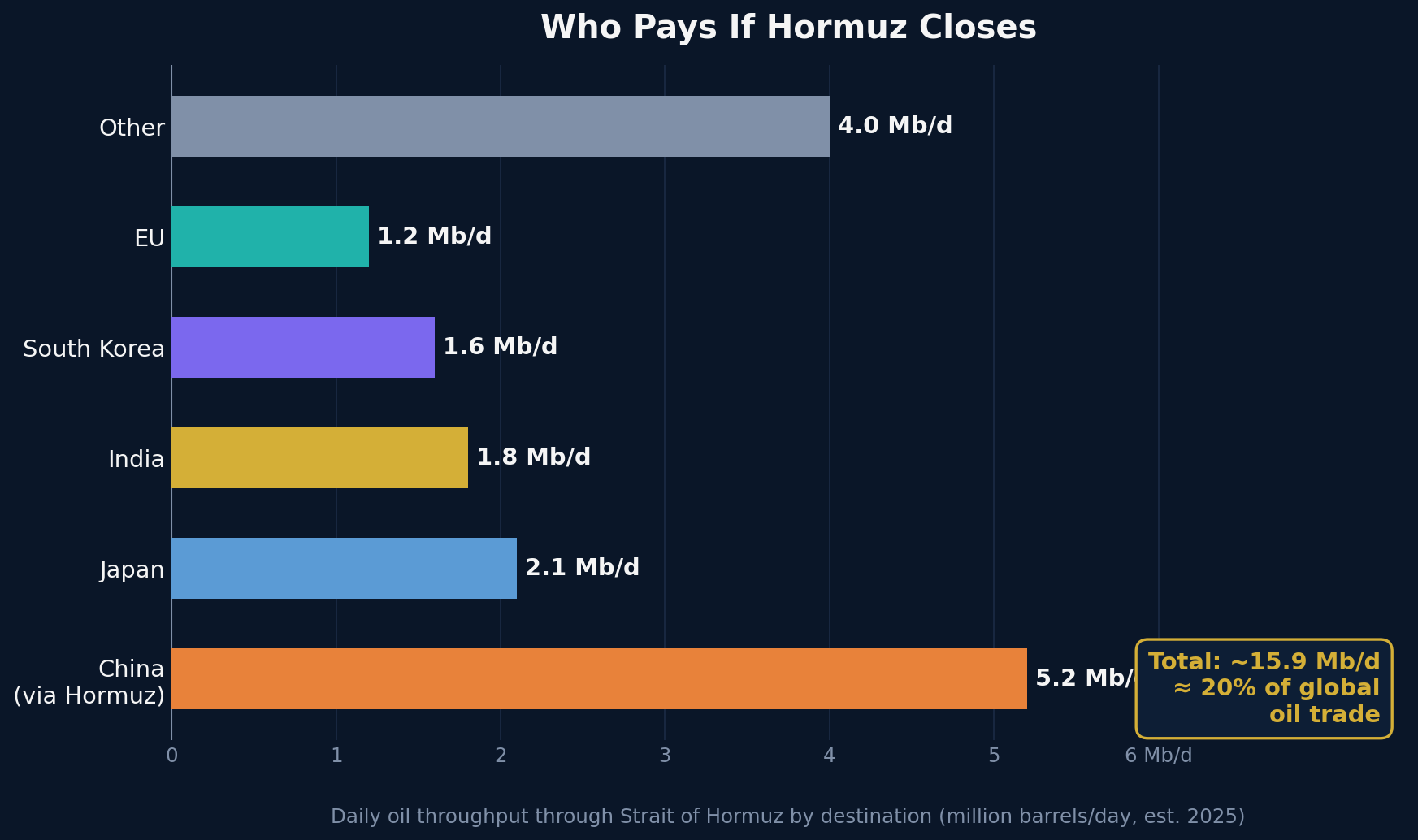
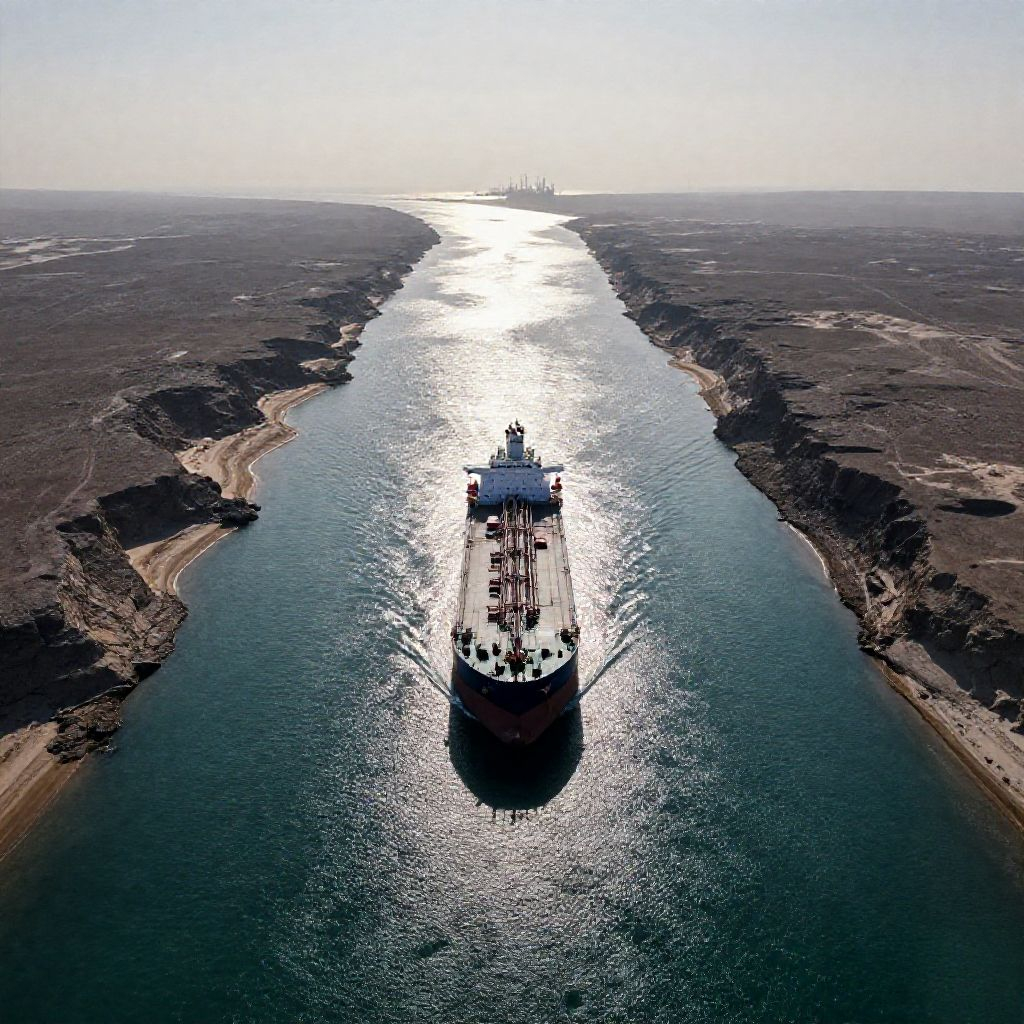
The Strait of Hormuz is 50 kilometers wide at its narrowest point. But tankers don't use 50 kilometers. Due to shallow waters and navigation requirements, all oil traffic moves through just two shipping lanes — each approximately 3 kilometers wide.
That's it. Two lanes, 3 kilometers each, carrying roughly 20% of the world's traded oil.
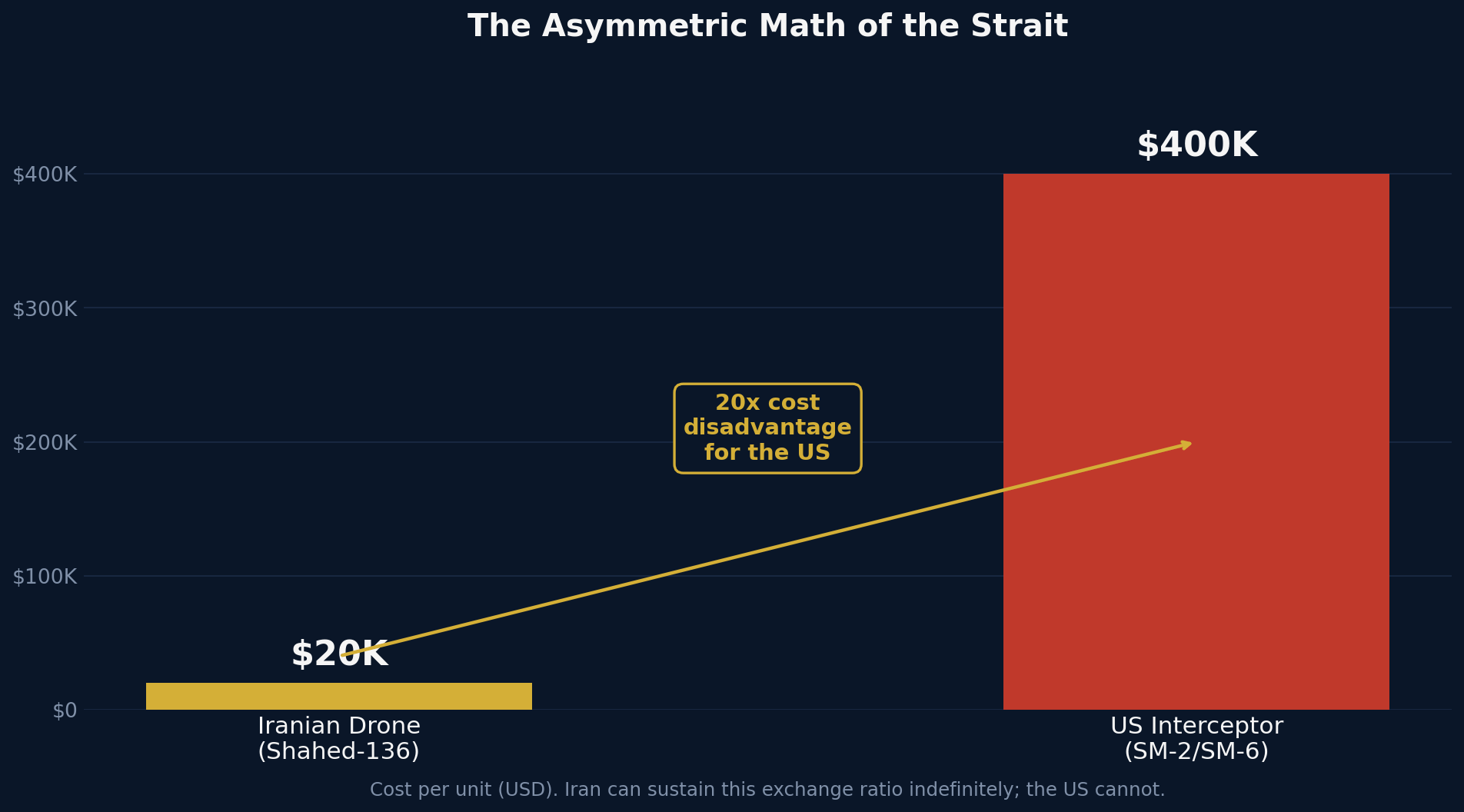
Iran doesn't need a blue-water navy to close them. It needs mines, shore-based missiles, and the swarm drones that have already proven their worth in Yemen and Ukraine. Iranian drones cost approximately $20,000 each; the U.S. Navy interceptors required to shoot them down cost approximately $400,000 each. Iran can sustain that math. The United States cannot, indefinitely.
"The Strait is not Iran's nuclear option. It is Iran's everyday deterrence — the geographic fact that transforms a medium-sized, economically isolated country into a veto player over global energy markets."
Part V✨ Why Khamenei's Death Changes Nothing
You can assassinate a leader. You cannot assassinate a power structure.
The killing of Supreme Leader Khamenei was supposed to be the masterstroke — the move that decapitates Iran's theocracy and sends its political system into terminal collapse. It didn't work out that way.
This is because Western analysts consistently confuse Iran's political structure with a conventional presidential system. Remove the president, and the country is rudderless. But Iran's real power doesn't live in an office with a nameplated door. It lives in two interlocking institutions: the clerical establishment and the Islamic Revolutionary Guard Corps (IRGC).
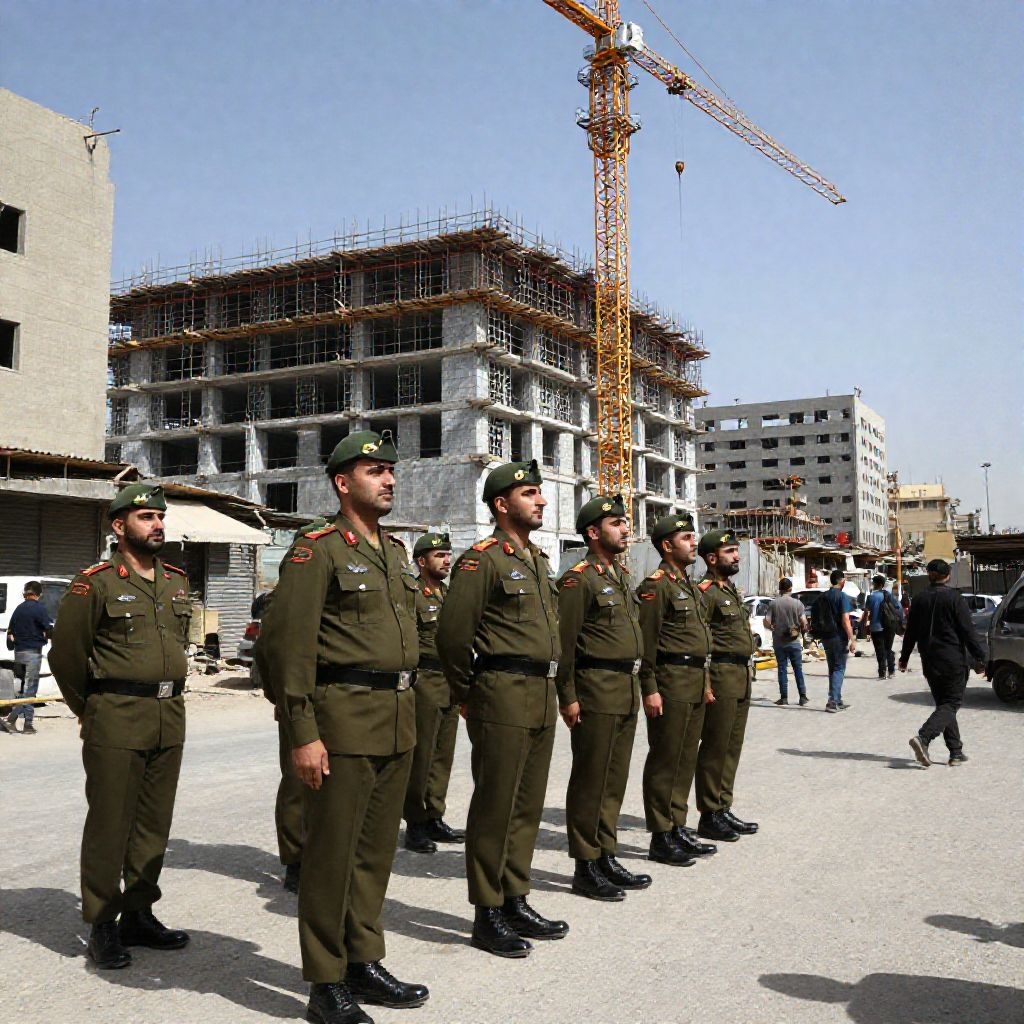
The IRGC is not just a military. It is a $200 billion economic empire with stakes in construction, telecommunications, energy, and banking. It has more to lose from regime collapse than from American bombs. Its institutional interests — survival, revenue, influence — will organize around any successor to Khamenei within weeks.
Decapitation strategies work on centralized tyrannies. Iran is not a centralized tyranny. It is a bureaucratic hydra dressed in religious robes.
Part VI✨ The Russian Veto and the Ukraine Equation
There is exactly one deal structure that could work. Russia is holding the key.
Here is the only negotiated solution that could, theoretically, satisfy both sides: Iran transfers its enriched uranium stockpile to Russian custody. Iran retains the technical capability to enrich, but the fissile material sits in Russia. This gives Iran a "breakout" option that remains visible and controllable. It gives the U.S. and Israel a verified absence of an immediately deployable weapon.
Iran has signaled it could accept this. The U.S. has signaled it could accept this. Russia has signaled it will accept this — if the United States makes meaningful concessions on Ukraine.
The gap between 15 and 30 years of security guarantees — Ukraine's demand versus the U.S. offer — is how close the world currently is to an Iran nuclear deal.
"The chessboard doesn't have separate games. It has one game, played on all squares simultaneously."
Part VII✨ The Sunni Wildcard and the Broader Conflagration
Pakistan has a nuclear bomb. Saudi Arabia just signed a defense pact with Pakistan. Think about that for a moment.
As Iran and the United States conduct their nuclear negotiation theater, the broader Middle East is quietly restructuring its alliance architecture. Saudi Arabia and Pakistan have signed a joint defense treaty. Turkey is reportedly exploring accession. India has moved closer to Israel.
Pakistan has nuclear weapons. Pakistan's military has historically maintained ties with both Saudi Arabia and the United States while occasionally renting those ties to the highest bidder. If the Iran-U.S. conflict escalates into a full regional war, the question of where Pakistani warheads point suddenly becomes relevant in ways that would have seemed absurd five years ago.
Beijing's position is the most uncomfortable chair in the room: too much stake to stay out entirely, too wary of the precedent to fully intervene.
Iran knows this. It's why Iran's closure threat isn't just aimed at Washington — it's aimed at Beijing, Riyadh, and Tokyo simultaneously. The message is: if you let this happen to me, you all pay the price.
Conclusion✨ The Insurance Policy Nobody Wants to Cancel
Iran doesn't need a nuclear weapon. It needs everyone to believe it might build one.
Iran does not need to actually possess a nuclear weapon. Possessing one would invite the very intervention it seeks to deter. What Iran needs — and has successfully maintained for twenty years — is what strategists call "nuclear latency": the demonstrated capacity to build a weapon, maintained at a level just below the threshold that would trigger preemptive attack.
This is not irrationality. This is the most sophisticated deterrence strategy available to a medium-power that cannot match the conventional military forces arrayed against it.
The tragedy is that this same logic makes negotiated disarmament nearly impossible. You cannot ask a country with Iran's history to give up the only tool that has ever demonstrably protected it from invasion — and expect a yes.
"Every Portuguese merchant, every British colonial officer, every Soviet general who marched through Persian soil contributed one more brick to the wall of Iranian strategic distrust. That wall is now five hundred years thick."
You want Iran to take it down? Bring a very long construction crew. And budget a century or two.
The GrandBoard
"The world is a chessboard. We explain every move."
X @TheGrandBoard · thegrandboard.substack.com