
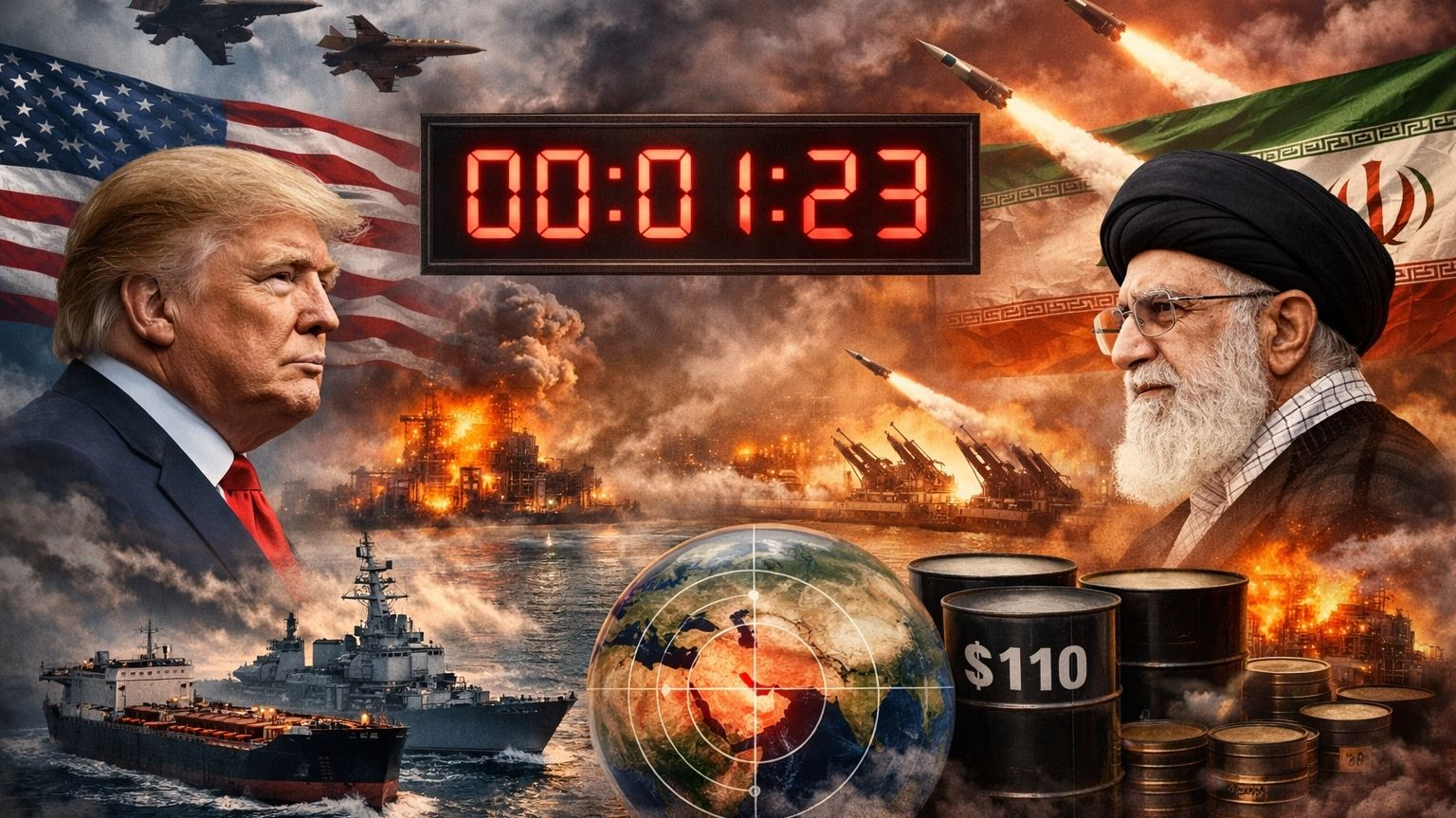

I still remember when geopolitical tensions used to feel distant, like something happening far away on maps and news tickers, but this time feels different, because Donald Trump’s deadline to Iran doesn’t just sound like politics—it sounds like a ticking clock that the entire world can hear.
The ultimatum is simple on the surface but heavy in consequence: Iran must agree to specific terms, including reopening the Strait of Hormuz and addressing nuclear concerns, or face massive military strikes targeting critical infrastructure like power plants and bridges
What makes this moment unusually dangerous is not just the threat itself, but the certainty behind it, as Trump has made it clear that the deadline is “final” and unlikely to be extended, removing the usual diplomatic cushion that often delays escalation 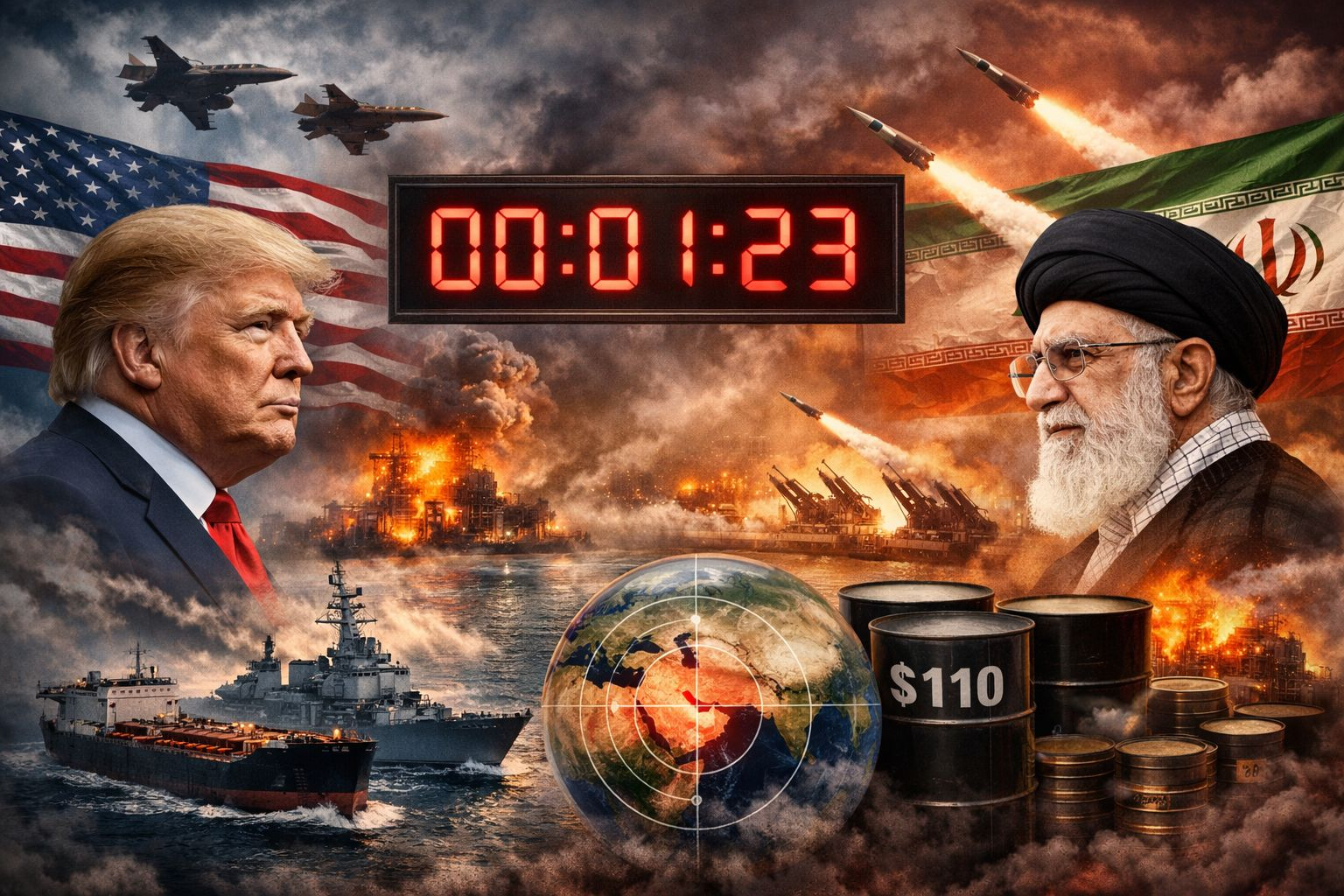
At the same time, Iran is not backing down, instead warning of “devastating and widespread” retaliation if attacks occur, which transforms this from a one-sided threat into a potential chain reaction that could ignite the entire Middle East
I think what many people don’t fully realize is that this isn’t just about two countries anymore, because the Strait of Hormuz—one of the world’s most critical oil routes—is at the center of this standoff, and any disruption there immediately sends shockwaves through global energy markets.
We are already seeing that effect, with oil prices surging above $110 per barrel as traders react not to supply and demand, but to fear and uncertainty about what happens if the deadline passes without a deal
And when oil moves like that, it doesn’t stay in the financial charts—it moves into everyday life, increasing fuel prices, raising inflation, and quietly impacting economies from Asia to Europe.
But beyond economics, there is a deeper and more troubling layer to this situation, because the types of targets being discussed—civilian infrastructure—have raised serious concerns among legal experts about potential violations of international law
This introduces a moral and institutional dilemma, where even military officials could be forced to choose between following orders and adhering to the laws of war, something rarely discussed but extremely significant in modern conflicts.
What makes the countdown even more intense is the failure of diplomacy so far, despite indirect talks and ceasefire proposals from mediators like Pakistan and others, showing that both sides are negotiating—but not agreeing on the same future
Iran appears to want a long-term resolution that reshapes the conflict entirely, while the U.S. is pushing for immediate concessions, especially around nuclear ambitions and oil flow, creating a gap that time alone may not bridge.
And time is exactly what is running out, because as the deadline approaches, military preparations are no longer theoretical—they are being openly discussed, planned, and in some cases, partially executed.
What feels unsettling is how quickly rhetoric has escalated, from negotiation language to phrases like “taken out in one night,” which signals not just pressure, but readiness for overwhelming force
At this point, the situation is no longer just a diplomatic standoff—it is a moment where a single decision could redraw geopolitical alliances, trigger regional wars, and reshape global markets in a matter of days.
I can’t help but think that this is one of those rare moments in history where the world pauses without fully realizing it, because whether the deadline leads to a deal or destruction, the outcome will define not just U.S.-Iran relations, but the direction of global stability itself.#TrumpDeadlineOnIran #Write2Earn