
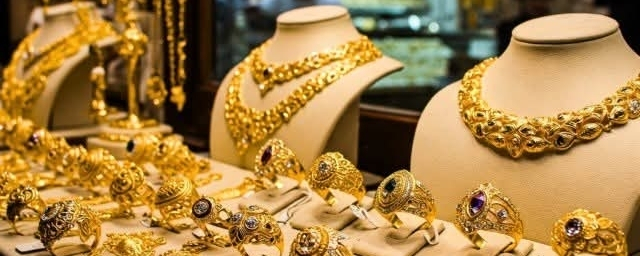

Gold jewelry prices in China are moving higher again, but what stands out isn’t just the increase it’s the behavior behind it.
On April 14, Laopu Gold priced its pure gold jewelry at 1,543 yuan per gram, marking an 8 yuan increase from the previous day. At the same time, Chow Sang Sang listed its pure gold jewelry at 1,455 yuan per gram, reflecting a sharper 12 yuan rise.
On paper, this looks like a normal reaction to global gold price movements.
But demand hasn’t slowed.
And that’s where things get interesting.
Rising Prices, But No Drop in Buying 🟡
In most markets, higher prices usually cool demand. Gold in China often behaves differently.
Jewelry isn’t just seen as decoration it’s treated as a store of value. That changes how buyers react. When prices rise, it doesn’t automatically signal “too expensive.” For many, it signals strength.
That psychological shift matters.
Instead of stepping back, some buyers actually accelerate purchases, fearing prices could go even higher. It turns gold jewelry into something closer to an investment decision than a luxury one.
Jewelry Is Quietly Acting Like an Investment 💰
There’s a subtle transformation happening in how gold is being bought.
Instead of traditional investment routes like gold bars or #ETFs many consumers are choosing high-purity jewelry. Why? Because it serves multiple purposes at once:
Wearable wealth
Long-term value storage
Easy liquidity when needed
This hybrid nature makes jewelry particularly attractive during uncertain times.
You’re not just buying something to wear you’re buying something that holds financial meaning.
Global Pressure Is Feeding Local Prices 🌍
The rise in China’s gold jewelry prices isn’t happening in isolation.
Several global factors are pushing gold higher:
Ongoing geopolitical tensions
Currency instability
Central banks increasing gold reserves
Broader uncertainty in traditional markets
China, being one of the largest gold consumers in the world, reflects these pressures quickly. When international gold prices rise, local retail prices follow but strong domestic demand can amplify that move.
That’s exactly what we’re seeing now.
The Cultural Factor Can’t Be Ignored 🧧
Gold holds a unique place in Chinese culture.
It’s deeply tied to:
Weddings and celebrations
Family wealth preservation
Generational gifting
Because of this, demand doesn’t behave purely like a financial market. Even during price increases, cultural buying continues sometimes even strengthens.
This creates a strong baseline demand that doesn’t disappear easily.
Price as a Signal, Not a Barrier 📈
One of the most important dynamics here is how people interpret price.
In many assets, rising prices increase fear.
With gold, especially in China, rising prices often increase confidence.
It sends a message:
“Gold is strong. It’s holding value.”
That belief reinforces demand rather than weakening it.
And when that loop forms price rising + demand staying strong markets behave differently.
What Comes Next? 🤔
The key question now is whether this trend continues.
If global uncertainty remains high, gold is likely to stay supported. And if Chinese consumers continue treating jewelry as both cultural and financial assets, demand may remain resilient even at elevated price levels.
That combination creates a strong foundation.
However, if prices rise too quickly, short-term pauses or corrections are always possible. But structurally, the demand base looks stable.
Final Thought
This isn’t just a story about gold getting more expensive.
It’s a story about how people see value.
In China, gold jewelry sits at the intersection of culture and finance. That’s why rising prices don’t push buyers away they often pull them in.
And when an asset becomes both emotional and financial at the same time, it tends to move differently from everything else.