
I have been inside Pixels long enough to know the farming loop is not the interesting part. The interesting part is what happens when your assets, your land, your progress, your PIXEL — start moving somewhere the game did not originally plan for them to go.
That is the interoperability question. And it is messier than the roadmap makes it sound.
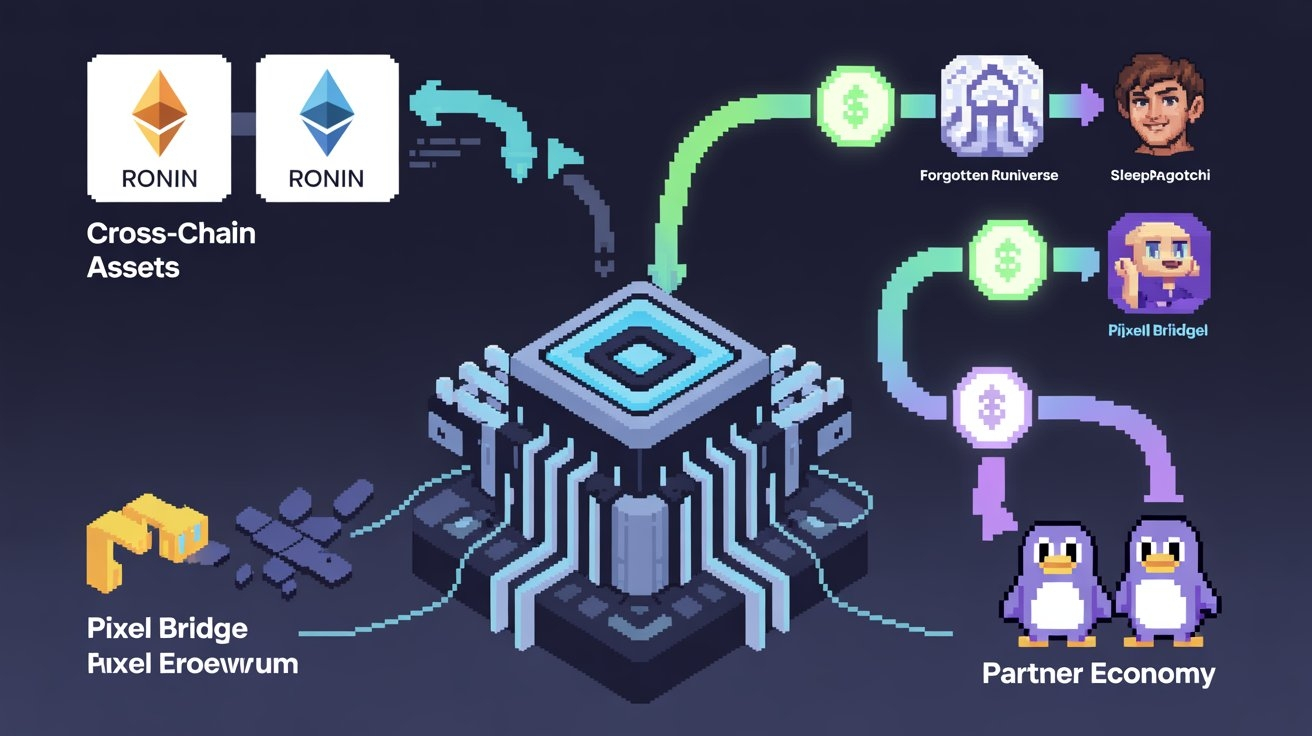
Pixels runs on Ronin Network, which is an EVM-compatible chain built by Sky Mavis, the same people behind Axie Infinity. EVM compatibility is the technical foundation everything else rests on. It means Pixels assets can theoretically talk to other EVM chains — Ethereum, other sidechains, partner ecosystems — without rebuilding the entire token standard from scratch. The Pixel token itself operates across both Ethereum and Ronin smart contracts simultaneously. That dual-chain structure is not cosmetic. It is what makes cross-platform movement possible at the infrastructure level.
But here is where it gets complicated.
The Ronin bridge is the mechanism that actually moves assets between chains. When a player transfers pixel an NFT from Ronin to Ethereum, the bridge locks the asset on one side and mints a representation on the other. Clean on paper. The problem is that bridging introduces a trust layer that pure on-chain logic cannot fully resolve. The asset exists in two states during transit. The bridge holds the real one. The destination chain holds the promise. Most players never think about this until something goes wrong, and then they think about nothing else.
Pixels supports over 80 external NFT collections as in-game avatars including Pudgy Penguins, Bored Ape Yacht Club and Mocaverse. That is real interoperability working at the asset layer. Your NFT from a completely different ecosystem loads inside Pixels and functions as your character. The Ronin wallet reads the ownership record, the game respects it, and suddenly a BAYC holder is farming crops on land they bought with PIXEL. That cross-collection recognition is technically sophisticated even when it looks simple from the player side.
The partner game integrations go further. Pixels and Forgotten Runiverse on Ronin have an active collaboration where Pixel between both games as a usable currency. Mid-2025 brought integrations with Sleepagotchi as well. The Pixel starts functioning less like a single-game currency and more like a shared economic layer across multiple Ronin-based experiences. Over 100 million Pixel are currently staked, which suggests the community treats this token as something with value beyond any single game session.
That is the technically ambitious version of interoperability. Not just moving assets. Building a shared economy where the token carries weight across different game environments without losing meaning each time it crosses a boundary.
The part I keep thinking about is whether that weight holds as the ecosystem expands. Each new integration adds surface area. More games reading the same token. More bridge activity. More downstream systems relying on the same on-chain record to mean the same thing in different contexts. Ronin has grown significantly since its early Axie days but the infrastructure is still carrying more load than it was originally designed for, and every new Pixels partnership adds another thread to that load.
Interoperability in Pixels is genuinely further along than most Web3 games. The EVM foundation is solid. The dual-chain token structure is real. The NFT cross-collection support works. The partner economy is growing. What remains unresolved is not whether the technology connects these worlds. It is whether the connections stay stable as more worlds get added and the original infrastructure has to keep answering for all of them at once.