
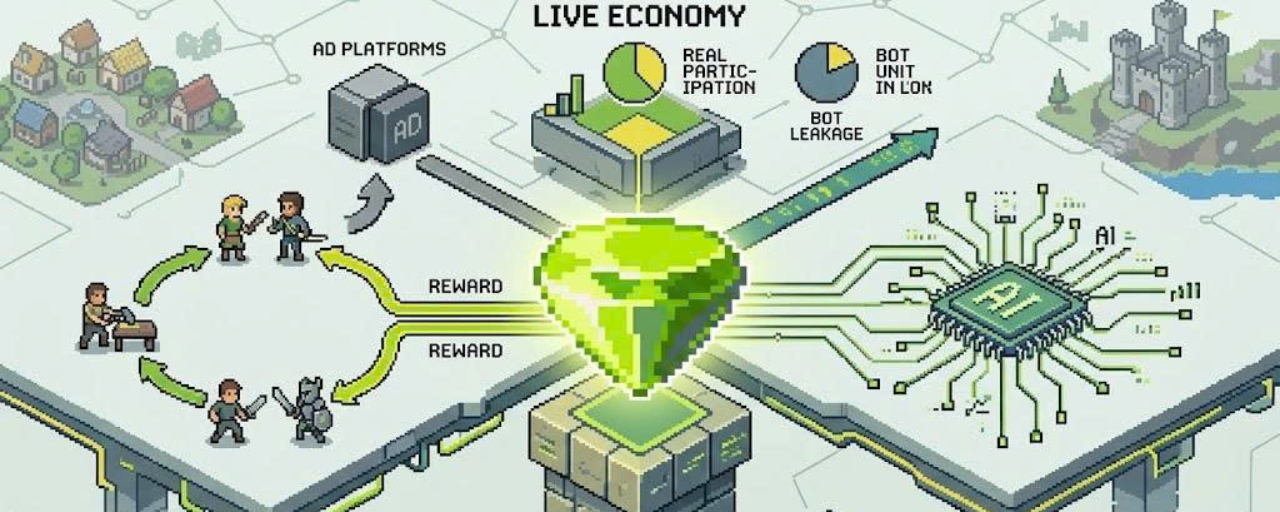
Stacked matters for one reason that most Web3 gaming products never get to claim honestly: it wasn’t imagined in theory first. It was learned the hard way.
A lot of reward systems sound compelling when they’re introduced. Better retention. Better monetization. Better engagement. But once real players arrive, the same pattern usually follows. Bots farm the incentives. Reward budgets leak. The wrong users get overpaid. The economy starts bending around extraction instead of genuine participation.
That is exactly why I think Stacked deserves more attention.

What @Pixels is building with Stacked is not another generic rewards layer. It feels more like the result of years spent discovering which assumptions break the moment a live economy faces real pressure. That difference matters. There is a huge gap between building a reward system and building one that can survive adversarial usage at scale.
The strongest part of the thesis is not just rewards. It is intelligence. Stacked adds an AI game economist on top of the reward engine, which is a much bigger idea than most people realize. Studios do not just need tools to distribute incentives. They need systems that can tell them why users churn, where reward budgets are being wasted, and which experiments are actually worth running next.
That is where this starts to look less like a campaign tool and more like infrastructure.
And the business model behind it is even more interesting. For years, gaming studios have spent enormous budgets paying ad platforms for user acquisition, often with weak retention and limited visibility into long-term value. Stacked pushes toward a different model: redirect more of that spend directly to players who actually engage. Not passive impressions. Not empty quests. Real rewards for meaningful behavior.
That is a cleaner loop. It is also a more defensible one.
To me, this is why Stacked stands out. It was built in production, not in a deck. And in crypto, that distinction is everything.