
I have been looking at it again, but not in the usual “maybe the chart bounces” kind of way. What pulled me back was something deeper than price. I started paying attention to how Pixels has been evolving the actual structure around its economy, and the more I looked into it, the more I felt this is no longer just a story about one farming game trying to keep a token alive. It feels more like a team that learned the hard way how fragile Web3 game economies are, then decided to rebuild the reward system around that lesson. Pixels still presents itself as a free-to-play farming and exploration game on Ronin, still pushes Chapter 2 as a major step forward, still highlights guilds, pets, staking, and social progression, and still says it has crossed 10 million players. But what matters more to me now is that the project seems to be thinking beyond one game loop and toward a broader rewards infrastructure layer.
What first made me pay attention again was not hype. It was the fact that Pixels openly admitted one of the biggest economic mistakes most Web3 games make. The team did not pretend the old model was fine. In the official FAQ, they clearly explained why they moved away from $BERRY. They said $BERRY had roughly 2% daily inflation, and they also explained the bigger issue behind that number: when a soft currency is on-chain inside a live economy, farmers can optimize extraction too easily and sell too aggressively. That creates pressure not just on the token, but on the whole gameplay loop. To me, that honesty matters. A lot of projects talk about “sustainability” like a branding word. Pixels actually pointed to the problem and changed the design. That is a much more serious signal than most people give it credit for.
This is exactly why I think the Coins and $PIXEL split is still one of the most important things to understand here. Pixels moved everyday in-game activity toward Coins, which are off-chain, while keeping closer to the premium and strategic side of the economy. The FAQ explains that players can convert into Coins in-game, and that daily task rewards were shifted toward Coins instead of feeding everything directly through the token. The team also removed the ability to sell items to NPCs during that transition, which was clearly meant to reduce easy extraction loops and rebalance the internal economy. I actually like this a lot because it shows they are trying to separate gameplay speed from token pressure. In simple words, they do not want the main token to be salary, spending cash, reward faucet, and exit liquidity all at the same time. That alone makes the model more thoughtful than the old play-farm-dump formula that damaged so many Web3 gaming projects.

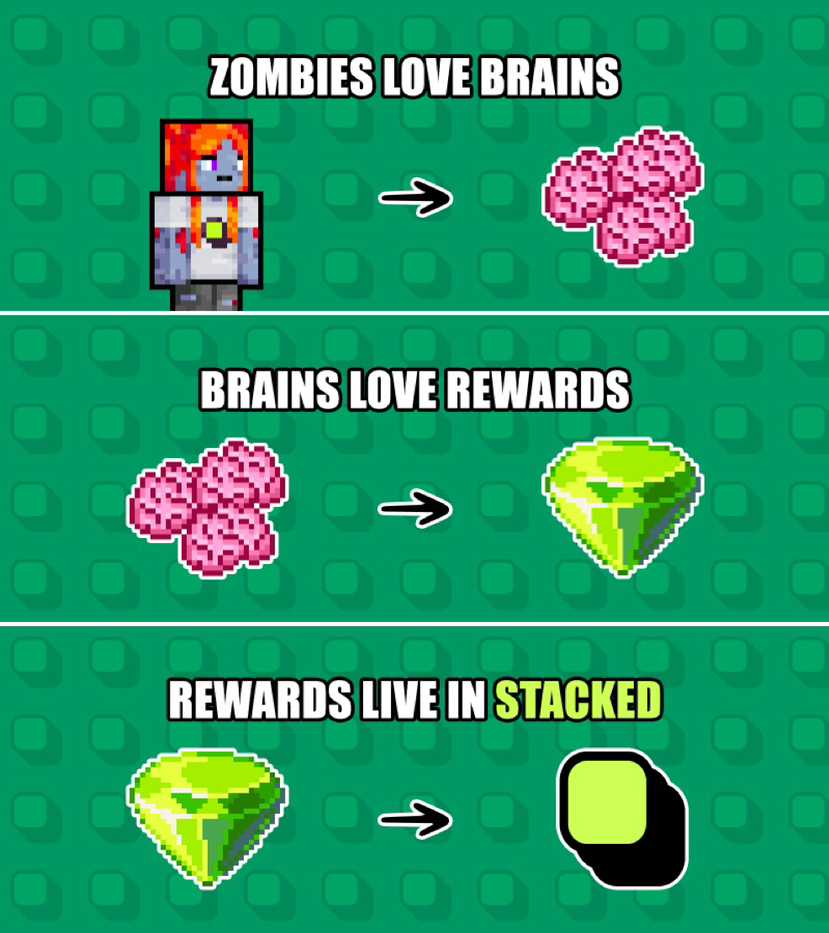
What makes this more interesting in 2026 is that Pixels now seems to be taking that idea one step further with Stacked. From the recent official launch messaging, Stacked is being presented as a rewards app for players and a rewarded LiveOps engine for games, built from everything the team learned while scaling Pixels. That changes how I look at completely. Before, the conversation was mostly about whether one game could support one token. Now the bigger question is whether Pixels is trying to turn its reward logic into infrastructure. That is a very different kind of story. If the team is right, then the value is no longer only in running one game economy better. It is in turning those economic lessons into a system other games can plug into as well. And honestly, that is a much stronger direction than just asking the market to care about another gaming token because of “future utility.”
The reason Stacked stands out to me is because it seems to focus on the real issue most people ignore in play-to-earn. The hard part was never putting assets on-chain. The hard part was always incentive alignment. That is where most projects broke. Rewards were too broad, too easy to farm, too badly targeted, or too detached from retention and real player behavior. The Stacked pitch is trying to solve exactly that by sitting underneath the experience and helping decide who should be rewarded, for what behavior, at what moment, and with what reward type. That sounds much closer to a game retention engine than a simple quest board. And for me, that matters because reward systems only become dangerous when they are lazy. A system that treats all users the same usually gets farmed. A system that understands behavior, timing, and long-term value has a better chance of creating real demand instead of temporary emissions.
This is also why I do not think $PIXEL should be looked at the same way people used to look at gaming tokens in earlier cycles. On the official Pixels site, $PIXEL is still tied to staking, ecosystem perks, progression, and the broader game universe. The site also still highlights premium layers such as pets, VIP, land-linked advantages, and social play around guilds. The FAQ says more pets can be minted with $PIXEL, free-to-play users can still access beginner resources, and even players without land can join guilds and benefit from land access that way. I like that structure because it keeps the funnel open while still leaving room for premium demand. That is healthier than locking the whole game behind financial behavior too early. It also gives the token a clearer role. I would rather see a token sit near staking, premium access, minting, ecosystem participation, and curated utility than be sprayed across every repetitive action in the loop.
Another thing I find important is that Pixels does not look like a dead product trying to survive on old branding. The official site still pushes Chapter 2, calls out regular updates, and positions the game as active and expanding. The Stacked launch also makes the ecosystem feel broader than just Pixels itself, with references to titles like Pixel Dungeons, Sleepagotchi, and Chubkins showing that the team is thinking in terms of a multi-game environment rather than a single isolated app. That matters because token narratives feel much weaker when they depend on one title doing everything alone. If the ecosystem layer keeps expanding, then has more room to matter as part of a wider network rather than only as the token of one farming game people may or may not stick with.
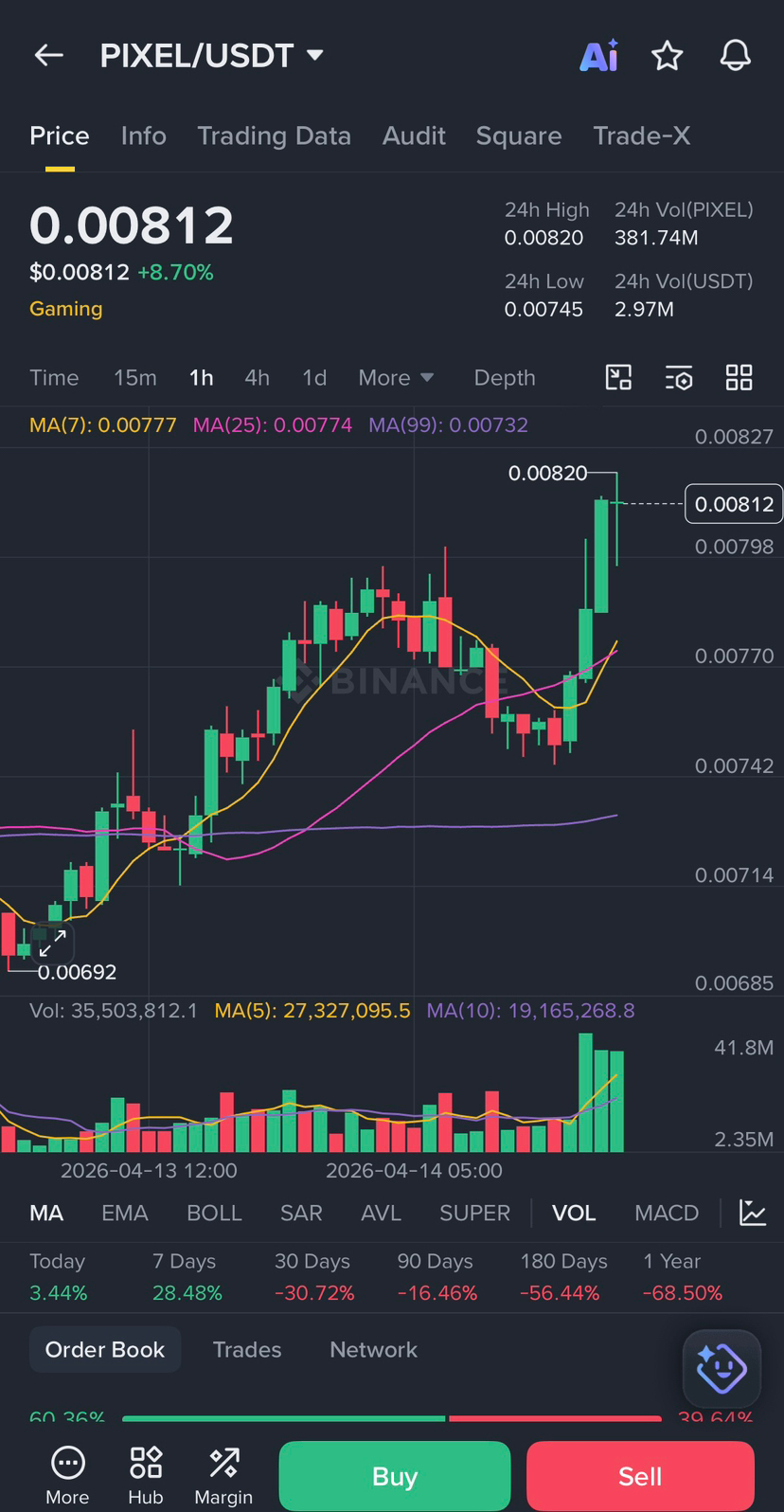
Of course, none of this means I suddenly think the risk is gone. I do not. Web3 gaming is still one of the hardest sectors to get right because it asks teams to balance fun, retention, economy design, monetization, social behavior, and speculation all at once. A smarter reward structure helps, but it does not guarantee demand. If the games stop being sticky, if the premium layer never becomes something players genuinely want, or if the ecosystem grows slower than expected, then even a more disciplined model can still struggle. I also think people should stay realistic about the token itself. As of April 14, 2026, Binance’s price page shows PIXEL around $0.0078, with a market cap around $26.4 million, about 3.4 billion circulating, and a 5 billion max supply. That tells me the market has already repriced expectations very hard. So I am not looking at this through peak euphoria anymore. I am looking at a reset asset attached to a team that is at least trying to build a more durable economic system than before.
That is honestly why I think @Pixels is worth watching again. Not because I think every gaming token deserves another chance, and not because I believe infrastructure language magically fixes bad economics. I am watching it because Pixels seems to have understood a hard truth that many teams never did: a game economy cannot stay healthy if the main token is forced to do everything. By moving routine in-game flow toward Coins, keeping closer to the premium and staking layer, and now pushing Stacked as a wider rewards engine built from real operating experience, the project feels more self-aware than most of its peers. That does not make it flawless. But it does make it more interesting. And right now, in a sector full of recycled token models and shallow reward loops, being one of the few teams actually trying to redesign the structure is enough for me to pay attention again.