
been analyzing one specific part of PIXEL’s system — vPIXEL
it’s a simple idea on the surface, but it changes how value moves insde the ecosystem
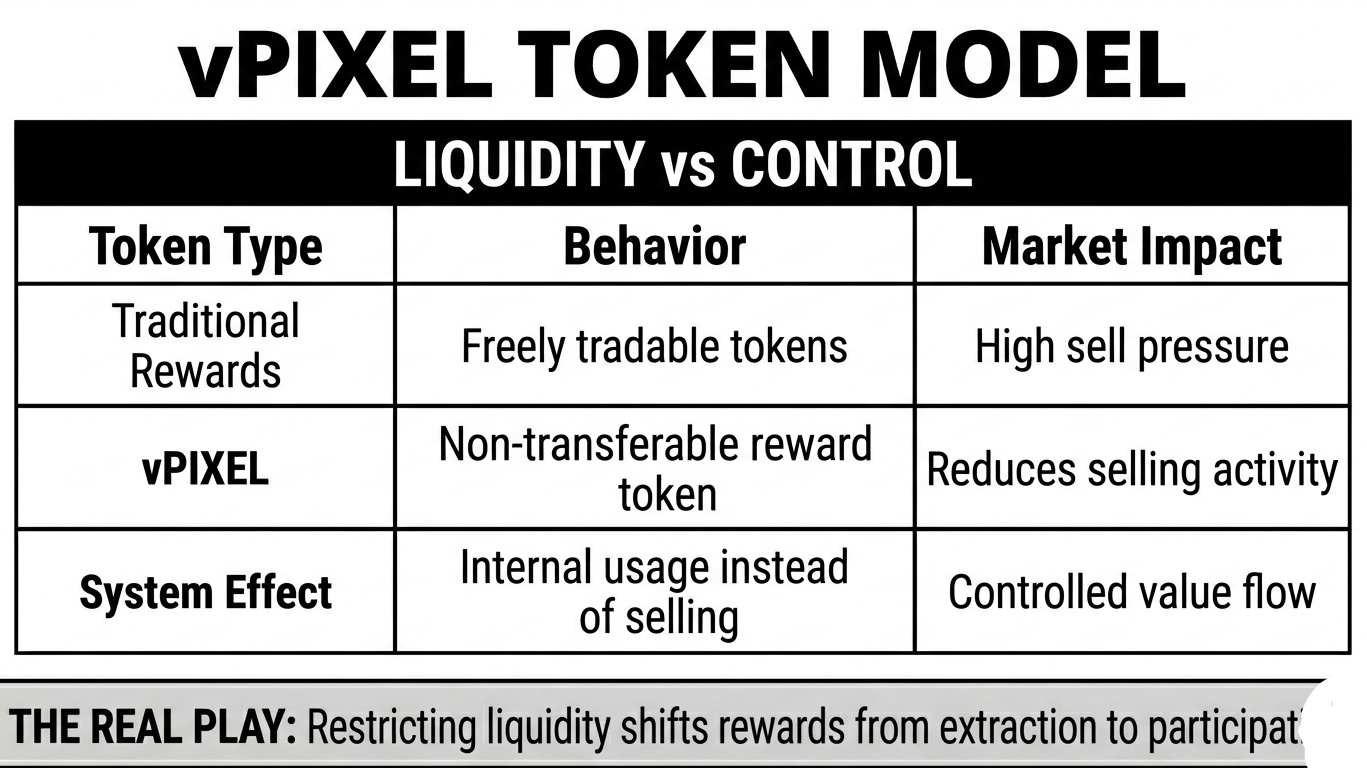
vPIXEL is a non-transferable version of $PIXEL. players can earn it, use it, and stake it — but they cannot sell it on the market.
this single restriction creates a very different economic behavior compared to traditional reward tokens.
in most play-to-earn systems, rewards are immediately liquid. players earn tokens and sell them, which creates constant downward pressure on price
over time, this turns rewards into extravtion tools rather than growth mechanisms
PIXEL tries to break that pattern using vPIXEL
instead of giving fully liquid tokens, the system distributes value in a form that stays inside the ecosystem
players can still use vPIXEL for in-game actions, staking, or progression, but they cannot directly convert it into external liquidity
this shifts the purpose of rewards
instead of encouraging instant selling, rewards now encourage participation and reinvestment
value circulates internally rather than leaving the system
this is where the main effect appears
sell pressure is reduced because players are not able to dump rewards on the market
at the same time, engagement increases because the only way to extract value from vPIXEL is through usage, not selling.
this creates a controlled loop
rewards → usage → progression → continued engagement
however, this control introduces a different kind of tension
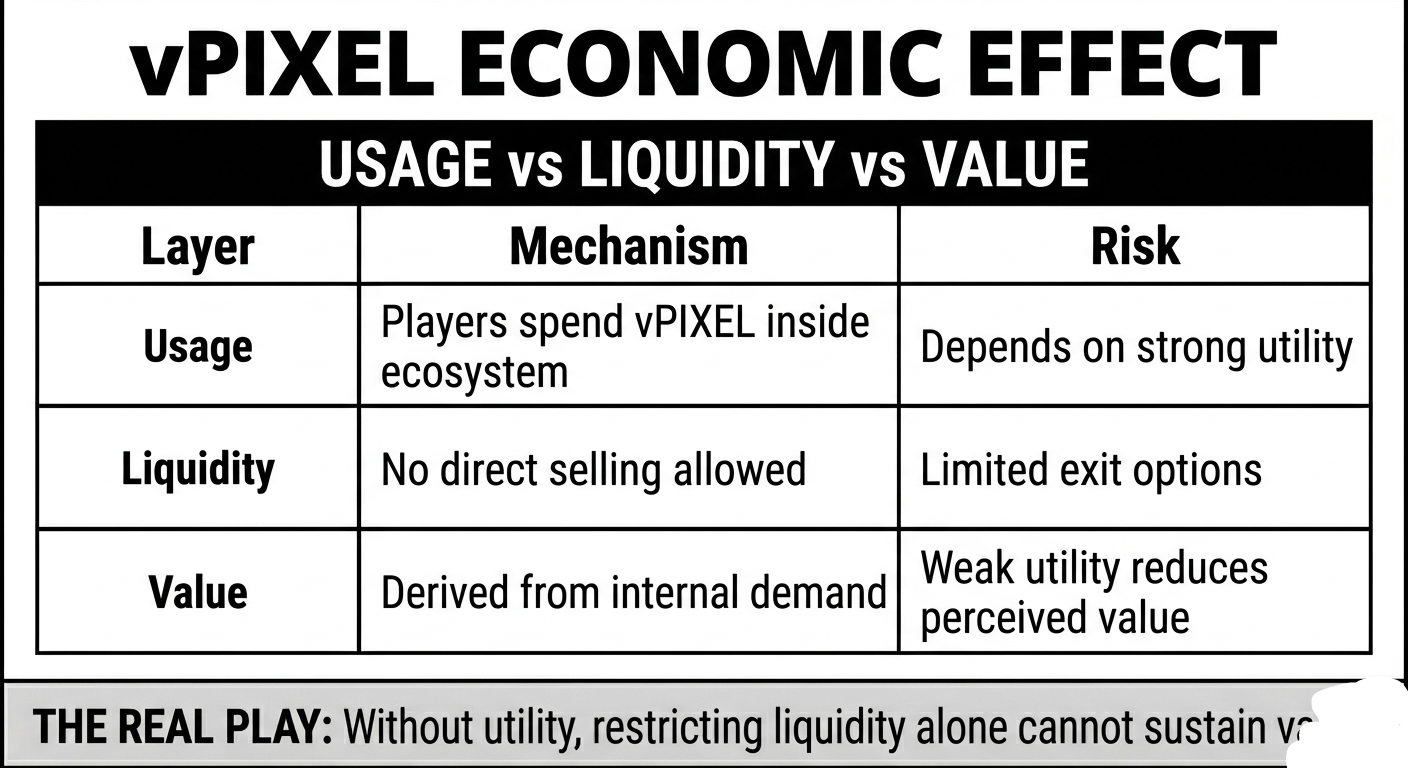
if players cannot sell their rewards, the perceived value of those rewards depends entirely on how useful they are inside the ecosystem
if utility is strong, vPIXEL feels valuable
if utility is weak, it starts to feel like locked value
this makes utility a critical factor
the system must continuously provide meaningful ways to use vPIXEL, otherwise players may lose interest
so insteed of relying on open market dynamics, PIXEL relies on internal demand .
vPIXEL is not just a token — it’s a mechanism to control behavior
it limits extraction, reduces volatility, and pushes users toward participation rather than exit
but at the same time, it places full responsibility on the ecosystem to maintain utility
because without strong internal use cases, restricting liquidity alone cannot create value.
so the real question becomes :
does controlling sell pressure actually strengthen the system… or does it simply delay it until users find another way to exit .
