
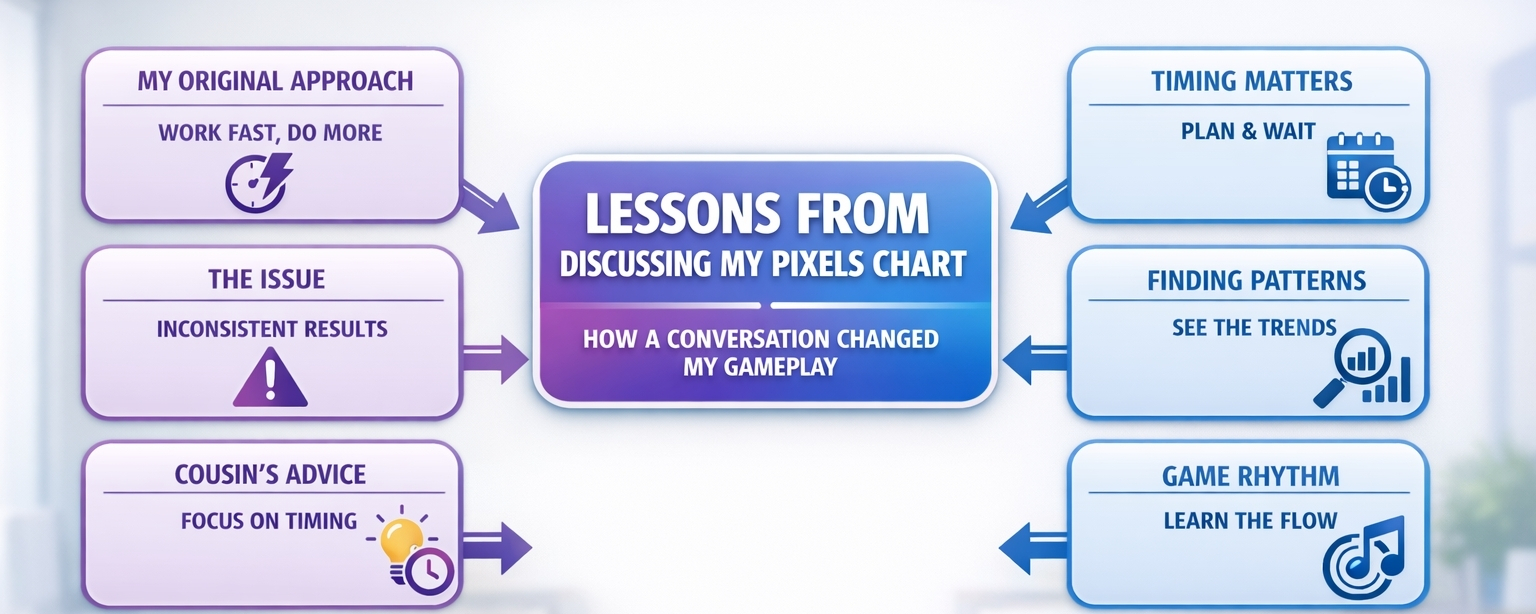
Tonight I was sitting with my cousin and we began to discuss my Pixels chart. I demonstrated to him what I was doing and attempted to describe how I had been playing Pixels. Initially, it was merely a routine conversation but as I continued to explain, I started to observe things that I had not given a keen eye to.
My initial strategy towards the game was straightforward. My thinking was that the more I do, the faster I could achieve better results. So I had concentrated on making good use of my energy and getting as many things done as I could and attempting to drive my progress along. However, looking at my overall results, they did not seem to be consistent.
When I explained this to my cousin, he indicated something very fundamental. He replied that, in case rushing was not enhancing the outcome, then perhaps it was not effort, but timing. I held on to that thought throughout the discussion.
I began to contemplate my gameplay. Whenever I was in a hurry, I would make little mistakes. I did not think about timing, did not plan the utilization of resources, and hoped progress to occur quickly. Conversely, when I was more patient in my play, it was more in control and stable.
That discussion made me realize that Pixels is not all about being active. It is concerning knowing when to do and when to wait. The game has its own rhythm and once one gets used to it, the game is far easier to understand.
Another crucial experience was that occasionally you are not aware of your own mistakes until you explain them to another person. Discussing my chart got me to notice trends that I was overlooking.
To me this is what makes learning in Pixels interesting. This game does not directly inform you of what you are doing wrong. You learn it gradually by experience and contemplation.
Eventually, that one discussion made a difference in how I think. I no longer cared about doing more but doing things on the right time. That change made the game less disorienting and more organic.