

The Pixels team has never been loud about hype. Instead, they’ve focused on building something that actually lasts. Their latest move — introducing Stacked, an AI-powered rewards infrastructure — shows they’re serious about fixing one of Web3 gaming’s biggest problems: unsustainable reward systems that burn out fast.
Most play-to-earn projects rely on big airdrops and heavy marketing spends that attract bots, create massive sell pressure, and then fade away. Pixels is trying a different approach. Stacked is essentially a “rewarded LiveOps engine” built from everything the team learned while scaling their own game. It uses AI to watch player behavior in real time and deliver the right reward to the right player at the right moment.
This isn’t guesswork. In early tests inside the Pixels ecosystem, the system helped generate over $25 million in revenue and significantly boosted player engagement — with reports of active days increasing by more than 129% in some campaigns. By targeting real activity instead of blanket rewards, it also makes life harder for bots and reduces unnecessary token dumping.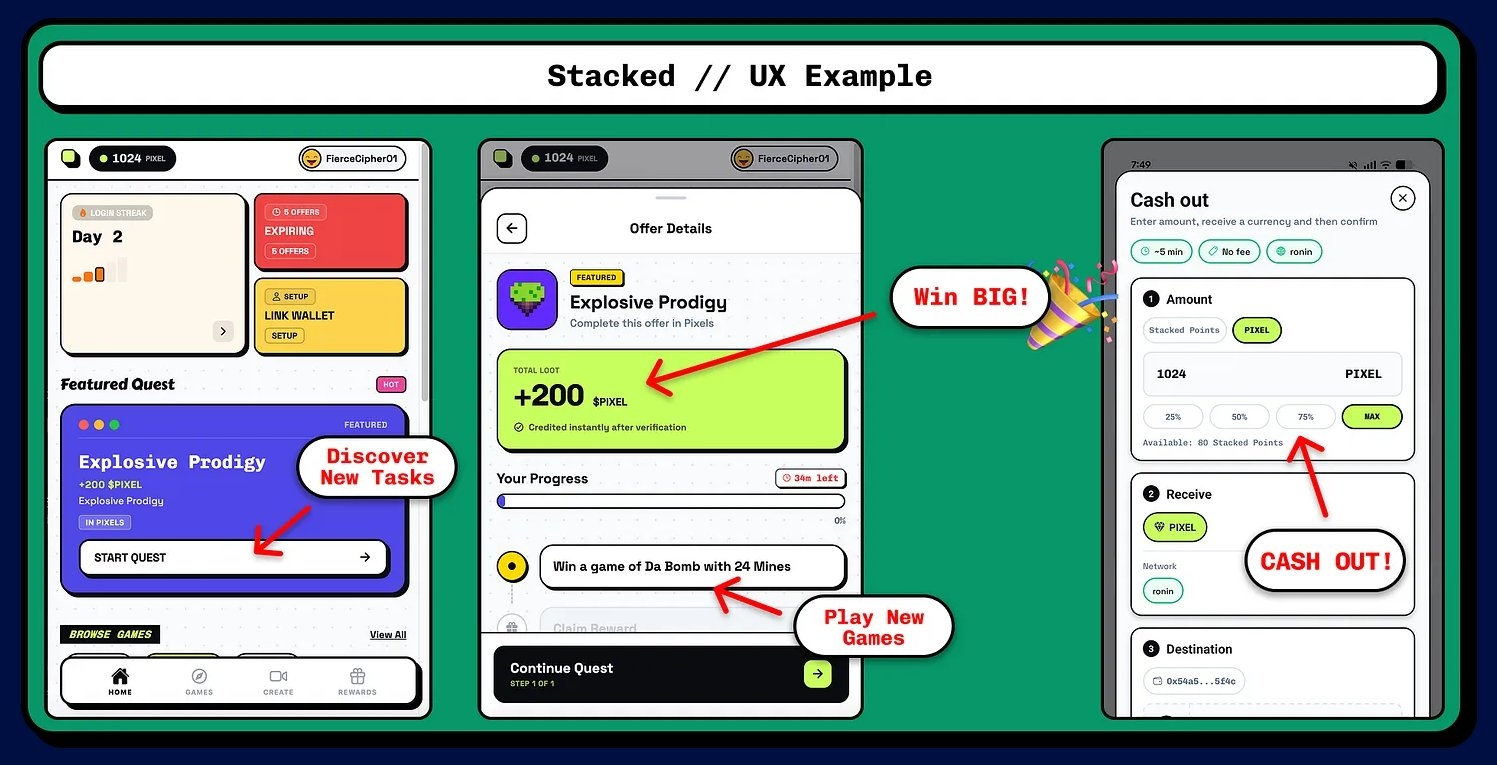
The philosophy behind Stacked is refreshing. Rather than wasting money on expensive ad platforms and influencer deals, game studios can redirect that budget straight into player incentives. Everything is auditable: studios can clearly see how their reward spend translates into retention, spending, and revenue. For players, it means getting paid for actually playing, completing tasks, and coming back — turning time spent in the game into something tangible.
On the token side, $PIXEL is evolving. It’s moving away from being just the currency of one farming game and becoming the loyalty and rewards backbone for a broader ecosystem. As Stacked opens up to external studios, $PIXEL will power rewards and utility across titles like Pixel Dungeons and Chubkins. The team is also making staking more central to reduce circulating supply, while introducing USDC rewards alongside PIXEL to help manage volatility and ease sell pressure.
As of April 2026, this feels like a mature step for Pixels. They’re shifting from short-term hype to building a real economy where rewards are data-driven, sustainable, and focused on genuine engagement.
Of course, execution will matter. Keeping players excited long-term, expanding the ecosystem smoothly, and proving that Stacked works for other studios are the real tests ahead. But if they continue prioritizing fun gameplay and smart economics over flashy promises, Pixels could quietly become one of the more durable projects in Web3 gaming.
It’s a welcome change of pace in a space that has seen too many boom-and-bust cycles.
$PIXEL #pixel