
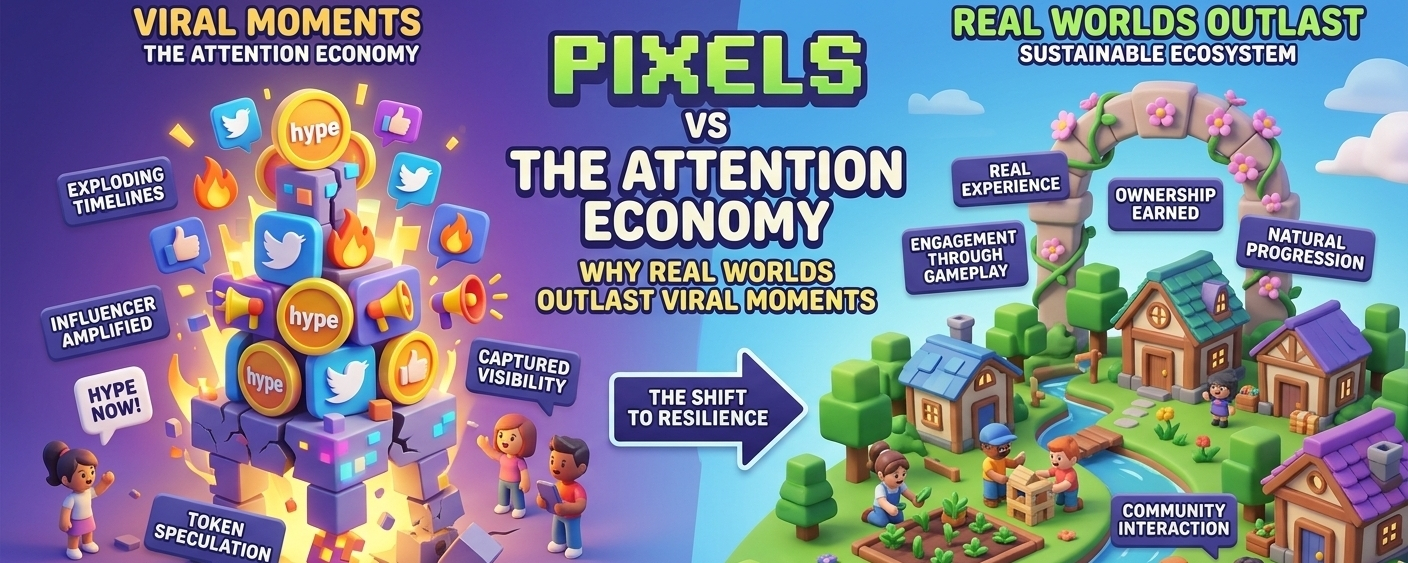
Not long ago, success in Web3 looked predictable. A project launched, timelines exploded with excitement, influencers amplified the narrative and attention itself became the currency. Many platforms rose overnight simply because they captured visibility at the right moment. For a while it felt like whoever controlled attention controlled the future. Yet markets evolve and over time a quiet truth began to surface attention can start momentum but it cannot sustain an ecosystem.This realization became clearer when comparing projects built for hype with those built for experience. While many ecosystems competed aggressively for headlines Pixels followed a different path. Instead of designing a system around token speculation, it focused on creating a world players actually wanted to return to. The difference was subtle at first almost invisible but its impact grew stronger with time.
In Pixels, engagement does not feel forced. Players enter through gameplay social interaction and discovery rather than financial pressure. Progression feels natural, ownership feels earned and community interaction becomes part of daily participation. This approach changes user behavior completely. Instead of chasing rewards players build routines. Instead of temporary users the platform gains residents.As the broader Web3 environment matured the limitations of attention driven growth became obvious. Viral projects experienced rapid rises followed by equally rapid declines once incentives slowed. Pixels however continued expanding quietly. Updates improved mechanics social layers deepened and economic systems evolved alongside player activity. Growth began to resemble an ecosystem developing organically rather than a campaign chasing visibility.What make this moment particularly interesting is how perception is shifting across the industry. Builders are starting to recognize that sustainable digital world is not created through constant marketing battle but through environment where users feel agency and belonging.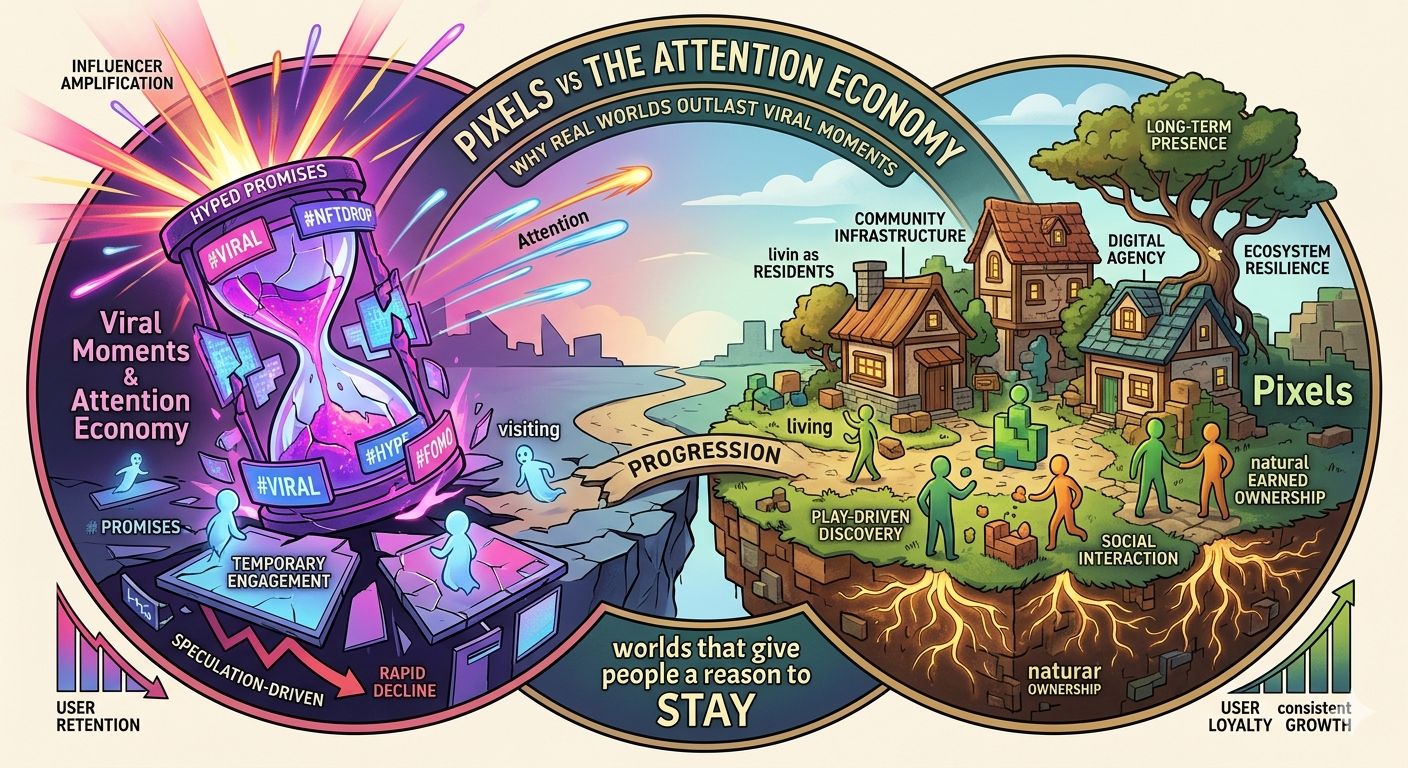
Pixels demonstrate that retention is stronger than hype and participation is more powerful than speculation.The platform’s strength lie in its balance between simplicity and depth. New players can join without intimidation while long term participant discover layered mechanic that reward commitment. This gradual onboarding transform curiosity into loyalty. Over time the community itself becomes the infrastructure supporting growth reducing dependence on external narratives.
Today the conversation around Web3 gaming is slowly moving away from short term excitement toward long term presence. The projects gaining resilience are not necessarily the loudest ones but the ones that continue functioning even when attention moves elsewhere. Pixels represents this transition from momentary visibility to enduring relevance.In the end digital worlds succeed when users stop visiting them as opportunities and start living inside them as experiences. Attention may introduce a project to the market but consistency earns trust. Pixels is proving that the future of Web3 may belong not to platforms that chase attention but to worlds that quietly give people a reason to stay.
