

i stopped looking at pixels like “just another farming game”
i’ve read a lot of takes on Pixels by now, and most of them still start from the same place: farming game, cute art, token, Ronin, next. but honestly, the more i follow this project, the less i think that simple label explains what is really happening here.
yes, Pixels still looks cozy on the surface. you farm, gather, craft, move around, build your routine, and get pulled into that soft little world. that part is still important. but in 2026, what keeps me interested is not only the farming loop. it’s the fact that Pixels keeps trying to turn that simple loop into a bigger system without losing the game feeling that made people care in the first place.
that balance is hard in web3 gaming. most projects either go too deep into token mechanics and scare people away, or they make a basic game and hope a token alone will carry the whole thing. Pixels is trying to sit somewhere in the middle, and that is why i think is still worth watching.
chapter 3 changed the mood of the game more than people expected
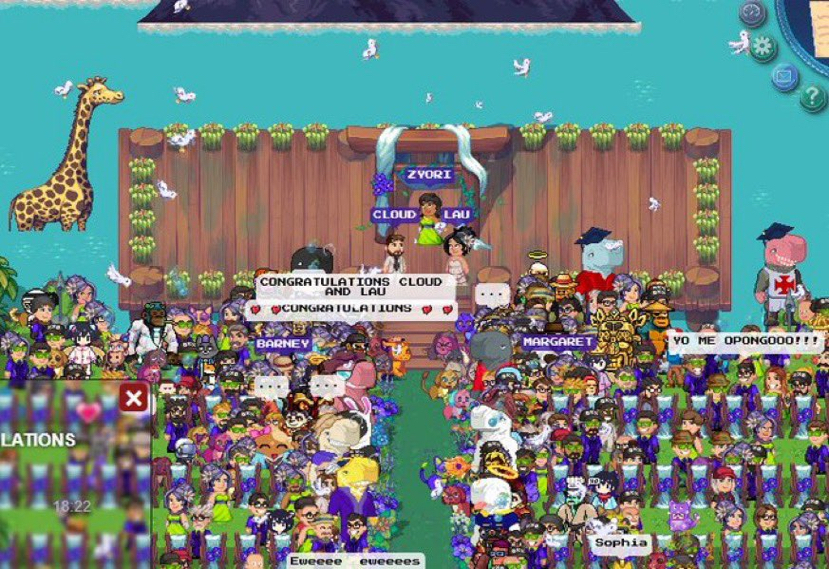
one thing i think really shifted the feel of Pixels was Chapter 3: Bountyfall. it pushed the game away from being only a quiet solo farming experience and added a bigger social competition layer through Unions. players can join Wildgroves, Seedwrights, or Reapers, then work on strengthening their Union’s Hearth with Yieldstones while also defending against sabotage from rival sides. Ronin’s own write-up says the first Union to full Hearth health takes the biggest share of the prize pool, which makes the season structure much more competitive than older Pixels loops.
and i think this matters a lot.
because one of the biggest risks with cozy web3 games is that they become too passive. people enjoy them for a while, but then the gameplay starts feeling flat. the Union system fixes part of that by giving players a reason to care about more than just their own farm. now there’s faction identity, seasonal pressure, contribution strategy, sabotage, and community competition layered on top of the usual resource grind. it is still Pixels, but it feels less isolated now.
 what still makes pixels smarter than older play-to-earn games
the thing i keep coming back to is that Pixels still feels like a game before it feels like a reward machine. i know that sounds small, but in this space it really isn’t.
a lot of old GameFi projects made the same mistake. they pushed rewards so hard that players stopped acting like players and started acting like extractors. once that happens, the economy usually gets ugly fast. Pixels took a different route by keeping off-chain Coins for regular in-game use while giving a more premium, ecosystem-level role. Pixels’ own help center says Coins are off-chain, and the official site now places $PIXEL around staking, rewards, and deeper ecosystem value rather than basic beginner interaction.
to me, that design choice still deserves credit. it reduces the feeling that every click exists only to push token farming. it lets the game breathe a bit more. and in a market where players are tired of obvious extractive loops, that softer approach helps Pixels feel more sustainable than a lot of the projects that came before it.
staking made $PIXEL feel more like ecosystem infrastructure
i also think looks more mature now because staking has become one of the clearer pillars around the token. Pixels’ staking docs describe staking as a way to support games in the Pixels ecosystem, earn rewards, and help shape the platform, while the staking dashboard shows different game options tied into the system. their FAQ also explains that Farmer Fees are based on reputation and that 100% of Farmer Fee revenue goes back to reward stakers. 
that is a pretty important detail to me.
because when i look at a gaming token, i always ask the same question: is this token only sitting there as a reward chip, or is it actually being used to connect the wider economy? staking moves a little closer to the second category. it gives the token a role beyond just trading and spending. it starts to feel like part of the ecosystem’s internal support structure.
that does not remove risk at all, but it does make the token story stronger.
stacked might be the piece that makes pixels bigger than one game
if there is one part of the story i think people should pay more attention to, it is Stacked.
Stacked has been described as a rewards app for players and a LiveOps rewards engine for games, built from what the team learned by scaling Pixels itself. the idea is not just “more rewards.” the bigger idea is smarter rewards across multiple games and experiences, based on behavior and retention rather than just mindless clicking.
that is why i think Stacked changes how i look at $PIXEL.
before, the token was mostly tied in people’s minds to one farming game. now the more interesting question is whether can become part of a wider gaming rewards layer. if more games in the Pixels ecosystem plug into that system, then stops looking like a single-title token and starts looking more like a shared asset across a growing loop of games, players, and incentives. that is a much better long-term angle than just hoping farming alone carries everything.
and honestly, i think this is the real reason Pixels still feels relevant in 2026. it is trying to grow sideways, not just upward.
ronin still gives pixels an edge where it matters
i also don’t think the Ronin part should be ignored. Ronin still presents itself as purpose-built for gaming, with frictionless onboarding, sponsored transactions, in-game marketplace tools, and a strong game-focused ecosystem. that kind of setup matters because a game can have good ideas, but if the chain experience feels heavy, players won’t stay patient for long.
Pixels benefits from being on a network where gaming is not some side experiment. and that helps the game in practical ways, not just branding ways. smoother actions, easier onboarding, better flow, less visible blockchain friction. in web3 gaming, those things matter more than people like to admit.
they are not always the sexy part of the story, but they are often the part that decides whether people keep showing up.
the community side is probably stronger than the market gives it credit for
another thing i find interesting is that Pixels has kept real player familiarity even after the first big wave of hype passed. the official site says the project has over 10 million players, while Ronin’s collector guide noted that at its peak, over 1 million players logged in every day. that does not mean every one of those players is active now, and i think it is important to be honest about that, but it does show that Pixels reached a scale that most web3 games never came close to.
for me, that history matters because it proves Pixels was never a tiny side project pretending to be bigger than it was. it actually reached scale, and now the real question is whether it can turn that scale into longer-term ecosystem strength through features like Unions, staking, and Stacked.
that is a much more serious test than just going viral once.
 my honest view on $PIXEL from here
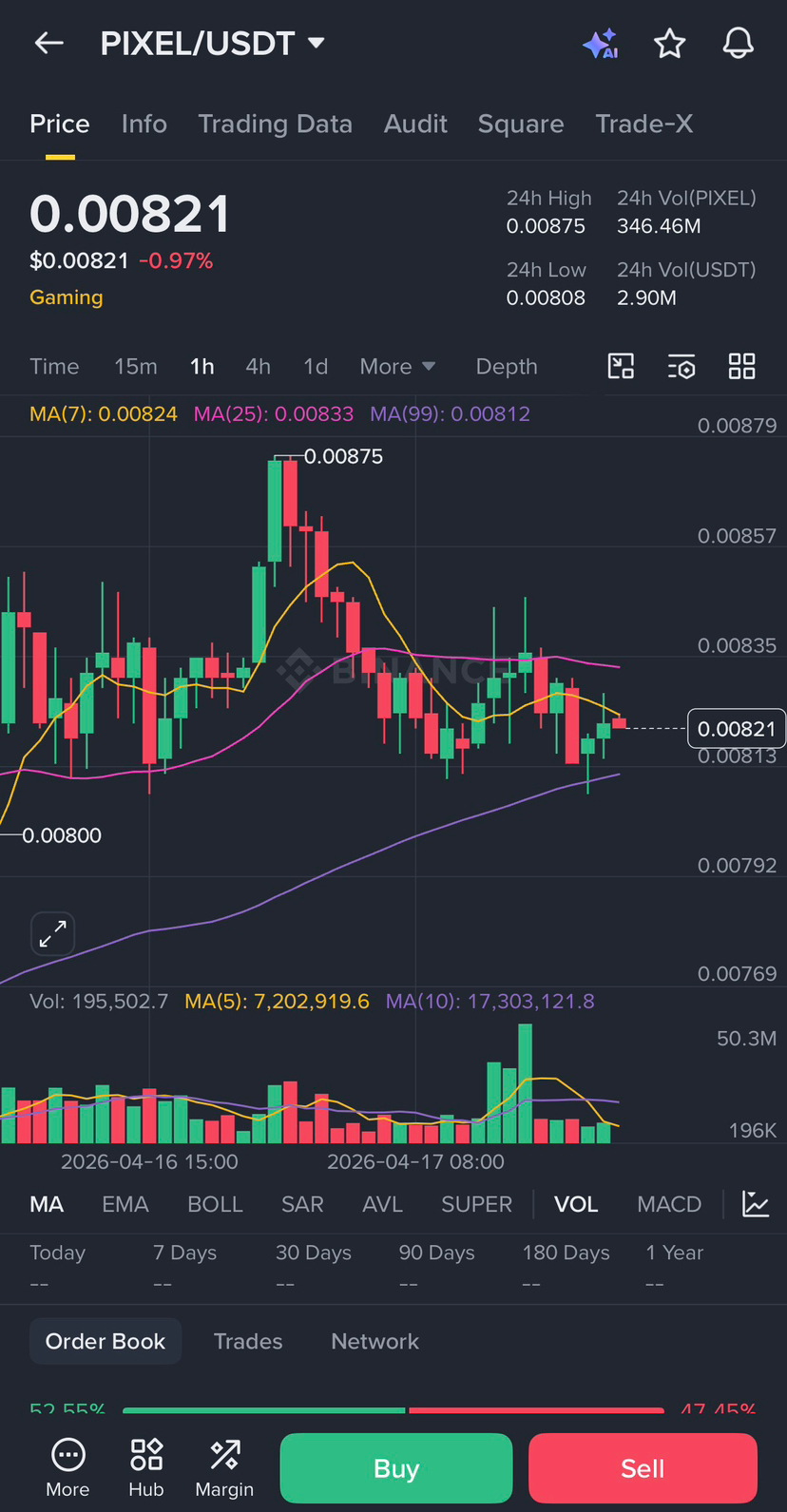
i still think is risky. i don’t say that to be negative, just realistic. gaming tokens are volatile, attention shifts fast, and even good updates do not automatically mean perfect execution. if Stacked fails to create real value or if the game leans too hard into rewards again, the same old problems can come back. that risk is always there.
but i also think Pixels deserves more respect than the average GameFi project because it has actually kept building in ways that make sense.
it did not stay stuck in the first farming loop.
it added social competition through Unions.
it pushed staking deeper into the ecosystem.
it kept the split between easier in-game currency and the premium token layer.
and now it is trying to turn what it learned from one game into a broader rewards engine.
that is not the behavior of a project that only wants one last hype cycle.
why i’m still paying attention
when i zoom out, the reason i still care about Pixels is simple: it feels like one of the few web3 gaming projects still trying to solve the hard part, which is keeping players around for reasons beyond short-term extraction.
that is the real challenge.
not launching a token.
not making a cute game.
not getting one spike in attention.
the real challenge is building a world where gameplay, rewards, ownership, and community can hold together without collapsing into the same old cycle.
i’m not saying Pixels has fully solved that.
but i do think it is trying harder than most.
and that is exactly why @Pixels till has my attention in 2026.