
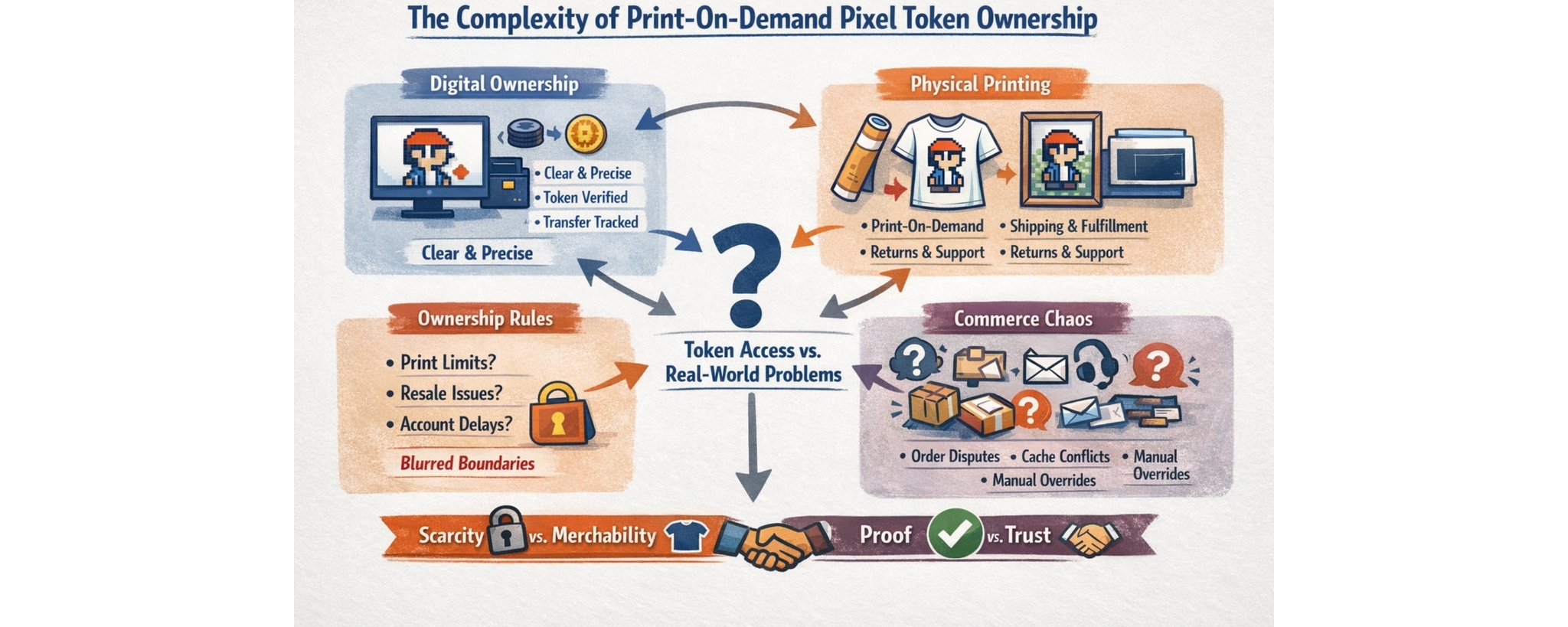
@Pixels What keeps coming back, at least for me, is that digital ownership always looks more settled than it really is. It feels precise while you stay inside the screen. Wallet connected, token visible, history intact. Fine. Then someone wants the thing to leave that environment and become a poster tube, a shirt, a framed print, and suddenly the certainty starts slipping in small places. Not because the proof disappears. Because the system around the proof gets ordinary again, which is usually where the trouble starts.
That is why print-on-demand tied to pixel token ownership feels more serious than people first assume. It sounds like merch. Usually that is where the conversation stays. A cute add-on, another community perk, another way to monetize attention around digital art. I do not think that is the hard part here.
The hard part is that a pixel token, once it gates physical printing, is no longer just sitting there as a collectible receipt. It begins deciding access. Not in some abstract governance sense either. In a very blunt way. Who gets the “print now” button. Whether a holder gets one print or ten. Whether resale shuts that right off cleanly or whether some storefront cache, email-based account, or fulfillment rule keeps the old entitlement hanging around longer than it should.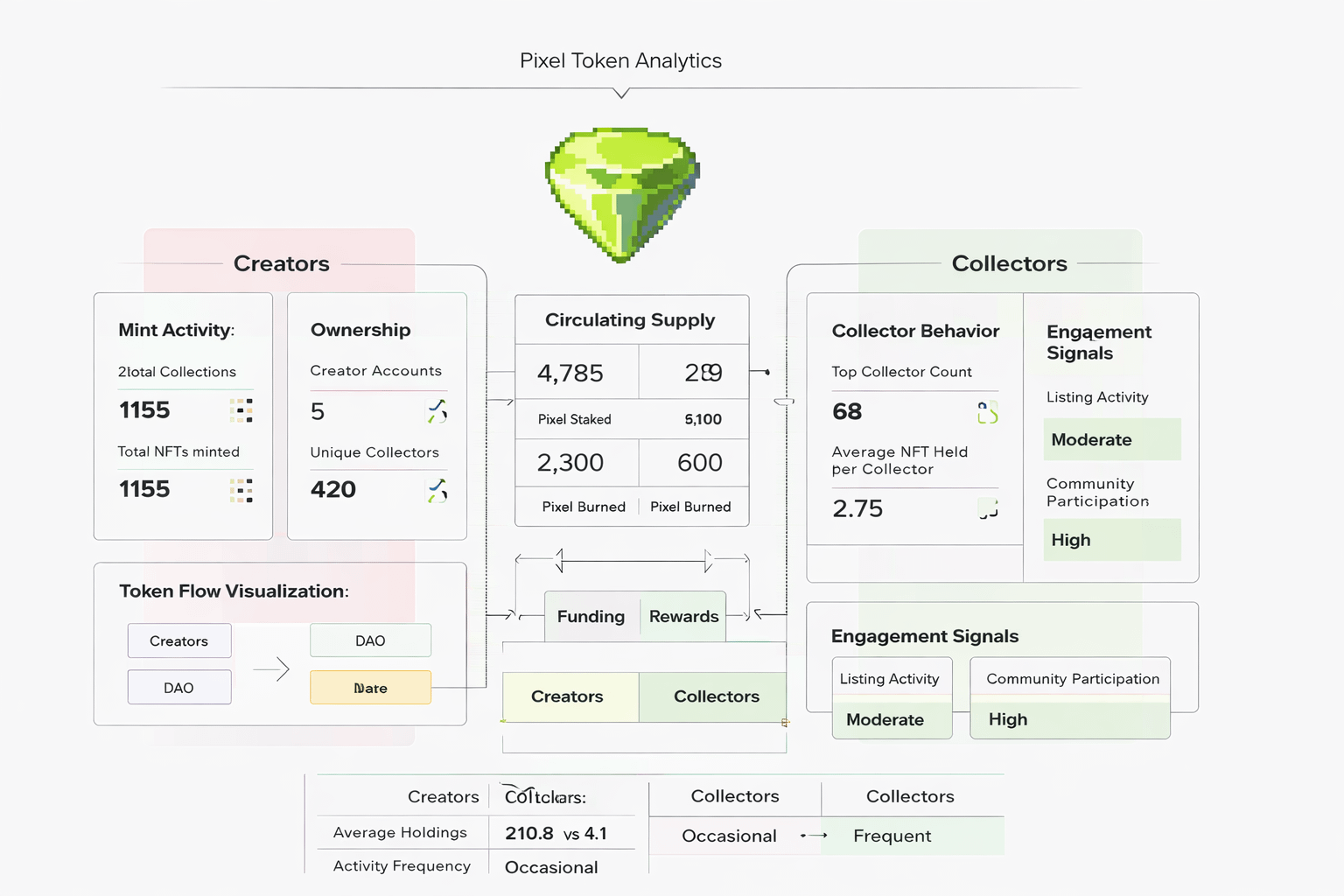
That is the part I keep watching. The token says one thing. The commerce stack says another. The customer support team, if there is one, says a third when a package gets lost or a buyer says they ordered before the transfer but after the screenshot or whatever half-broken timeline they send over. Suddenly proof-of-ownership is not just proof. It is a claim entering a queue of exceptions.
And pixel art makes this stranger, not simpler. Because the value is not only in scarcity. It is in recognizability. A pixel image travels well onto physical goods precisely because it is visually compact, almost logo-like in some cases, easy to reproduce, easy to want. So when print-on-demand gets attached to pixel tokens, the token starts behaving less like static ownership and more like a conditional license surface. Maybe personal display. Maybe collectible merch access. Maybe something closer to commercial leverage, depending on how the rights are written, or not written, which is often the real issue.
I used to think the interesting question was whether the token could verify the owner at checkout. That still matters, obviously. But it feels too narrow now. The more difficult question is whether the meaning of ownership survives contact with printers, APIs, regional shippers, returns, support overrides, batch production rules, and resale markets that do not wait for anyone’s clean logic to catch up.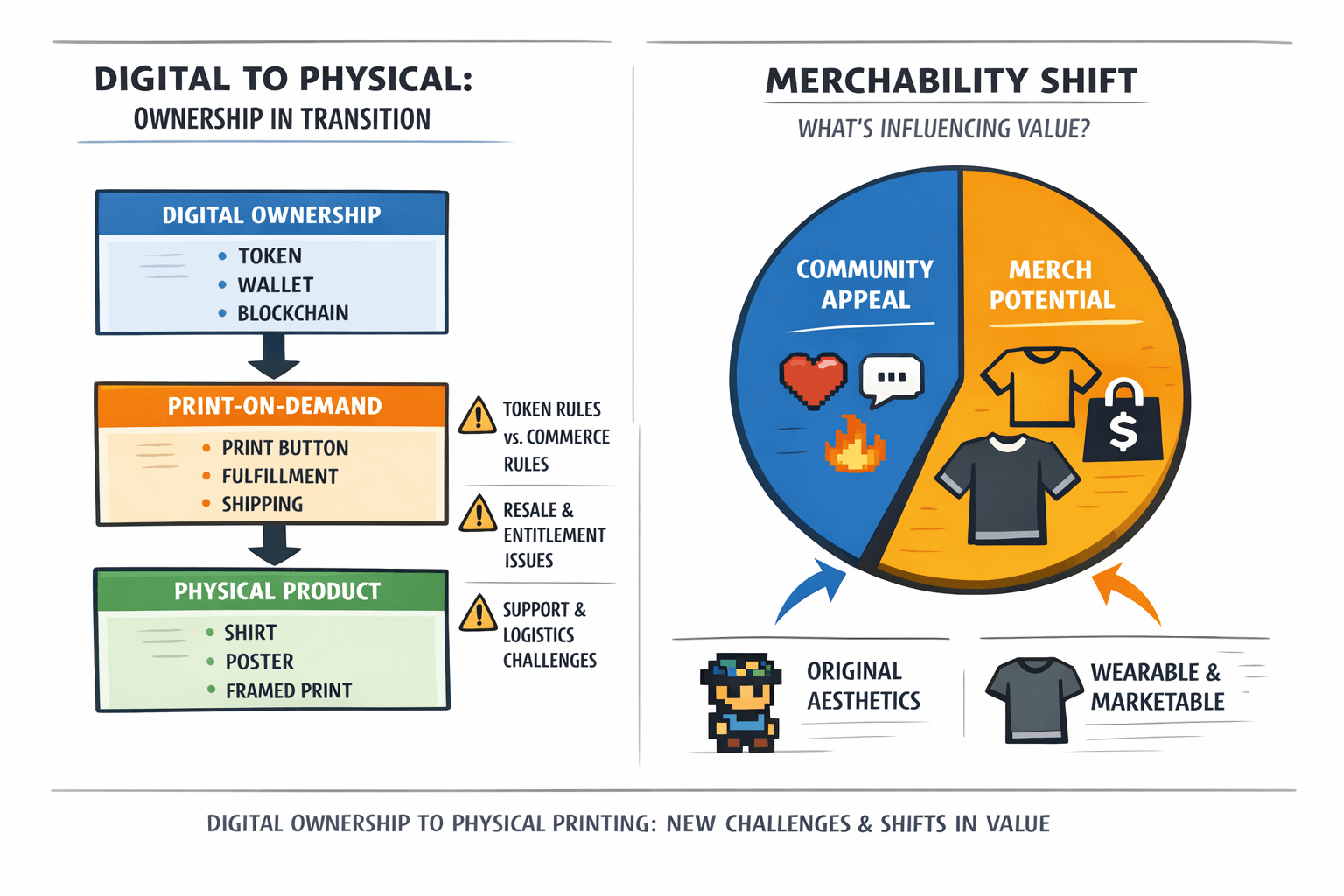
And there is a cultural shift buried in that too. Once people know a pixel token can unlock physical goods, some of the art will start getting valued for merchability, not just for whatever made it matter inside the original community. Cleaner shapes. More wearable palettes. More identity signaling. That may create a stronger market. Or maybe a flatter one. Hard to tell early.
So I do not really look at this as a neat bridge from digital proof to physical product anymore. It feels more like a stress test for whether ownership can carry enough authority outside the chain to organize messy human systems without quietly falling back on trust, manual decisions, and soft exceptions. Which it still might. That part is not resolved.#PIXEL #pixel. $PIXEL