
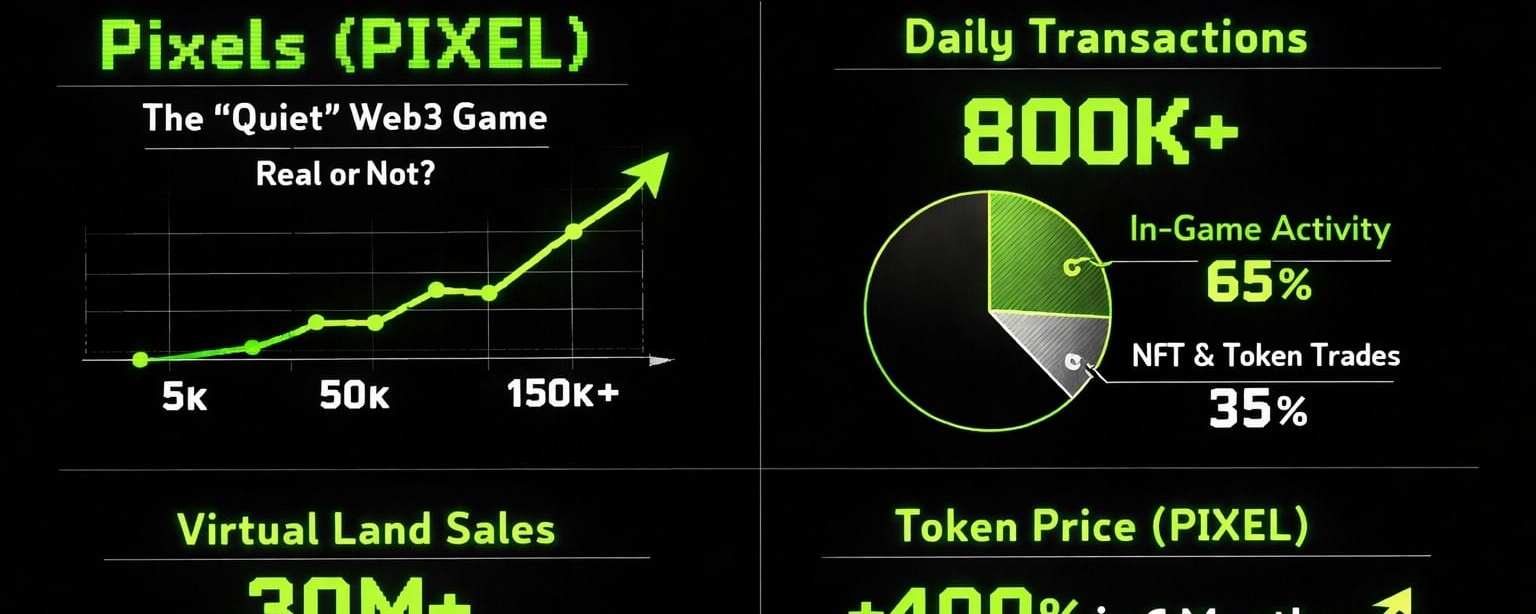
I’m watching Pixels (PIXEL) the way you watch something that’s still forming—not rushing to label it, just trying to see what it becomes once the noise settles.

At first glance, it already had the usual footprint you see with early gaming tokens: fast listing attention, a circulating supply that hits the market early, and a valuation that moved into that mid-cap zone where price starts reacting more to sentiment than fundamentals. Trading activity has been active enough to keep it visible, but not stable enough to suggest long-term conviction is fully in place yet. It still feels like a token in discovery mode rather than one anchored by consistent demand.
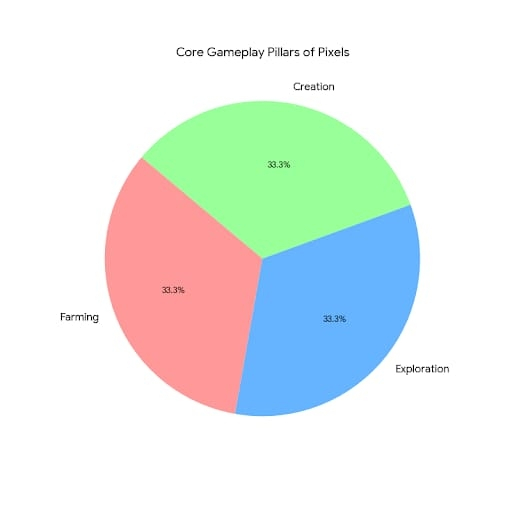
But the token itself isn’t really the interesting part. What I’m actually trying to understand is what Pixels is attempting under the surface. It’s trying to turn a simple game loop—farming, crafting, exploring—into something closer to a functioning digital economy. Not just a game with rewards, but a system where actions carry weight beyond the session you’re playing in.
That idea sounds familiar because gaming has always had internal economies. The difference here is ownership and persistence. What you earn or produce isn’t just locked inside the game world—it can be moved, traded, and priced outside of it. In theory, that turns everyday gameplay into economic activity.
But this is where reality usually complicates the story.
In the early phase, systems like this don’t grow because they’ve proven their economy works—they grow because incentives are strong enough to pull people in. That creates a kind of mixed behavior. Some players are there because they enjoy the loop. Others are there because they’re optimizing rewards. And in most cases, it’s hard to tell which group is actually driving the numbers.
On-chain visibility helps, but only up to a point. You can see transactions, volume, and wallet activity—but you can’t always tell intention. A healthy economy isn’t just about activity; it’s about whether that activity would continue if rewards were reduced or removed.
That’s the part I’m most cautious about with Pixels.
The system is trying to create something that looks like a self-sustaining loop: players generate value, value circulates, and the ecosystem feeds back into itself. But early loops like this often rely heavily on external energy—tokens, incentives, speculation—to stay alive. If that energy slows down too early, the system hasn’t always developed enough internal gravity to hold people in.
There’s also the question of balance. If rewards are too strong, you attract short-term extraction behavior. If they’re too weak, you don’t get enough participation to sustain liquidity in the economy. That balance is rarely stable in the early stages—it shifts constantly as the system tries to find equilibrium.
What I keep looking for is not hype or expansion, but patterns that feel repetitive in a healthy way. Are players returning because the world itself is engaging? Are they reinvesting into progression, or just cashing out as quickly as possible? Do in-game actions start to feel meaningful even when rewards aren’t the main driver?
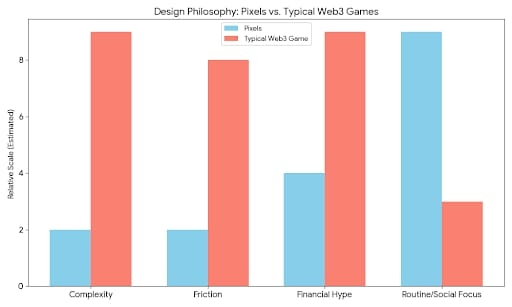
Those signals matter more than any short-term price move.
Right now, PIXEL still behaves like a young token—reactive, narrative-driven, and sensitive to attention cycles. That’s not unusual. Most projects in this category go through that phase. The real question is whether it ever shifts from “attention-driven participation” to “habit-driven participation.” That’s a very different stage of maturity, and most projects never fully get there.
So I’m not really trying to predict where the chart goes next. That part feels secondary. What I’m paying attention to is slower: whether the economy starts to show signs of real persistence, whether activity holds without constant stimulation, and whether the system begins to feel less like a reward loop and more like a place people actually return to.
Because in this space, launch excitement is easy. What’s harder—and far more important—is what’s still happening when nobody is trying to push it forward anymore.