


There is a story behind @Pixels that most people have completely missed, and i think it is one of the most important stories in web3 gaming right now.
So, let us talk about #pixel 🎮⛳️🎮
One thing I know is that most projects that go through what Pixels went through would have disappeared quietly by now, the token will crash, the players will leave, the team will also move on to the next idea, this is the pattern, that is what almost always happens.
I have seen this with other gaming projects and I am super impressed to say Pixels did not do that.
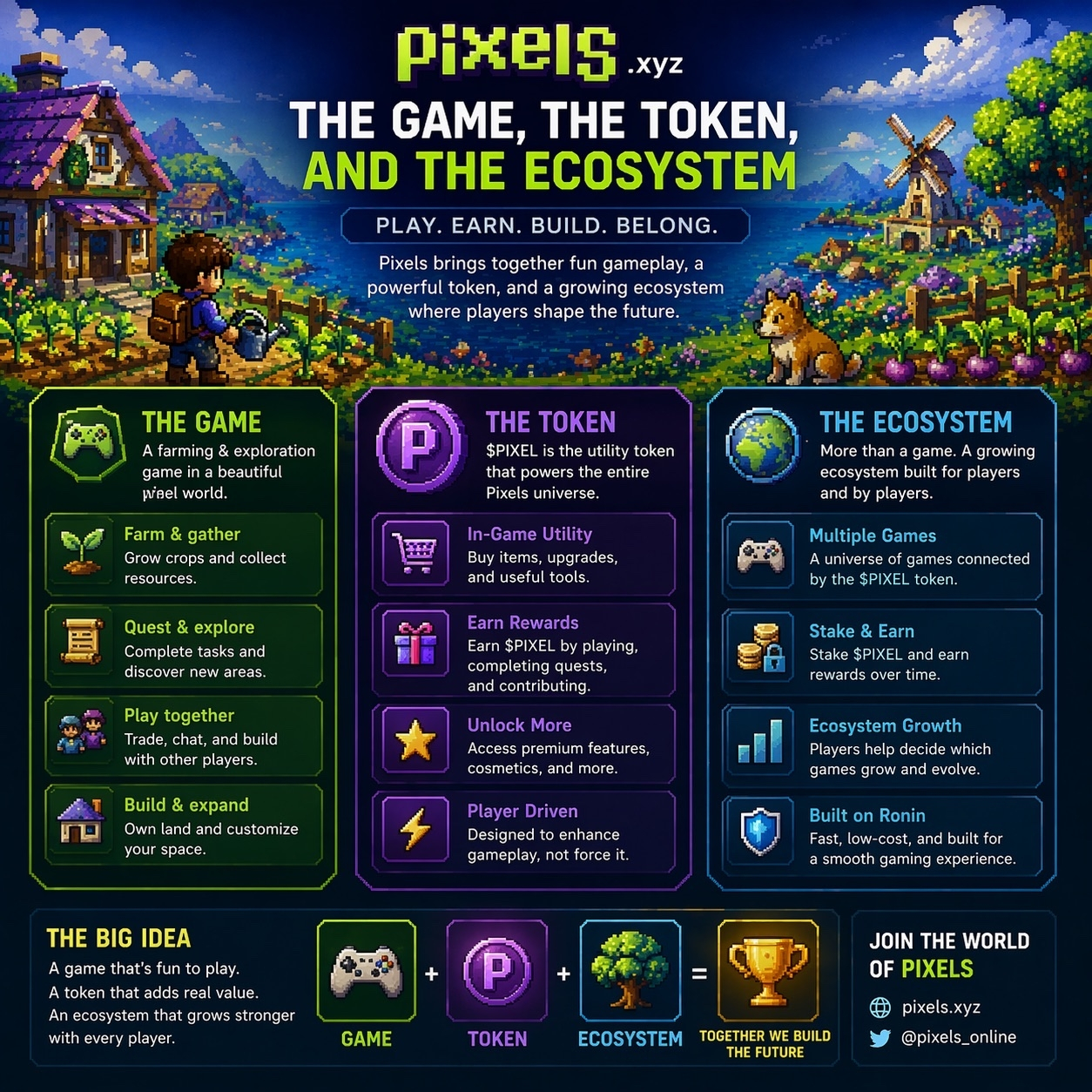
When the Pixels game started growing and attracting real players in 2024, the same cracks that destroy every other play-to-earn project started showing up, bots farming rewards, economies draining faster than they could recover, most players came in for the money and vanishing the moment the money slowed down, the Pixels team watched all of that happen inside their own game, with real consequences, in real time and to be very honest, this is not a comfortable place to be.
Most teams in that position will panic, they will change tokenomics overnight, blame the market, make announcements and hope nobody notices the fundamentals are broken, the $PIXEL team did something harder, they stayed, they studied the problem, they asked the questions nobody wanted to ask, they kept their community informed, they did not disappear.
The thing I know most gaming projects ignore is what actually makes a reward system work, who should get rewarded, when should the reward come, how do you stop bad actors without punishing the players who are genuinely there for the game, how do you keep the economics alive without killing the fun, these are not easy questions, and there are no shortcuts to answering them and I am glad to say @Pixels stayed long enough to find real answers.
Now, let us look back a bit, in 2024 @Pixels had over one million daily active users and twenty five million dollars in revenue, those numbers did not fall from the sky, they came from something the team was quietly building underneath the game the whole time, something most people never saw or talked about.
That something is Stacked 🏅🎮🏅
Stacked is the rewards engine Pixels built internally to fix their own problems, and now they are opening it up to other game studios, it lets studios run real money reward campaigns, find the right players, reward them at the right moment, and actually measure whether any of it is working, not estimating, not hoping, measuring.
On top of that there is an AI game economist, studios can ask it why players are dropping off at day three, which mechanics are keeping loyal players around, where the reward budget is quietly leaking away, and then act on those answers immediately inside the same system, no waiting, no external tools, no guesswork.
Think about what that means for a studio that has been spending money on advertising and genuinely not knowing what is working, Stacked takes that budget and sends it directly to the players who show up and engage, the value that used to go to ad platforms now goes to the community, that is a completely different way of thinking about growth and i find it genuinely exciting.
Stacked has already processed over two hundred million rewards across the Pixels ecosystem, it is not a concept sitting in a whitepaper, it is not a promise on a roadmap, it is already running, already tested against bots and farmers and bad actors, and it held up.
Most teams can build a quest board, very few can build a reward system that survives real people trying to break it, Pixels already went through that and came out with something that works.
And $PIXEL sits inside all of this as a cross ecosystem rewards currency, every new studio that plugs into Stacked adds more demand for the token, it is no longer just the currency of one farming game, it is becoming the fuel for a growing network and that changes the value story in a way that i think the market has not fully priced in yet.
@Pixels did not just survive play-to-earn, they studied it, they fixed it, and they built infrastructure from everything they learned, now they are offering that to the rest of the industry.
That is not a small thing, that is what separates a project that lasts from one that does not.