
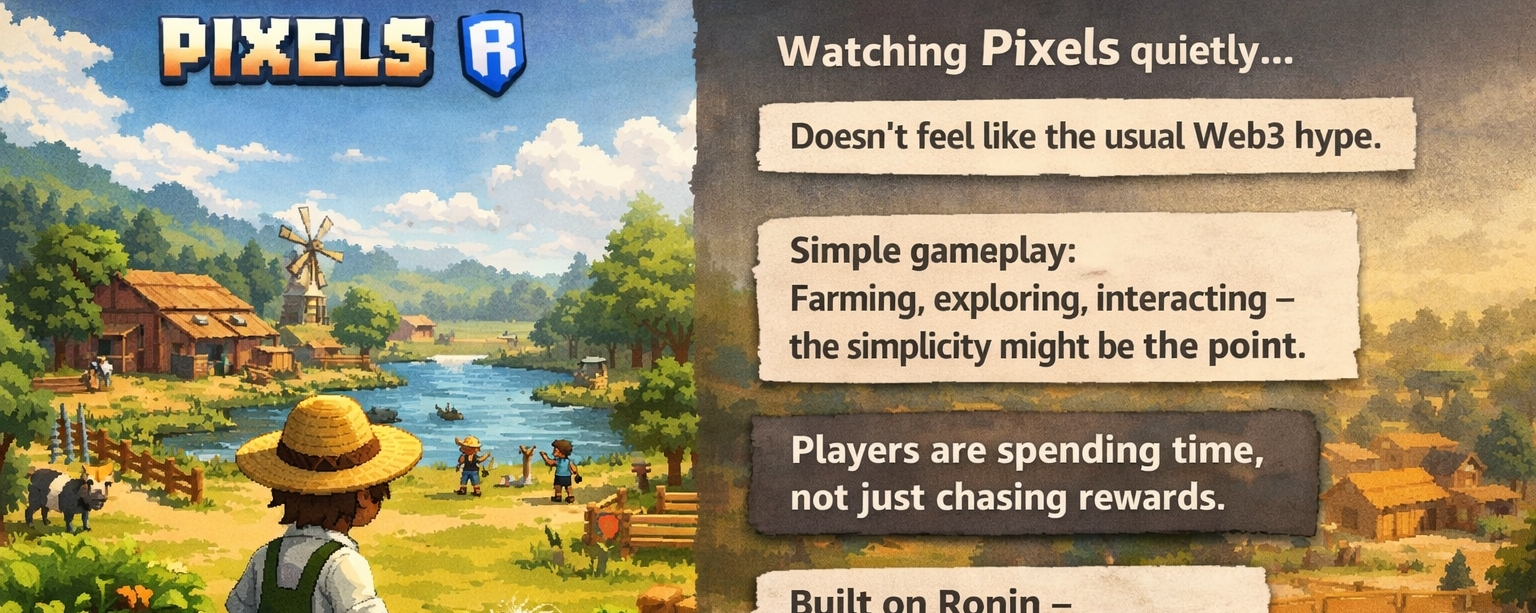
I’ve been spending some time looking at Pixels, and my reaction wasn’t the usual excitement I see around new Web3 games. It felt quieter than that. More like noticing something and trying to understand why it’s getting attention. The game itself is simple — farming, walking around, collecting resources, interacting with other players. Nothing overly complex. But sometimes that’s exactly what makes something interesting. I’ve seen a lot of projects fail because they tried to do too much too quickly. Pixels seems to go in the opposite direction, keeping things slow and easy to step into.
What stood out to me first was how social the world feels. Players aren’t just clicking buttons in isolation. They’re moving around the same map, farming beside each other, trading, and just existing in the same space. That changes the tone. I’ve noticed that when a game feels populated, people naturally spend more time in it. Even if they’re not doing anything special, they stay longer. And when users stay longer, small economies begin to form on their own. It stops feeling like a reward machine and starts feeling like a place.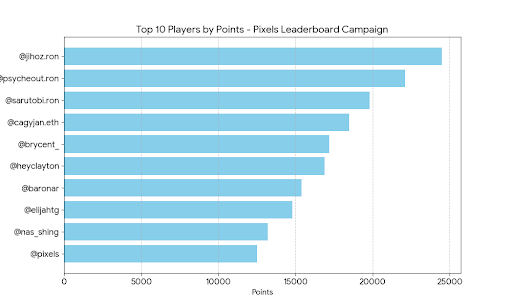
The decision to build on the Ronin Network also makes a difference. Ronin already has users who understand Web3 gaming. That removes a lot of friction. No complicated onboarding, no learning curve around wallets, no confusion about assets. I’ve seen this kind of environment help projects grow more naturally. When users don’t have to think too much about the technical side, they focus more on just playing.
At the same time, I can’t ignore how familiar this all feels. Farming economies have existed in Web3 before. Resource gathering, land value, crafting loops — none of this is completely new. And I’ve seen this pattern play out many times. Early activity looks strong because everything is new. Players explore, experiment, and interact. But later, the gameplay becomes routine. That’s usually the moment where things either stabilize or start fading. If players keep showing up out of habit, the project holds. If they only came for rewards, attention slowly disappears.
Another thing I keep thinking about is simplicity. Pixels is intentionally simple, and that can be powerful. Players create their own paths. Some focus on farming, others trade, some just explore. That kind of freedom can build organic behavior. But simplicity can also become repetitive if the world doesn’t evolve. Web3 users don’t usually stick around for static loops. They move fast, and when nothing changes, they rotate.
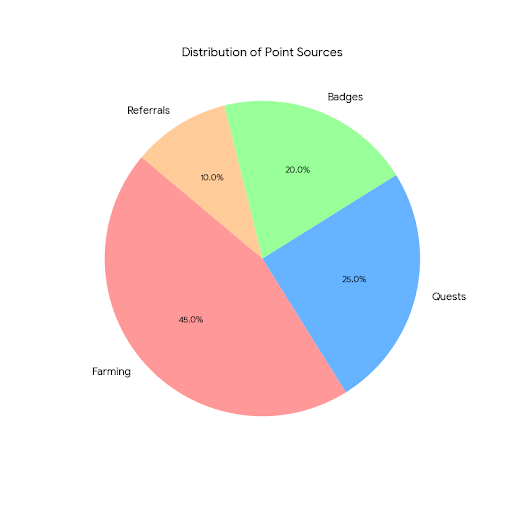
I also find myself watching how the economy develops. Early stages always look healthy because new players are joining. Resources are valuable, trading feels active, and everything has momentum. But I’ve seen economies shrink when growth slows. It doesn’t crash — it just becomes quieter. That’s usually when you find out whether there’s real demand or just early curiosity.
What makes Pixels slightly different is the surrounding ecosystem. Ronin tends to keep users inside its environment. Someone leaving one game often tries another. That shared user base can quietly support projects longer than expected. It doesn’t create hype, but it helps maintain activity. I’ve seen that kind of ecosystem gravity matter more than people realize.
Right now, Pixels feels like something that’s still forming its identity. It’s not trying to be revolutionary. It’s not overly complicated. It’s just building a small world and letting players fill it. I’ve seen this approach work before, and I’ve seen it fade too. It usually depends on whether players treat it like a place to return to, or just something to check once.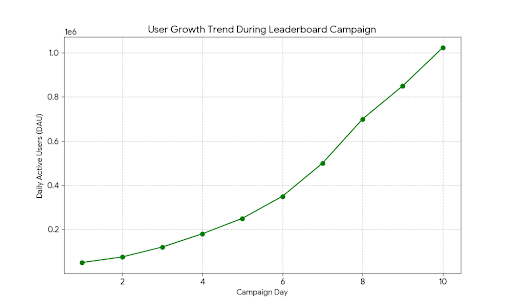
For now, I’m just watching. I want to see what happens when the initial curiosity settles. If people keep logging in without needing strong incentives, that says a lot. If activity slows when rewards normalize, that also says a lot. It’s still early, and the real picture usually appears later. So I’m not leaning one way or the other — just observing how it grows, and whether it turns into a habit or remains a short-lived moment.