
By: Senior Analyst, Digital Asset Markets
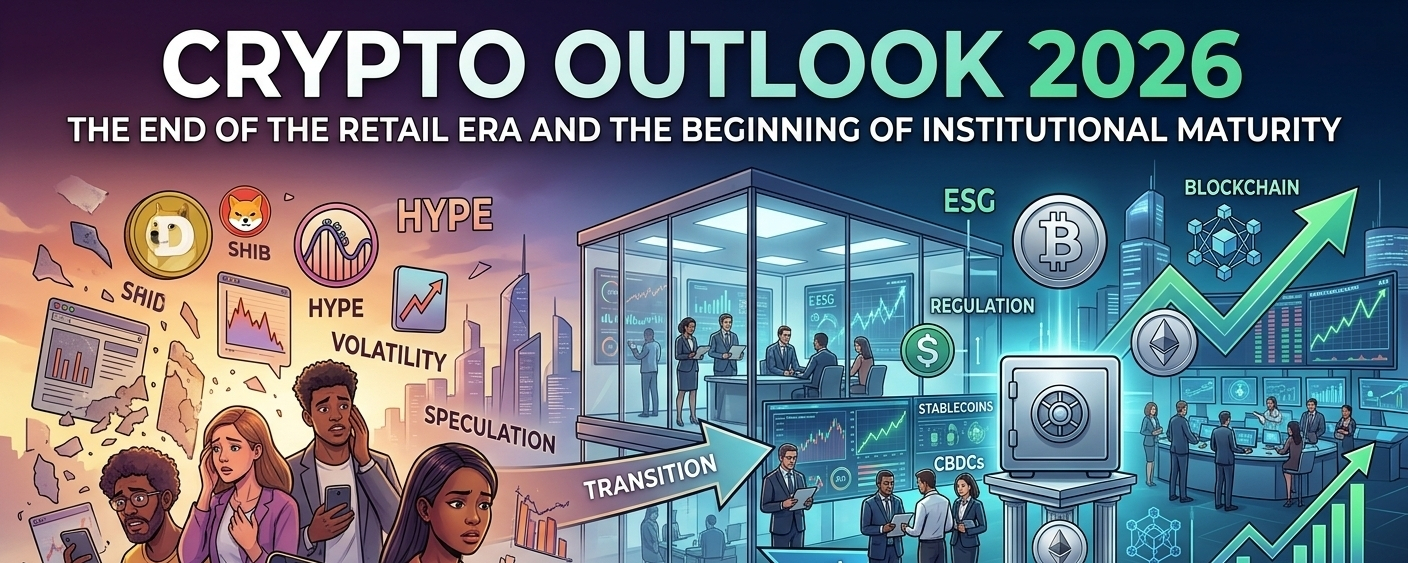
At the dawn of 2026, the cryptocurrency market has undergone a radical transformation. We are saying goodbye to the era of sharp volatility driven by retail traders and entering a completely new phase dominated by institutional investors and clear regulatory frameworks. Following 2025, a year marked by political promises and the post-election surge, the market is now entering a stage of "institutional maturity" that will redefine the rules of the game.
The Regulatory Landscape – The CLARITY and GENIUS Acts Light the Way
The most important news in 2026 is the end of the regulatory ambiguity that plagued the sector for years. The market is awaiting the passage of the CLARITY Act, which has broad bipartisan support in the House of Representatives, to establish a clear framework for digital assets and delineate the responsibilities of the SEC and the CFTC.
This legislation, alongside the GENIUS Act signed by former President Trump in July 2025 to regulate stablecoins, paves the way for major financial institutions such as JPMorgan, PayPal, and Visa to enter the market officially. Projections suggest the stablecoin market could exceed one trillion dollars during the year, triple its current size.
Institutions Lead – The End of the Four-Year Cycle
The "four-year cycle" linked to Bitcoin halvings has long governed cryptocurrencies, but Grayscale, the largest digital asset manager, confirms that this logic has ended. The year 2026 represents the "dawn of the institutional era," where performance will be tied to Federal Reserve monetary policy and capital flows into exchange-traded funds (ETFs).
Data reveals a radical shift. According to Bitwise, flows into US Bitcoin ETFs have exceeded 12 billion dollars. This means Wall Street has entered the market and will not leave easily. This will lead to a notable decrease in Bitcoin's volatility, which is expected to be lower than that of Nvidia stock.
Artificial Intelligence – The New "Agentic" Economy
Perhaps the most innovative development of the year is the integration of artificial intelligence with blockchain. It is no longer just about using bots for trading; we are moving toward an "Agentic Economy."
Andreessen Horowitz introduces the concept of "Know Your Agent" (KYA), where AI agents will independently interact with smart contracts and pay for services via protocols such as x402. This could account for up to 30 percent of daily transactions on some chains like "Base" by the end of the year.
This trend will create massive demand for scalable infrastructure, likely ensuring that Ethereum and Solana continue to outperform newer chains in attracting developers.
Part Four: Emerging Markets – Tokenization and Prediction
The year 2026 witnesses the birth of three promising sectors.
The first sector is Real World Asset (RWA) trading. Keyrock predicts that real-world assets (such as treasury bills and stocks) will see fourfold growth as traditional financial markets move to public blockchains.
The second sector is prediction markets. Platforms like Polymarket have surged dramatically. Projections suggest that weekly trading volume could jump to 25 billion dollars, making these platforms serious alternatives to traditional polling.
The third sector is privacy. With increased surveillance, privacy-focused coins will return strongly, and their total market capitalization is expected to exceed one trillion dollars.