#pixel As a social media influencer who has been closely analyzing emerging Web3 ecosystems long before they reach mainstream attention, I have followed Pixels since its early development phase. My interest was not based on hype, but on verification—studying its infrastructure, economic design, and long-term viability. After extensive observation and research, it became clear that Pixels is not just another short-term blockchain trend, but a strategically built project with the potential to redefine digital ownership in gaming.
$PIXEL Pixels officially gained major traction following its integration with the Ronin Network, a move that significantly enhanced its scalability, speed, and accessibility. This transition placed it within a proven ecosystem that had already demonstrated global success through projects like Axie Infinity. From a technical standpoint, this decision alone positioned Pixels far ahead of many competitors still struggling with high fees and poor user experience.
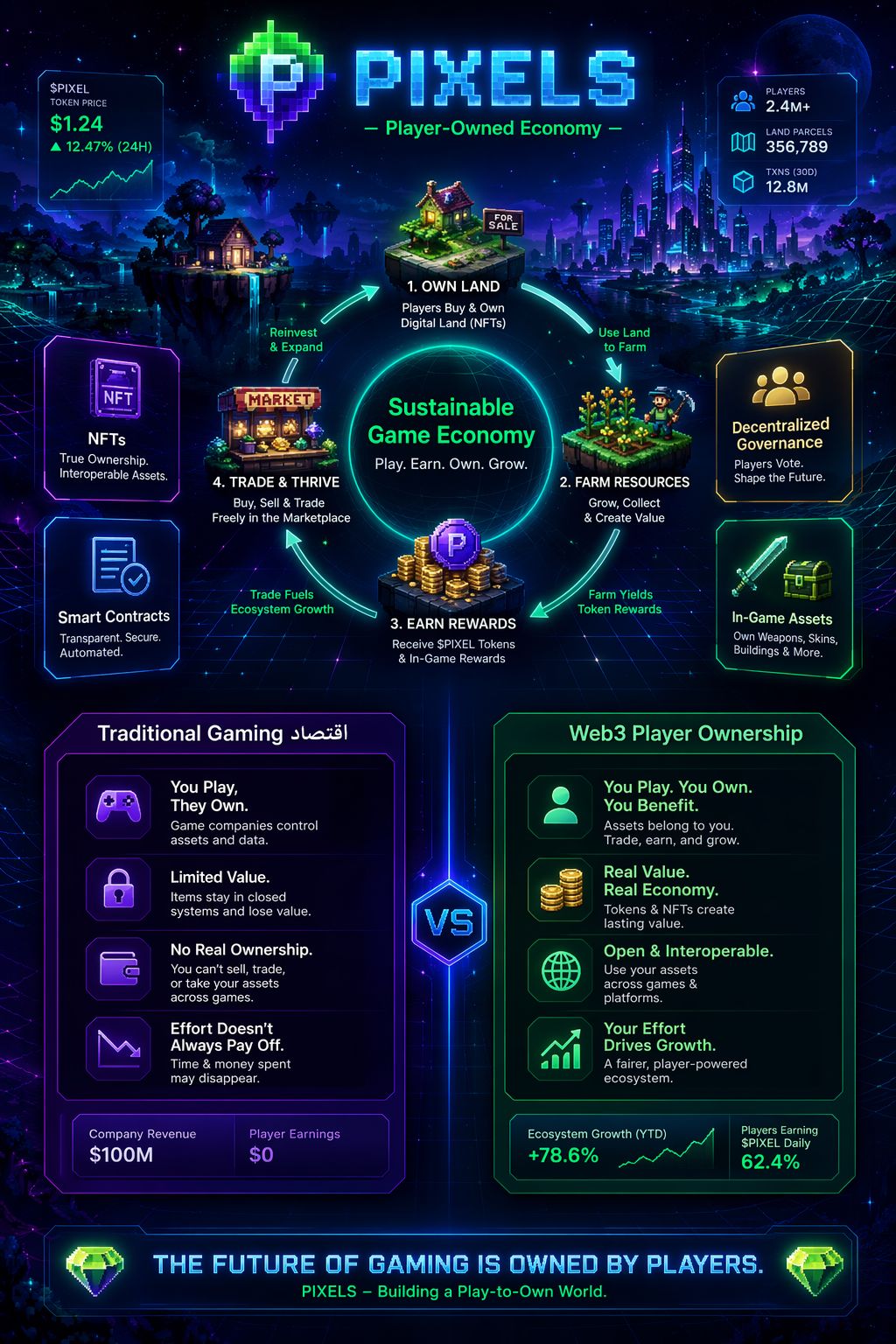
@Pixels From the very beginning, Pixels has demonstrated a clear advantage: it prioritizes real gameplay over empty financial promises. The project revolves around farming, exploration, resource management, and social interaction—yet beneath this simple structure lies a powerful economic engine. Players are not just participants; they are stakeholders who can own land, trade assets, and benefit from a player-driven marketplace. This balance between entertainment and economic opportunity is what gives Pixels long-term credibility.
Having personally evaluated its core mechanics, token utility, and user growth patterns, I can confidently state that Pixels offers multiple advantages. It provides a low barrier to entry, making it accessible to both casual gamers and serious Web3 participants. Its economy is structured to reward consistent engagement rather than speculative behavior. Most importantly, it builds a strong community layer, which is essential for long-term sustainability in any digital ecosystem.
Looking ahead, the trajectory of Pixels appears increasingly promising. By 2027, the project is likely to mature into a more advanced digital economy, with deeper land utility, expanded gameplay mechanics, and stronger community governance. By 2028, we can expect broader mainstream adoption, potentially driven by mobile accessibility and global user onboarding. Moving into 2029 and 2030, Pixels has the potential to evolve beyond a single game into a scalable ecosystem—one that integrates multiple experiences, interoperable assets, and a fully developed player-owned economy.
However, a high-level perspective requires honesty as well as optimism. Like all Web3 projects, Pixels operates within a volatile environment. Token fluctuations, regulatory developments, and user retention will all influence its long-term success. Yet, based on its current foundation, strategic direction, and consistent growth, it stands out as one of the few projects with the structure needed to navigate these challenges effectively.
From my professional standpoint, Pixels represents more than just an opportunity—it represents a shift in how digital value is created and distributed. It is a project where time, effort, and strategy are not wasted, but accumulated. It is a system where players are not controlled by the platform, but empowered within it.
In a space often filled with uncertainty, Pixels offers something rare: clarity of vision, strength of execution, and the potential to lead the next generation of Web3 gaming