

I didn't go looking for information about Pixels pets expecting to find anything technically interesting. I assumed it would be the standard NFT playbook. Generate some traits, randomize the combinations, mint on chain, call them unique. That's how most games do it and most games don't have much more to say about it beyond the marketing language.
What I found was more considered than I expected, though I want to be careful about how much credit I extend before I've seen the system run at scale.
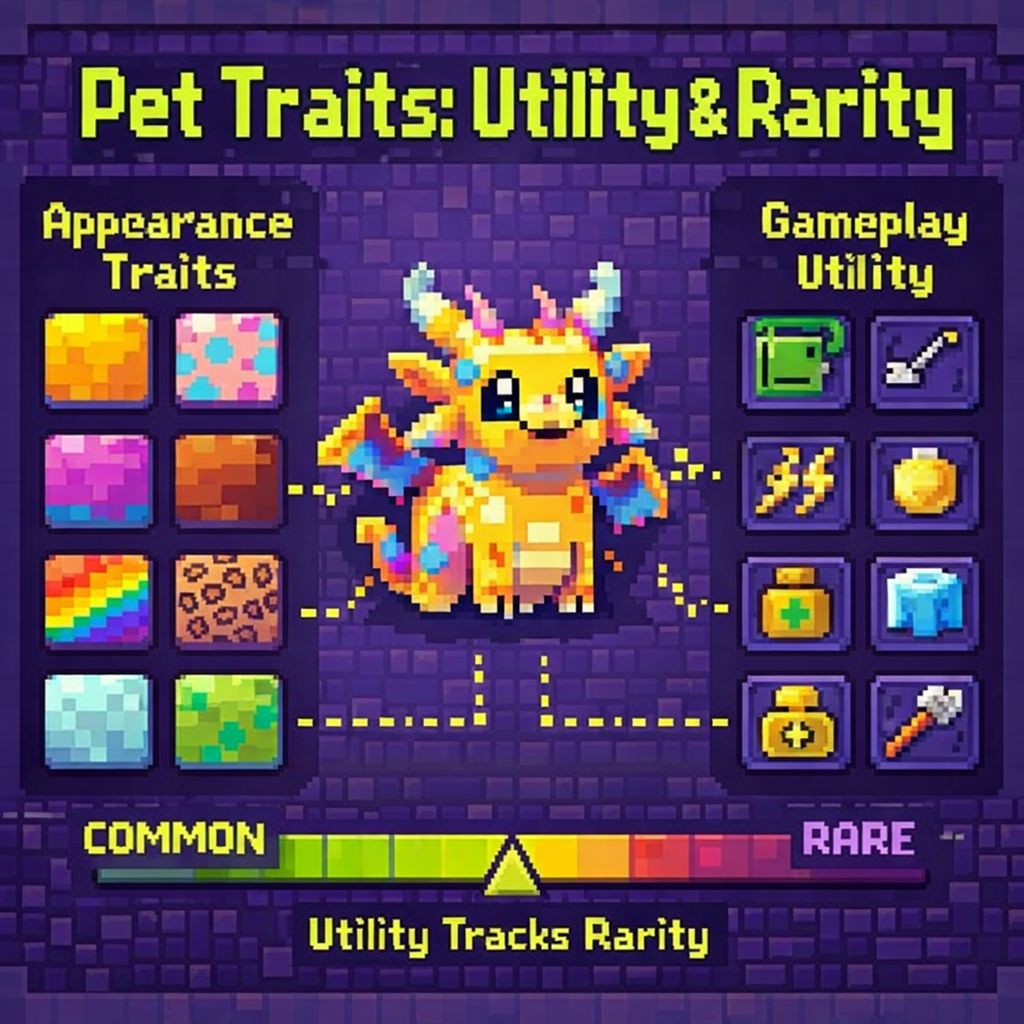
The basic premise is that pets in Pixels are minted as NFTs on the Ronin network. Each pet has a combination of traits that determines its appearance and its in-game utility. That second part matters. A lot of NFT pet systems stop at appearance. The asset looks unique but does nothing that affects gameplay in a meaningful way. Pixels ties pet traits to actual farming functions, meaning the combination you get at mint affects what the pet contributes to your operation. That's a design decision with real economic implications.
The minting process uses on-chain randomness to determine trait combinations. This is where I start asking harder questions because on-chain randomness is a solved problem in theory and a messier one in practice. True randomness is difficult to achieve in a deterministic system like a blockchain. Most implementations use verifiable random functions or commit-reveal schemes to approximate fairness. Whether Pixels' implementation is genuinely unpredictable or subtly gameable is something that requires audited smart contract code to answer properly. I haven't seen a public audit specifically covering the pet minting contracts and I'd want to before feeling fully confident.
Trait rarity is tiered, which is standard. Common traits appear frequently, rare traits don't. The distribution percentages determine how scarce the most valuable pets are. Scarcity is what drives secondary market prices. This is familiar territory from every NFT collection that has ever existed, and I mention it not to be dismissive but to note that the technology here is less novel than the application. The interesting part isn't how rarity is implemented. It's whether the rare traits are actually worth having in gameplay terms or just worth having in resale terms.
From what I can tell, Pixels has put real thought into making utility track rarity. A pet with rare traits should perform better at specific farming tasks, not just look more impressive. If that design holds up as the pet population grows and the meta develops, it creates a connection between the NFT market and actual gameplay that most pet systems fail to establish. Collectors and players want different things from the same asset. Getting those incentives to point in the same direction is genuinely hard.
The on-chain nature of pet ownership means pets are tradeable independent of the game itself. Your pet lives in your wallet, not in a game server. If Pixels shut down tomorrow, you'd still hold the NFT. Whether that NFT would retain any value without the game context is a different question, and one I'd encourage anyone spending real money on pets to sit with honestly before buying.
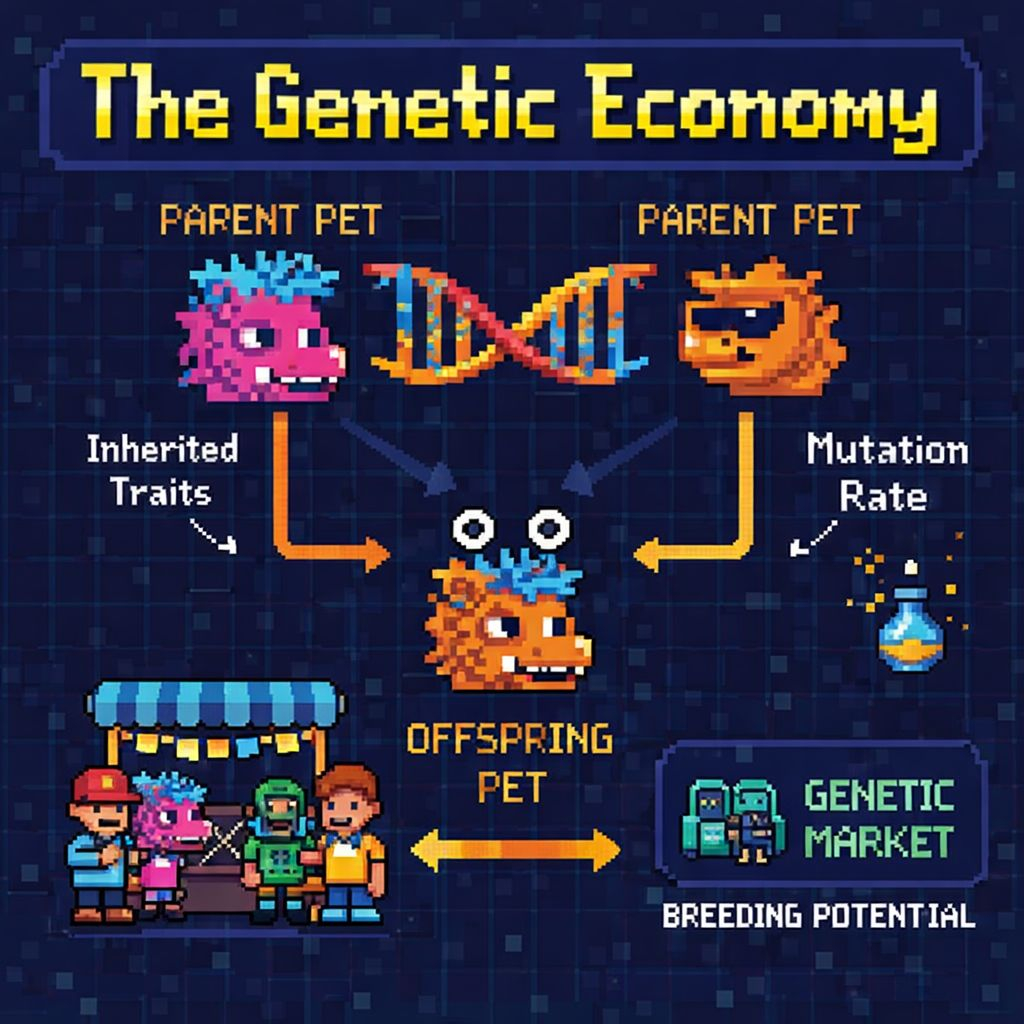
The breeding system, where two pets can produce offspring with inherited and mutated traits, adds another layer of technical complexity. Trait inheritance rules are encoded in the contracts. The mutation rate introduces additional randomness. This is where the system gets genuinely interesting from a design standpoint because it creates a genetic economy, a market not just for individual pets but for combinations that might produce valuable offspring.
I find that more compelling than I expected to. Whether the execution matches the concept is something only time and a larger pet population will reveal.
I'm watching it. Cautiously.