
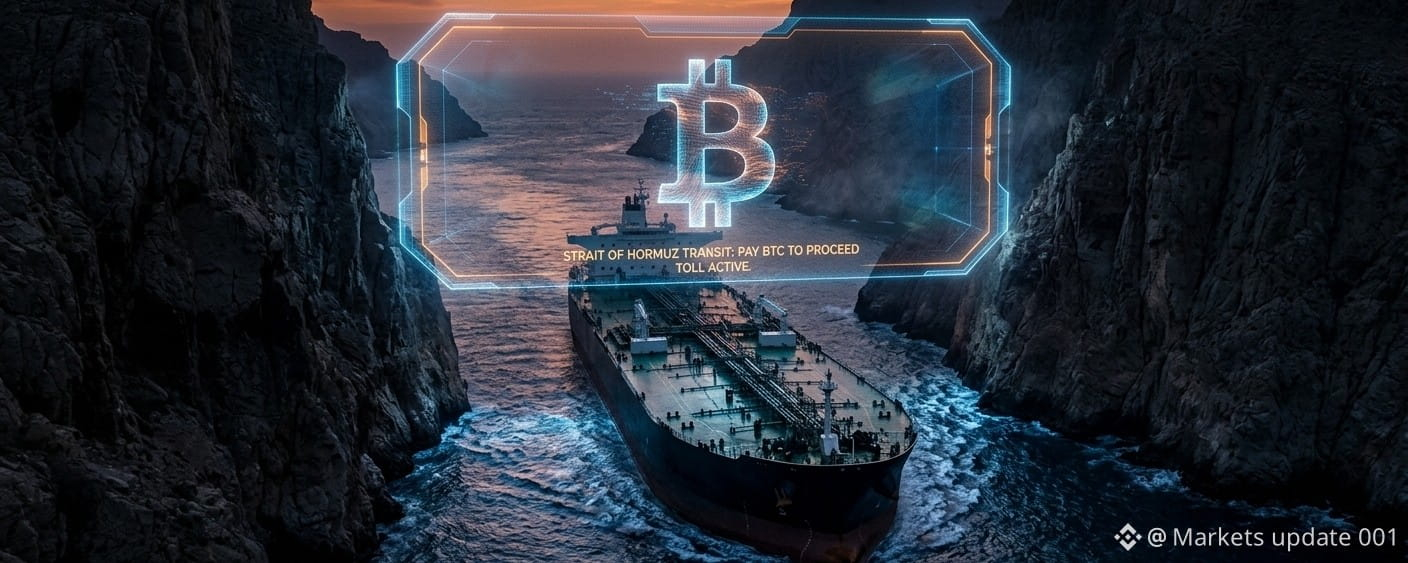
Is the world’s most vital oil chokepoint becoming the first "Bitcoin-only" toll booth in history?
In a move that fundamentally reshapes the intersection of geopolitics and digital finance, the Iranian government has reportedly begun demanding Bitcoin for oil tanker transit through the Strait of Hormuz. As roughly 20% of the world's petroleum flows through this narrow passage, the decision to implement a mandatory cryptocurrency toll—set at roughly $1 per barrel of oil—represents a massive shift in how sovereign nations attempt to evade the U.S.-led banking system. By forcing shipping companies to pay in decentralized assets, Tehran is leveraging the censorship-resistant nature of blockchain technology to secure revenue that traditional sanctions simply cannot reach.
Since 2022, data suggests that Iran has shifted over $3 billion through various cryptocurrency channels. While much of this volume was initially dominated by dollar-pegged stablecoins like USDT, the recent push toward Bitcoin reflects a strategic move toward an asset that no central authority can freeze or confiscate. This "on-chain" trade route has proven incredibly difficult for international regulators to block; despite aggressive efforts, the U.S. Treasury has managed to freeze only about $600 million of these assets. This leaves nearly $2.4 billion circulating freely, providing a critical financial lifeline for an economy otherwise cut off from global commerce.
The implications of this move extend far beyond the Middle East, as other sanctioned nations watch closely to see if the "Bitcoin toll" model can be replicated. For the cryptocurrency market, this represents a double-edged sword: it proves Bitcoin’s utility as a peerless tool for non-sovereign value transfer, but it also invites unprecedented scrutiny from national security agencies. As shipping companies are given only seconds to settle their digital tolls or risk being denied passage, the Strait of Hormuz has effectively become the world’s most high-stakes laboratory for crypto-geopolitics.
Do you think using Bitcoin for international trade by sanctioned nations will speed up global regulation, or is it impossible for any government to truly stop?