

When Pixels introduced off-chain coins into its economy, my first reaction was to read the announcement twice because I wanted to make sure I understood what they were actually doing.
A blockchain game adding off-chain currency feels counterintuitive on the surface. The whole premise of Web3 gaming is that your assets live on a chain, verifiable and owned by you rather than by a server somewhere. So when a game that built its identity around on-chain ownership starts routing some economic activity through off-chain systems, the obvious question is why. And the less obvious but more important question is what you give up when they do.
The practical answer to why is performance and cost. On-chain transactions cost gas fees and take time to confirm. For a game that wants players clicking, farming, and spending frequently, requiring a wallet confirmation every time someone buys seeds or completes a small trade creates friction that kills the gameplay loop. Off-chain coins let players transact instantly without fees, which makes the game feel more like a game and less like a financial application. That's a legitimate problem being solved by a legitimate solution.
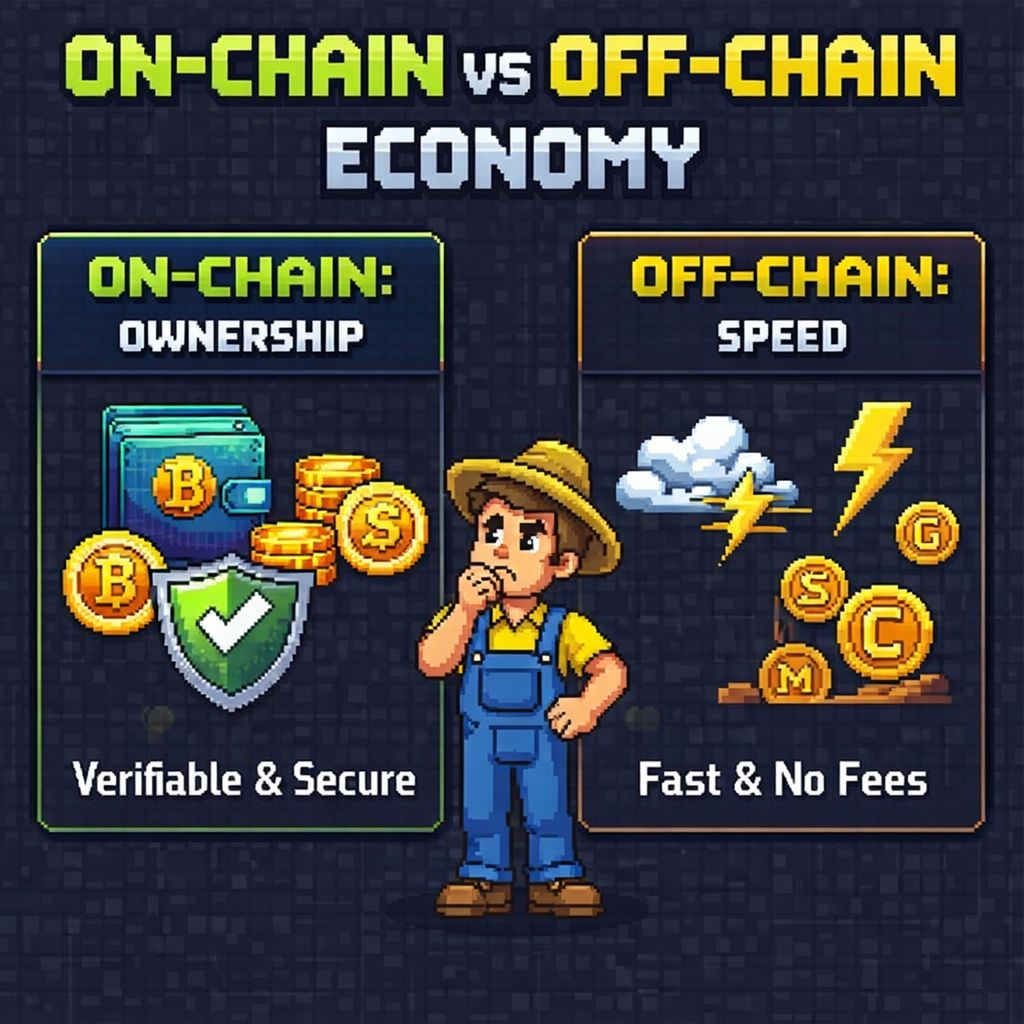
What I kept turning over in my head was the ownership question. On-chain assets are yours in a way that off-chain balances are not. If your PIXEL is in your wallet, it exists independently of Pixels the company. If your off-chain coin balance lives on Pixels' servers, it exists because Pixels says it does. That's a meaningful difference that the framing around off-chain coins tends to minimize.
I want to be fair here. This is not unique to Pixels. Every game with an internal currency that isn't on a blockchain operates this way. Your gold in World of Warcraft, your V-Bucks in Fortnite, your coins in any mobile game. None of those are yours in any real sense. You're licensing them from the developer under terms that can change. Pixels introducing off-chain coins brings it closer to that model for certain transactions, which is either a pragmatic compromise or a philosophical retreat depending on how seriously you took the ownership premise in the first place.
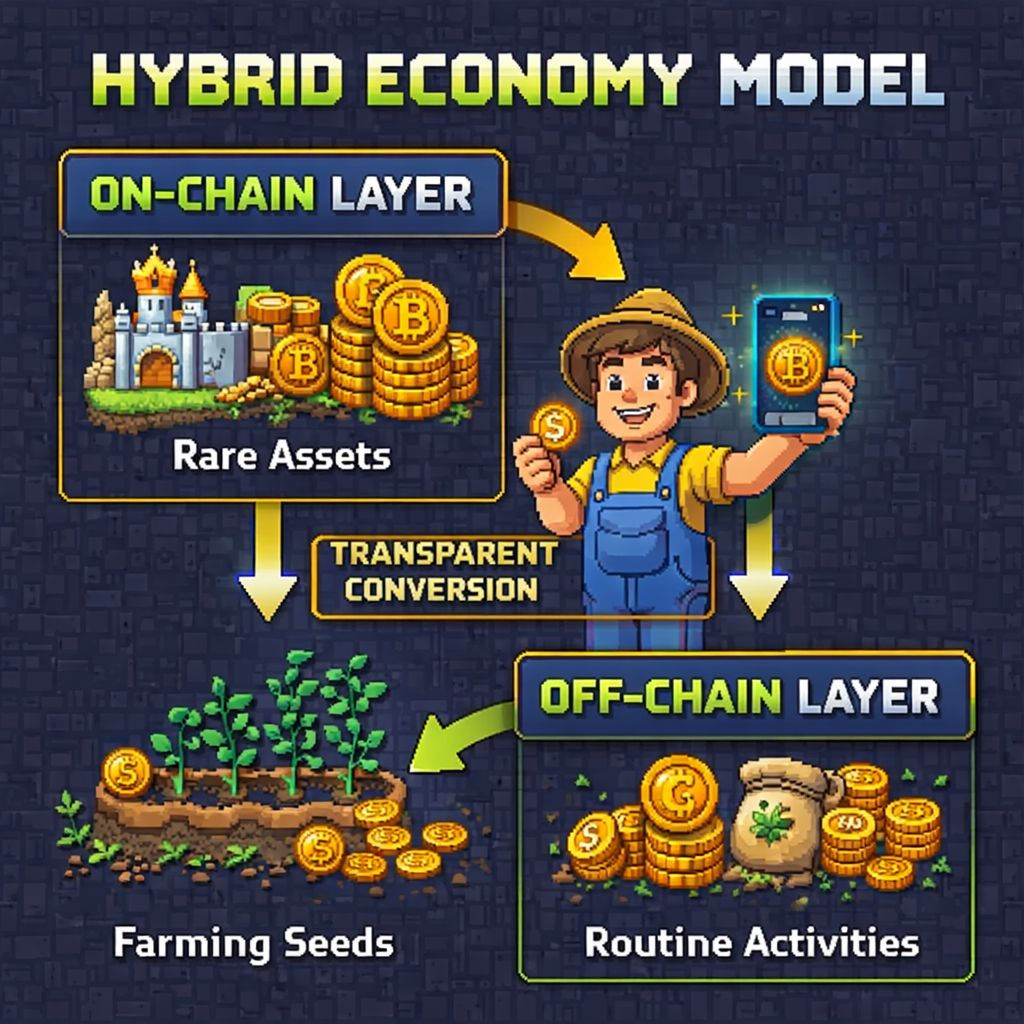
The design I've seen positions off-chain coins as a layer beneath the on-chain economy rather than a replacement for it. Routine small transactions happen off-chain. Significant asset ownership and trading stays on-chain. The idea is that you get the speed and affordability of a traditional game economy for everyday activity, while retaining genuine ownership for things that matter. In theory that's a reasonable hybrid.
In practice the line between what counts as routine and what counts as significant is drawn by the development team, not by the player. And lines drawn by development teams have a history of moving in directions that benefit the product over the player when the two come into conflict.
What would make me more comfortable is clarity about conversion. Can off-chain coins be moved on-chain freely? Are there limits, fees, or conditions attached to that process? The easier and more transparent that pathway is, the more the off-chain system feels like a convenience layer. The more restricted it is, the more it starts to feel like a separate economy with different rules about who actually owns what.
I think Pixels introduced off-chain coins because the alternative was a game that felt too slow and too expensive for casual players. That's a real trade-off and I don't think it was made carelessly.
I do think players should understand exactly what they're holding when they accumulate off-chain balances, and read the terms carefully before deciding how much economic activity to run through a system that lives on a server rather than a chain.
The distinction matters. It's just easy to forget when the game is fun.