
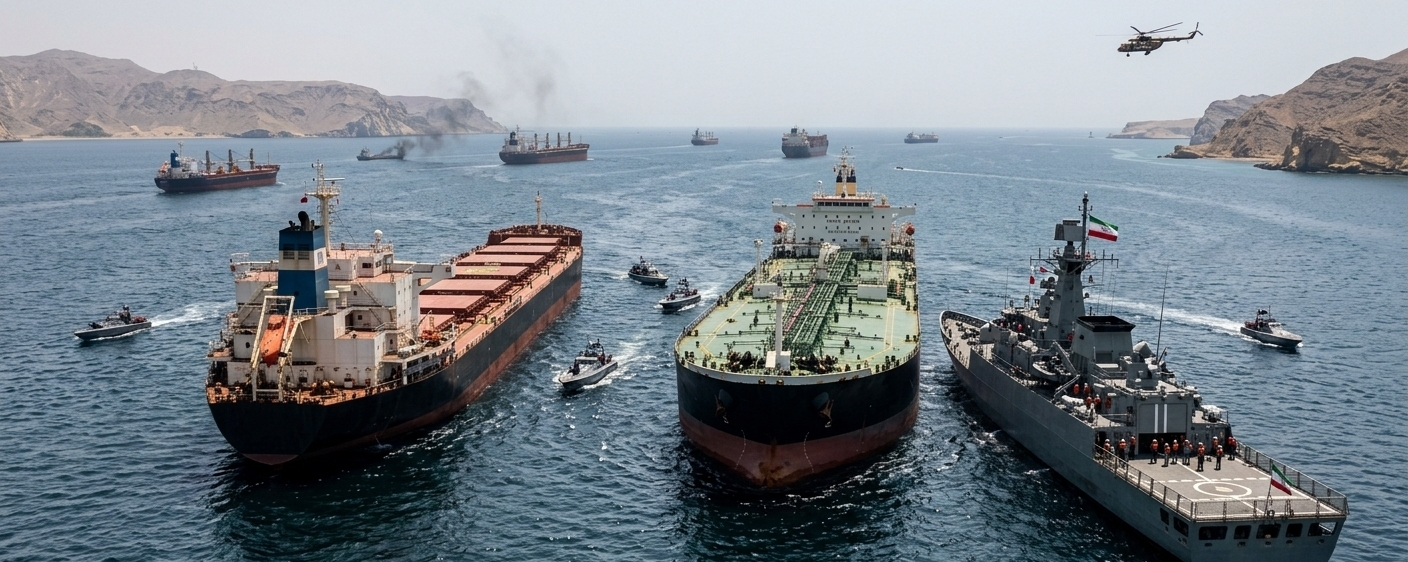
On April 22, 2026, a serious situation unfolded in the Strait of Hormuz, one of the most important sea routes in the world. Iran announced that it had taken control of two large ships shortly after several vessels were attacked in the same area.
According to Iranian officials, their naval forces stopped and seized the ships because they were not following proper rules while passing through the waters. They claimed the ships ignored warnings and had issues with their tracking systems. However, many people believe this is part of a much bigger and more dangerous situation.
Earlier that day, multiple ships reported being fired upon while moving through the strait. Crews were shaken, and at least one ship was damaged. Panic spread quickly across nearby vessels, with some stopping their journey and others trying to move away from the area as fast as possible.
Thankfully, no deaths have been reported so far, but the fear and uncertainty have grown. The sea route, which is usually busy and vital for global trade, suddenly felt unsafe.
This incident happened at a very sensitive time. There had been hope for peace, as a temporary agreement between Iran and the United States had recently been extended. Many were expecting calm discussions and possible progress. Instead, this sudden action at sea has created more tension and raised doubts about what will happen next.
The Strait of Hormuz is extremely important because a large part of the world’s oil passes through it every day. When something goes wrong there, it doesn’t just affect nearby countries—it impacts the entire world. After this incident, shipping companies became more cautious, and oil prices started to react to the uncertainty.
Right now, the situation is unclear and tense. The sea is still open, but it no longer feels completely safe. Every ship passing through now faces more risk than before.
This is not just about two ships being taken. It is about control, power, and how quickly things can change in one of the world’s most important locations. What happens next could shape not only the region, but also global trade and stability in the days ahead.
This situation is not just about ships. When tension rises in the Strait of Hormuz, oil prices usually go up and global markets become unstable. In times like this, crypto markets can also react quickly, as traders move money based on fear and uncertainty. If tensions continue, we may see more volatility in both traditional and crypto markets.