
i have worked with data science teams long enough to know the most dangerous moment in any analysis and honestly reading the Stacked mechanic correlation capability brought it right back
the dangerous moment is when you find a pattern that looks real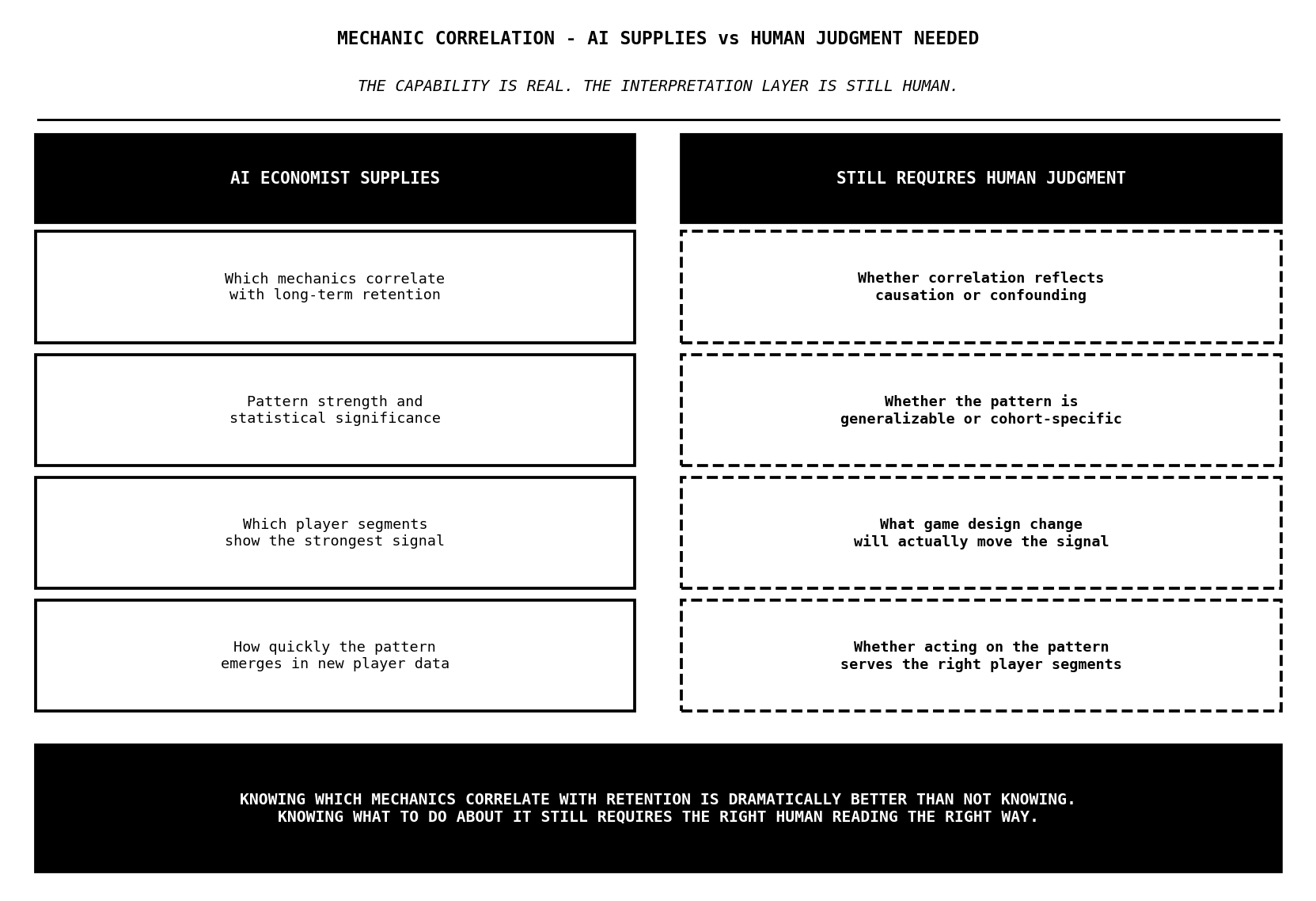
the AI economist inside Stacked does something genuinely impressive.,it analyzes behavioral data across cohorts and identifies which in-game mechanics correlate with long-term retention.players who engage with mechanic A stay longer.players who skip mechanic B churn faster.the system surfaces those patterns and tells the studio what it found
that is a meaningful capability. most studios are flying blind on this.they build mechanics based on intuition,ship them,watch the retention curve,and try to figure out what worked. Stacked compresses that feedback loop dramatically.instead of waiting months to see if a mechanic retained players,the correlation surfaces in the data early
And i find that genuinely exciting.,the idea that a studio could know - before they over-invest in the wrong direction - which parts of their game are actually holding players.,that changes how game design decisions get made
but here is where i spent a long time sitting yesterday.
correlation and causation are not the same thing. and in live game data they get confused constantly.
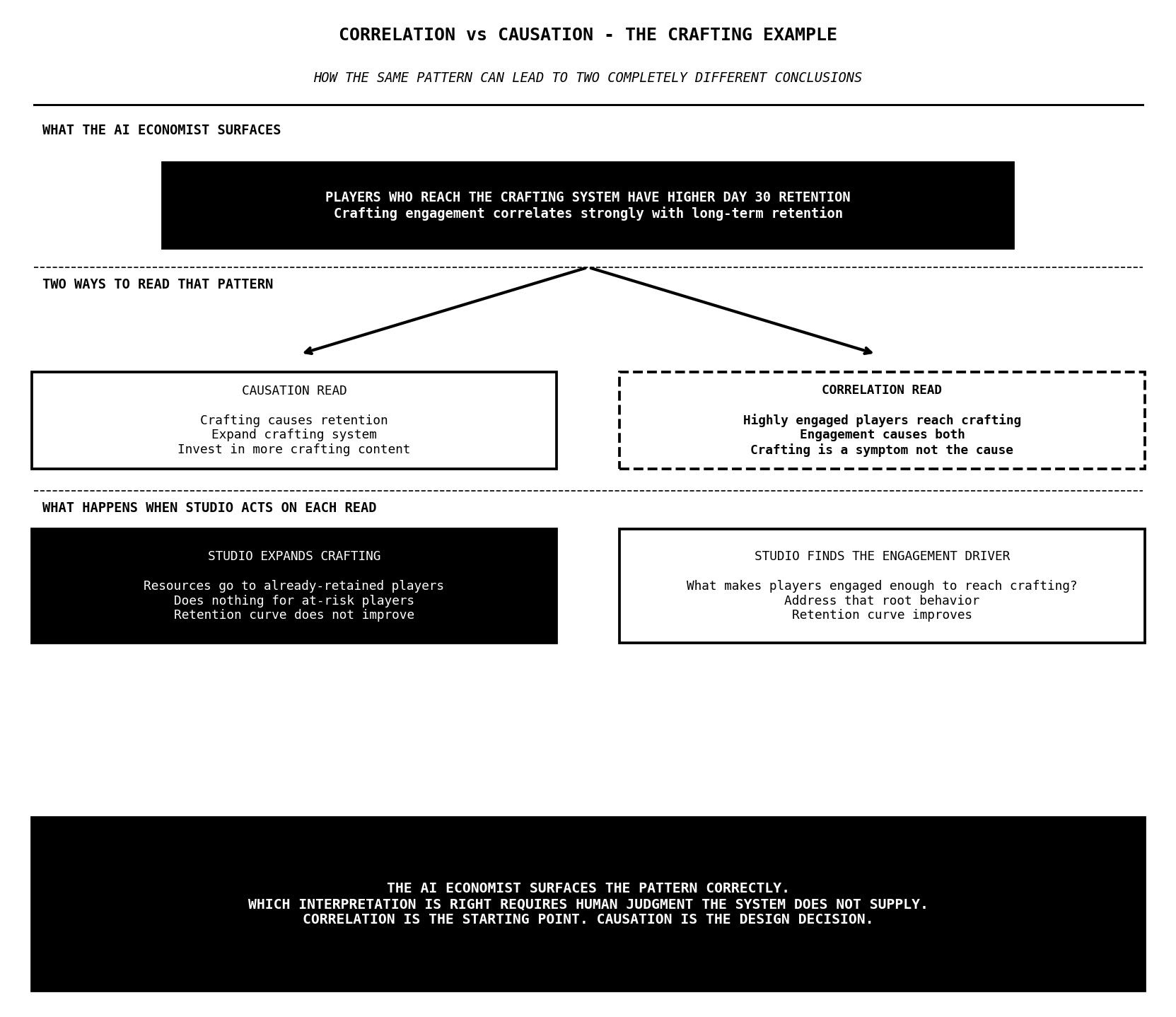
here is a simple version of the problem.players who reach the crafting system in a game tend to have higher day 30 retention.the AI economist surfaces that pattern.the studio reads it as:crafting causes retention. they invest heavily in expanding crafting.retention does not improve
what actually happened - the playyers who reached crafting were already the most engaged players. they would have retained regardless.crafting did not cause their retention.their engagement level caused both the crafting exploration and the retention.the mechanic correlated with the outcome but did not produce it
acting on that correlation redircted studio resources toward a mechanic that served players who were already going to stay.it did nothing for the players who needed help.
actually this is the thing i want to push on most
the Stacked AI economist surfaces correlations. the documenttation describes it as identifying player actions that genuinely drive long-term value.but genuine drive is a causation claim.the underlying method is correlation analysis.the gap between those two things is where studios can make expensive mistakes even with good data
the capability is real and valuable.knowing which mechanics correlate with retention is dramatically better than not knowing.but the interpretation layer-turning correlation into a design decision-still requires human judgment that the AI does not supply.
honestly dont know if the mechanic correlation capability is the insight that finally gives studios a science-based foundation for game design decisions or a powerful pattern finder that still requires someone who understands the difference between correlation and causation to use it correctly?? 🤔
