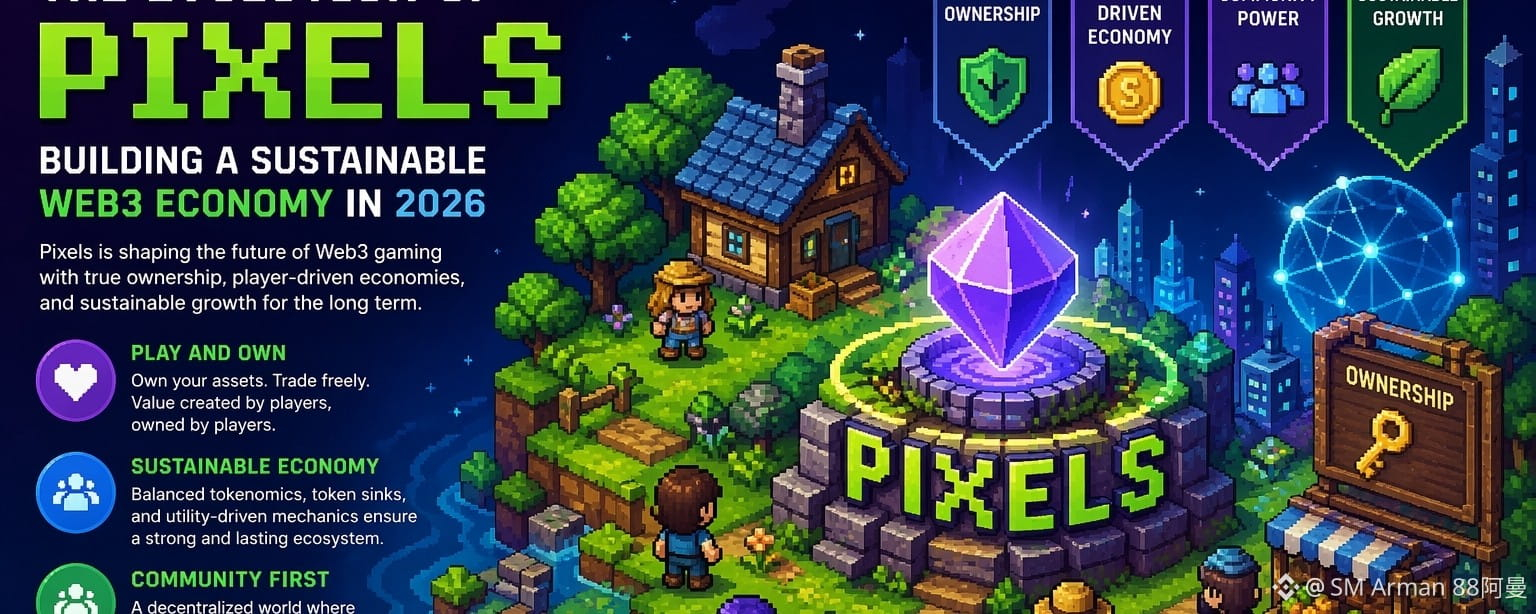
The Web3 gaming ecosystem in 2026 is entering a transformative era, where the concept of “play-to-earn” is evolving into something far more sustainable: **play-and-own economies**. At the center of this evolution stands **Pixels**, one of the most innovative blockchain-based gaming platforms, redefining how digital economies can thrive through player ownership, community incentives, and long-term value creation.
In the early stages of Web3 gaming, many projects relied heavily on inflationary token rewards to attract users. While this generated rapid growth, it often led to unsustainable economies where token values collapsed under selling pressure. Pixels is part of the new wave of projects solving this challenge by shifting from short-term speculation to **utility-driven ecosystem design.
Pixels has built a digital world where in-game assets, currencies, and achievements are backed by blockchain technology, allowing players to truly own what they earn. This ownership model creates a more meaningful relationship between the player and the platform. Rather than simply farming rewards, users are encouraged to participate in an ecosystem where assets retain functional and social value.
A major strength of Pixels lies in its focus on economic sustainability. Instead of distributing tokens endlessly, the platform creates token sinks through upgrades, crafting, land improvements, and premium in-game actions. These mechanisms ensure that tokens are constantly recycled within the ecosystem, balancing supply and demand. As a result, the economy becomes more resilient, supporting both active players and long-term holders.
Another defining element of Pixels’ success is its community-centered growth model. In traditional games, value flows primarily to the developer. In Pixels, value is shared among the players, creators, and ecosystem participants. This creates a powerful network effect: the more players contribute, the stronger the ecosystem becomes. Community ownership encourages loyalty and transforms players into stakeholders.
Sustainability in Web3 is no longer just about tokenomics—it is also about accessibility. Pixels addresses this by making blockchain gaming easy to enter, with seamless onboarding and gameplay that feels familiar even to users with no prior crypto experience. This accessibility is crucial for mass adoption because it removes the friction that once limited blockchain gaming to niche communities.
Pixels also demonstrates how **interoperability** can enhance economic sustainability. Assets and identities in Web3 are no longer locked inside isolated platforms. As ecosystems become more connected, the value of digital assets expands beyond a single game. Pixels is positioned to benefit from this trend by enabling assets and rewards to integrate with the broader decentralized economy, increasing utility and strengthening retention.
Perhaps most importantly, Pixels shows that successful Web3 economies must prioritize engagement before extraction. Players stay when the experience is enjoyable, social, and rewarding beyond monetary incentives. By combining engaging gameplay with decentralized ownership, Pixels creates an environment where economic activity emerges naturally from participation rather than from speculative farming.
The evolution of Pixels reflects the broader maturity of Web3 itself. The focus is moving away from hype-driven reward systems toward **sustainable digital economies** built on ownership, utility, and community alignment. In 2026, the projects that succeed will be those that create lasting value for users, and Pixels is proving that blockchain gaming can be both profitable and sustainable.
As Web3 continues to expand, Pixels stands as a blueprint for the future—where virtual economies are not just decentralized, but durable. By aligning incentives between players and the platform, Pixels is helping build the foundation for a sustainable Web3 economy where digital ownership becomes a real engine of growth.#pixel @Pixels $PIXEL