
Let me tell you something that genuinely gave me chills the first time I heard it when the Pixels team quietly pulled back the curtain on Chapter 3, I felt like I was standing at the edge of something that was about to change Web3 gaming forever, and I've been in this space long enough to know the difference between hype and a real turning point. Right now, if you've been playing Pixels, you know the world as a place of farming, crafting, socializing a peaceful, productive grind that honestly built one of the most engaged communities I've ever seen in GameFi but Chapter 3 is where that world stops being peaceful, because combat mechanics are entering the picture, and not in the shallow, cosmetic way we've seen other Web3 games slap on a battle system just to generate buzz. What the Pixels team is building is a deeply strategic, faction-based war economy where players must align with a faction, pool their highest-tier resources, construct and defend a hearth a resource station and actively compete to ensure their faction comes out on top, while simultaneously having the power to sabotage rival factions, meaning every session becomes a calculated battlefield where your farming skills, your resource stockpile, and your strategic alliances all converge into one brutal, beautiful risk-to-earn loop. And here's where I need to geek out for a second, because none of this would be possible at scale without the technical backbone that makes it all run smoothly the integration with XAI's Stylus Protocol, which essentially strips away the one thing that has historically killed Web3 game momentum: friction from transaction costs. Through XAI's gaming-specific Layer 3 architecture built on Arbitrum's AnyTrust technology, transactions become near-zero in cost and gasless in experience, meaning players stop thinking about gas fees and start thinking purely about strategy, which is exactly the mental shift a game like Pixels needs to cross from niche Web3 audience into mainstream gaming territory. I've seen projects crumble under their own transaction weight, I've watched players abandon otherwise brilliant games because the cost of on-chain actions ate into every reward and the fact that Pixels made the deliberate choice to anchor Chapter 3 onto infrastructure that eliminates that barrier tells me the team isn't just building for today's crypto-native players, they're building for the next wave of gamers who've never touched a wallet in their lives. What also gives me confidence is the development philosophy behind this the 3 to 4 month chapter cycle isn't just a content calendar, it's a live economic experiment, where Chapter 3 serves as the proving ground for whether the faction and combat-adjacent systems generate the kind of Return on Reward Spend that justifies pushing deeper into full-fledged PvP combat in future chapters, meaning the team only scales what works, and they iterate fast enough that the game never goes stale. I've been covering $PIXEL for a while now, and I can tell you this chapter isn't just an update. It's the moment Pixels graduates from a farming sim into a living, breathing economic battlefield, and I for one am absolutely here for it.

Άρθρο
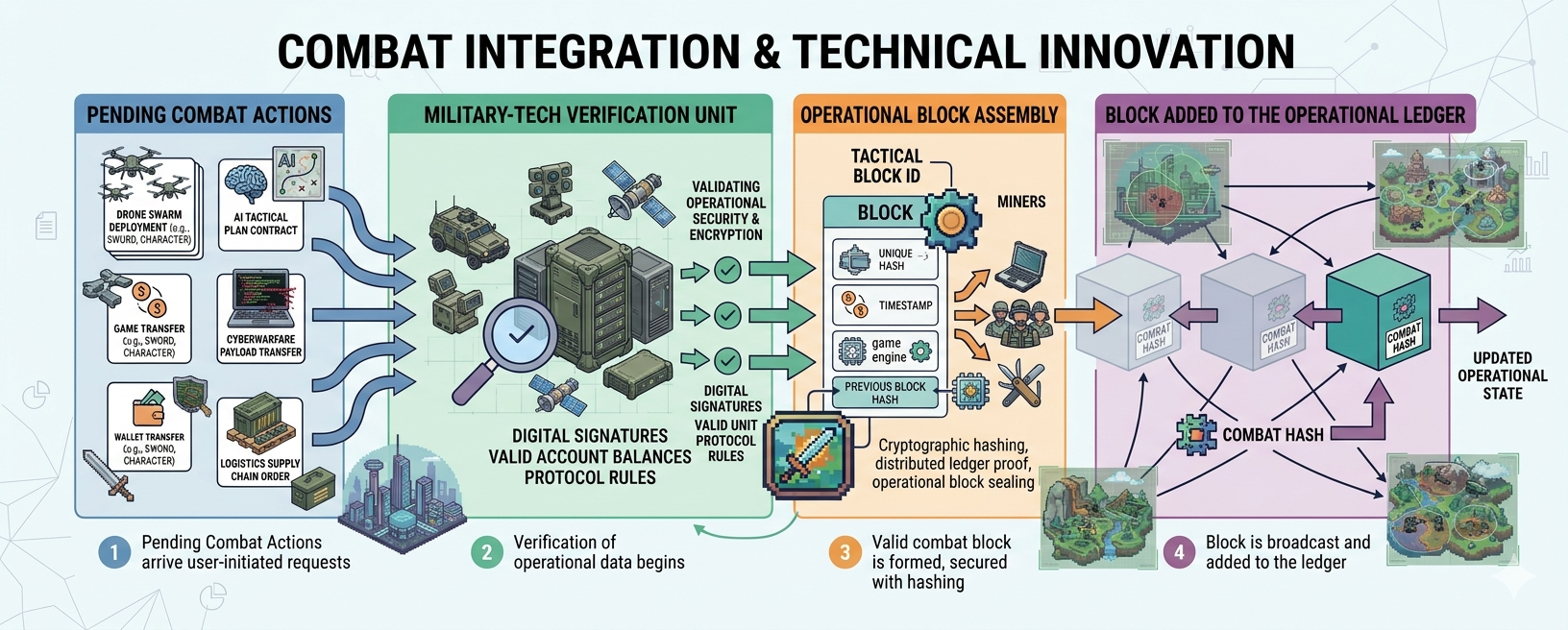
Combat Integration & Technical Innovation
Αποποίηση ευθυνών: Περιλαμβάνει γνώμες τρίτων. Δεν είναι οικονομική συμβουλή. Ενδέχεται να περιλαμβάνει χορηγούμενο περιεχόμενο. Δείτε τους Όρους και προϋποθέσεις.