I’ll be honest, the first time you load into Pixels, it doesn’t look like something that should be pulling in hundreds of thousands of people every day. It looks small. Almost old. Like something you’d play for ten minutes and forget. You walk around, plant a few crops, maybe chop some wood, and you think… that’s it?
But then you don’t leave.
And that’s where it starts to get interesting, because the game isn’t trying to impress you in the usual way. It’s not chasing hyper-realistic graphics or some deep cinematic story. It’s doing something quieter, and honestly, a bit more dangerous it’s building a loop that’s just satisfying enough to keep you coming back without questioning it too much.
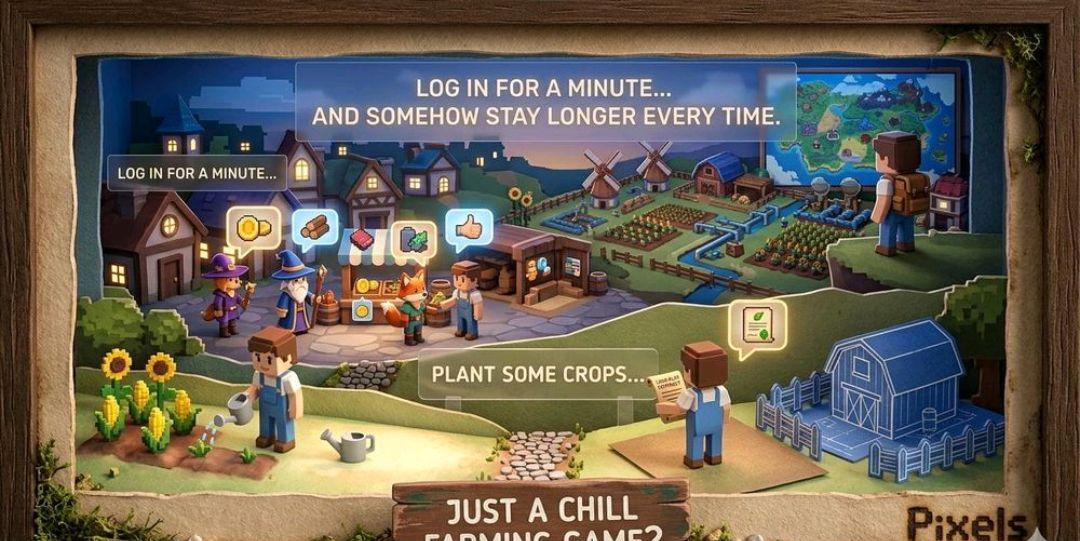
You plant. You harvest. You craft. You repeat.
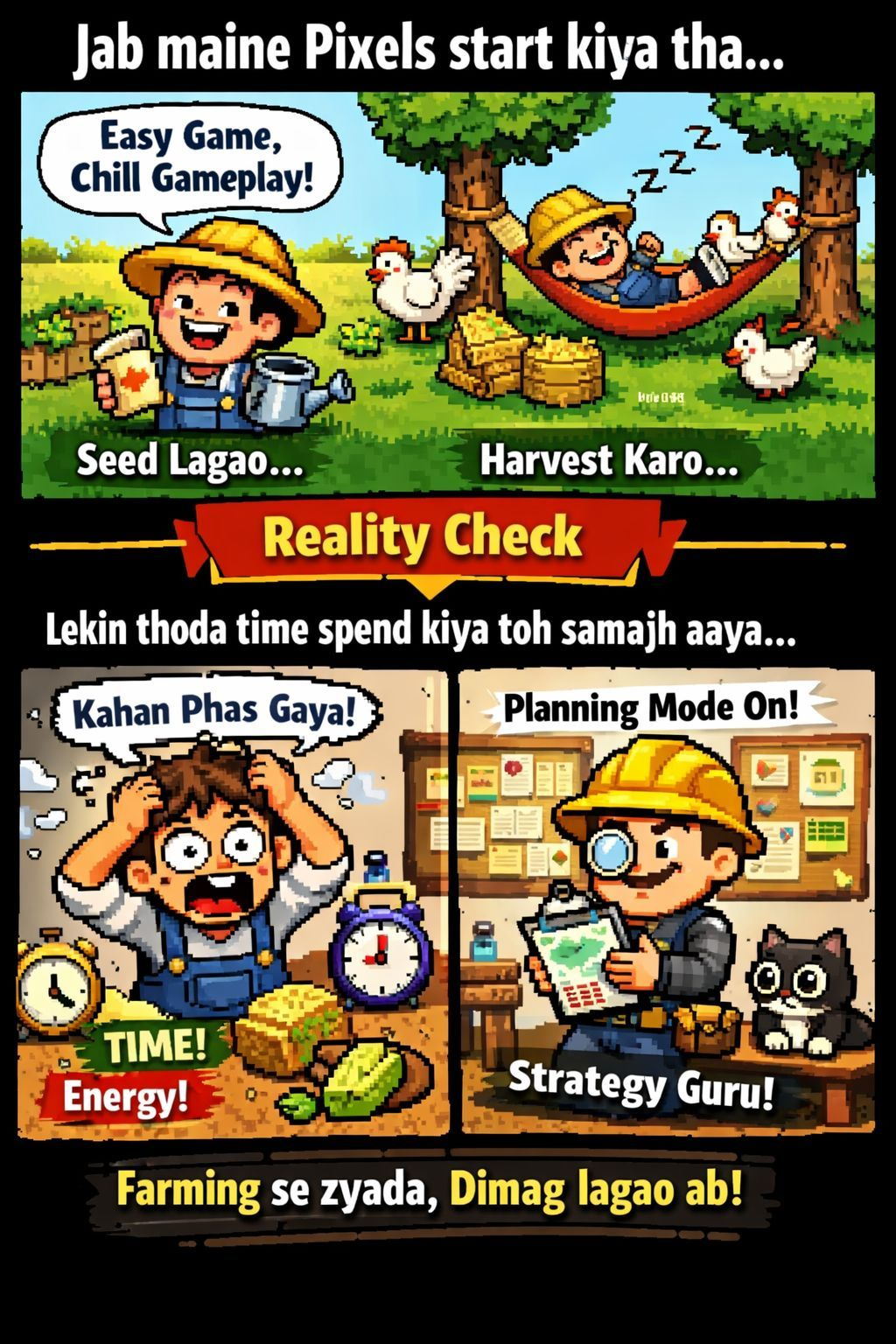
Sounds boring when you say it like that. But inside the game, it feels different. There’s always one more task. One more upgrade. One more small push forward. And before you notice it, you’re thinking about efficiency. About energy. About timing your actions so nothing gets wasted. That’s when it stops being casual and starts becoming a system.
And everything in Pixels revolves around that system.
The core of the game is farming, yeah, but it branches out quickly. You’re gathering resources wood, stone, crops and those feed into crafting, cooking, upgrading tools, and expanding what you can actually do in the world. It’s all connected. Nothing feels completely useless.
But there’s a catch.
Energy.
You can’t just grind forever. Every action costs energy, and once it’s gone, you either wait or find ways to optimize around it. That one limitation changes everything. Suddenly the game isn’t just about doing things it’s about doing them smartly.
And this is where I think Pixels quietly separates itself from most Web3 games.
It doesn’t shove “earn money” in your face immediately.
It lets you play first.
Then, slowly, it introduces the idea that what you’re doing might actually have value.
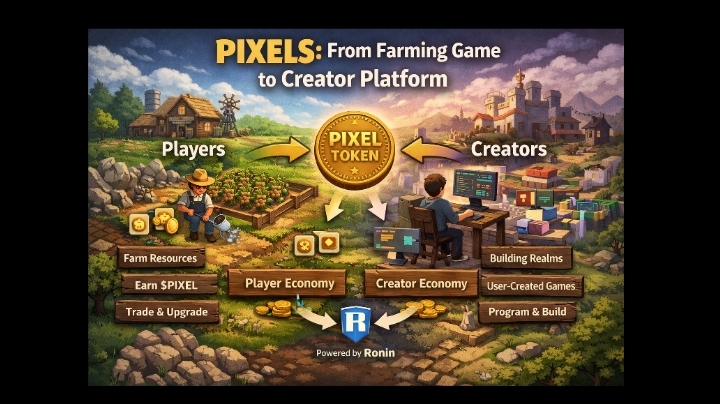
Because yeah, this is where blockchain comes in. Your land, your items, your pets they can exist as NFTs. You can own them, trade them, even build small economies around them. That’s not just a feature, that’s the backbone of the whole thing.
But let’s not pretend it’s all smooth.
This is where things get messy.
Because once ownership and tokens enter the picture, the mindset of players changes. Some people are just there to chill, plant crops, and enjoy the vibe. Others? They’re calculating every move. Maximizing output. Treating it like a job.
And honestly, both approaches exist side by side in a slightly awkward way.
The game runs on a dual economy. You’ve got Coins, which are purely in-game and used for progression buying tools, speeding things up, unlocking new layers. Then you’ve got PIXEL, the actual token with real-world value, used for premium features, guild systems, minting assets, and more.
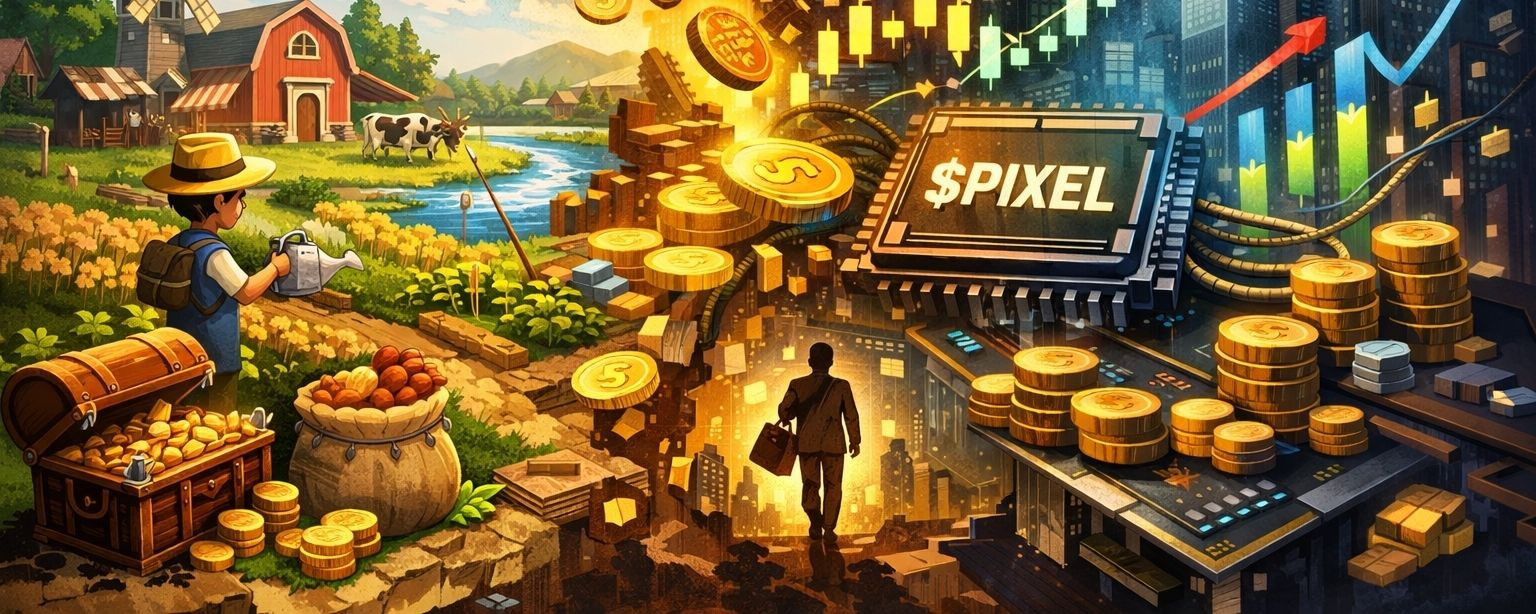
And yes, you can earn PIXEL.
Through quests. Through farming. Through trading. Through just being active in the ecosystem.
But here’s the part people don’t like to say out loud.
It’s not guaranteed.
Some players make decent returns. Others barely earn anything meaningful. It depends on how much time you put in, how efficient you are, and honestly… how the market is behaving at that moment. The “play-to-earn” idea sounds clean, but in reality, it’s a bit rough around the edges.
And maybe that’s the honest way to look at it.
Pixels isn’t some magical money machine.
It’s a system. One that rewards consistency, strategy, and patience but also one that can feel repetitive if you’re not careful.
Still, there’s something about it that works.
Part of it is the scale. The game has grown fast really fast especially after moving to the Ronin Network, which was a smart move. Lower fees, smoother gameplay, and access to a proven Web3 gaming ecosystem gave it a serious boost.
Part of it is the community. It leans heavily into being social. Guilds, shared land, interactions with other players it’s not just you grinding alone. There’s a sense that the world is alive, even if the graphics are simple.
And maybe that simplicity is the real trick.
Because the game doesn’t overwhelm you. It doesn’t demand too much upfront. It lets you ease in, build habits, and then slowly deepens the experience. By the time you realize how much time you’re spending, you’re already invested.
That’s not accidental.
That’s design.
But I keep coming back to one question.
Is it actually fun?
And I think the answer depends on what you expect from it.
If you’re looking for something visually stunning or story-driven, you’ll probably get bored. Fast. This isn’t that kind of game. It doesn’t even try to be.
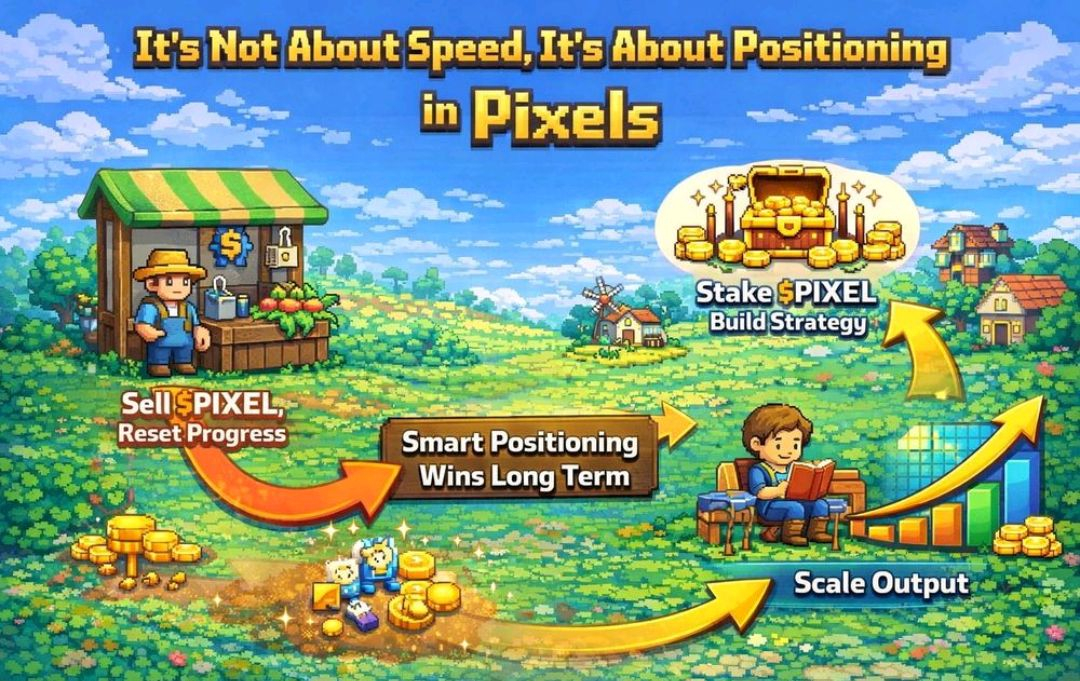
But if you like progression loops, small wins stacking over time, and the idea that your in-game effort might turn into something tangible, then it clicks. Slowly, but deeply.
And once it clicks, it’s hard to step away.
That’s the strange part.
Pixels doesn’t shout. It doesn’t try to prove anything.
It just keeps you there.
@Pixels
#pixel
$PIXEL