By Areeba 🖋️
I have been thinking about a simple idea for some days, and the funny thing is… the idea sounds almost too simple.
Maybe that is why I like it.
A lot of people talk about rewards in gaming as if rewards are just extra bonuses. Something added on top.
Play the game. Get a reward. Move on.
But what if rewards are not the main point?
What if the bigger idea is where value goes.
And who gets it.
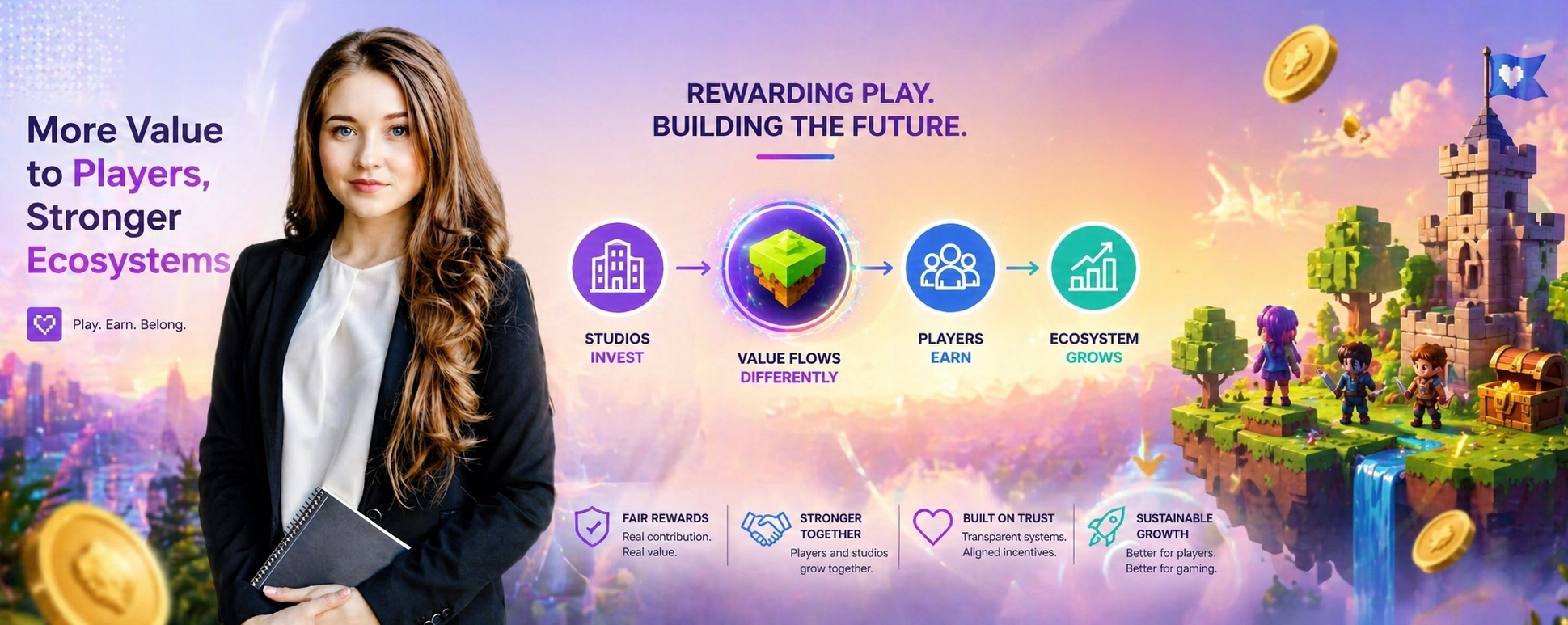
That is the thought I keep coming back to when I think about Pixels and especially this idea people mention about sending more value to users instead of ad platforms.
At first, honestly, I did not pay much attention to it.
It sounded nice. Maybe too nice.
Crypto has many nice sounding ideas. Not all of them become real.
But the longer I sat with it, the more I felt there may be something deeper there.
Because gaming studios already spend money. Lots of it.
That money exists already. This is important.
This is not about inventing some new magical budget. The spending already happens.
Studios pay for user growth. They pay ad networks. They pay platforms. They pay for attention.
That has been normal for years. So normal most people stop questioning it.
But sometimes the most interesting ideas start when someone questions something everybody accepts.
And the question here is simple.
What if part of that value reached players directly?
Not fake rewards. Not spam quests. Not empty emissions.
Real rewards tied to real engagement.
When I first thought about it, I almost dismissed it as just another play-to-earn variation.
But I do not think it is the same thing.
At least not exactly.
Because old play-to-earn often tried to create value mostly from inside the game loop.
This feels different.
This feels more like redirecting value that is already leaving the system.
And that changes how I look at it.
Actually I remember thinking… wait. Why should all growth value always flow outward?
Why not let some flow inward to players?
That sounds obvious once you say it. But obvious ideas can still be powerful.
And maybe that is partly why this sticks with me.
There is also something fair about it.
Players create value too.
They show up. They spend time. They build communities. They create network effects. Sometimes they make a game relevant.
Yet usually players are treated mainly as targets of growth spend. Not recipients of it.
That feels strange when you think about it.
And maybe that is what this idea challenges.
I know some people may say, well rewards to users are not new. True.
But maybe the framing matters.
Seeing rewards as part of growth infrastructure instead of just incentives… that is different.
At least to me.
And this is where I think the conversation around Pixel gets interesting.
Because if the token sits inside a bigger rewards system where more games can participate, then maybe utility grows in a way people are underestimating.
Maybe.
I keep saying maybe because I do not want to pretend certainty. I do not have certainty.
This is me thinking out loud. A bit messy maybe. Human messy.
Sometimes I think online writing feels too perfect. Too clean. Real thinking is rarely like that. It loops. It doubts. It repeats. Mine does.
So if this article feels a little wandering… well maybe that is honest.
Anyway.
Another thing I keep thinking about is how this could change player psychology.
If rewards are tied to meaningful behavior, maybe users stop seeing rewards as extraction. Maybe they see them as participation.
That is a different feeling.
And feelings matter in economies more than people admit.
People stay where systems feel fair. People leave where systems feel exploitative.
Simple.
I also wonder if redirecting more value to players can improve loyalty.
Not because people only care about money. That is too simplistic.
But because people notice when systems share upside.
And maybe that builds stronger ecosystems.
I have seen some people focus only on whether this creates demand for the token. Fair question.
But I think the more interesting question may be:
Does it create a stronger relationship between player and ecosystem?
That might matter even more.
Because strong relationships often outlast incentives.
I know that sounds soft. Maybe vague. But I think it matters.
There is another part people maybe overlook.
If growth spend becomes more measurable through rewards tied to behavior, that could matter to studios too.
Because then this is not just a player story. It is a business story.
And when player incentives and business incentives line up… interesting things can happen.
Maybe stronger things.
I keep imagining a future where some studios ask: Why pay all growth spend outward if some can be used to deepen engagement directly?
That feels like a serious question. Not a marketing line.
Of course, there are risks. Always.
Maybe it scales badly. Maybe it works in one ecosystem and not others. Maybe reward budgets get misused. Maybe users game it.
All possible.
I do not ignore those things. Actually they make the topic more real.
Ideas without risks are usually fantasies.
Real ideas have tradeoffs.
And honestly I like discussing tradeoffs. It makes things feel less like shilling.
There is maybe another reason I like this topic. It does not depend only on hype.
It connects to something practical. Value flows.
Where money goes. Why. Who benefits.
Those are serious questions.
And serious questions usually interest me more than price predictions.
I will say something slightly personal. When I first came into crypto, I mostly looked at tokens through price and utility. Probably like many people.
Over time I started caring more about system design. How value moves. How incentives shape behavior. How infrastructure can matter.
And maybe that is why this topic grabs me. It touches all of that.
There is a sentence I keep writing in my notes: Sometimes the biggest shift is not creating more value. It is redirecting existing value better.
I like that sentence. Maybe too much. But I keep coming back to it.
Because maybe that is the whole thesis in simple words.
Not inventing magic. Redirecting value.
Maybe that is powerful.
And maybe it could even be bigger than many people think.
Now I want to touch something related. The “more value goes to users” idea can sound idealistic. Maybe even naive.
I get that.
But many strong systems have aligned incentives at their core. That is not naive. That is design.
And maybe this is partly trying to do that.
Again — maybe.
I know I repeat maybe a lot. Maybe too much lol. But I would rather sound uncertain than fake certain.
Another thought.
People often talk about moats through anti-bot systems or data or infrastructure. All important.
But maybe user value sharing can also be part of a moat.
Because if users feel they receive meaningful upside from participation, maybe retention changes. Maybe community quality changes. Maybe network effects strengthen.
Hard to measure. Maybe hard even to prove.
But not impossible.
I think sometimes markets ignore softer forces because they are harder to model. Yet softer forces often shape outcomes.
Trust. Fairness. Belief. Community.
These things matter.
Maybe more than spreadsheets sometimes.
I also like that this topic pushes me beyond the usual GameFi debate. It is not just “is play-to-earn dead” or “is token inflation bad.”
It asks something broader.
Can gaming value be shared differently?
That feels like a worthy question.
And maybe the answer matters beyond one project.
Maybe it matters for how Web3 gaming matures.
Or maybe I am overthinking all of this. Very possible.
Sometimes I do that.
I can imagine someone saying: It is just reward distribution, relax.
Maybe!
But I keep feeling there is more there.
And usually when an idea keeps pulling me back, I pay attention.
Another small thing. I like that this thesis is not based on taking value from nowhere.
Too many crypto models feel circular. Rewards from emissions feeding more emissions.
This at least tries to point to outside budgets already present. That seems healthier.
Maybe more grounded.
Grounded ideas are underrated.
Let me wander a little more.
Sometimes I wonder if part of why people miss ideas like this is because they look too practical.
And practical things often seem boring at first.
Payments looked boring. Cloud infrastructure looked boring. Yet both became massive.
Sometimes boring ideas hold big outcomes.
Maybe redirecting value could be one of those “boring but big” ideas.
Maybe not.
There is also the question of whether players even want this model.
I think maybe yes, but maybe not in the simplistic “people like rewards” way.
Maybe because people like systems where participation feels respected.
That is different.
And honestly… that matters to me personally. I like systems where users are treated as part of the value creation story. Not just metrics.
Maybe that is why I emotionally connect to this topic.
Yes emotionally. I know crypto people act like everything is rational. It isn’t.
People invest emotionally all the time.
Another thing. If external studios ever adopt models like this, the implications could be bigger than one token.
That could shift how reward budgets are thought about across games.
That is a huge if. I know.
But worth imagining.
I sometimes think imagination is underused in analysis. Not fantasy. Imagination. There is a difference.
You need imagination to see category shifts early.
Maybe this is one. Maybe not.
Also, small confession: I wrote part of this article, deleted a lot, then came back and wrote again. Because I did not want it to sound too polished. Too much crypto writing sounds generated. I wanted this to feel like a person thinking. Even if imperfect. Maybe especially if imperfect.
There is probably some repetition here. I left some on purpose. Humans repeat themselves when a point matters to them.
So yes, some rough edges are intentional.
One more angle before I end.
I wonder if “more value goes to users” is partly about dignity.
Maybe that sounds dramatic. But maybe not.
Because giving users a bigger share of value created by their engagement can be seen as respecting contribution.
And systems built on respect often feel stronger.
Maybe I am getting philosophical now. Maybe too much chai while writing this.
But still. I mean it.
There is a quiet power in structures that distribute value more fairly.
History shows that in many places. Not just crypto.
Could gaming move a bit in that direction?
I do not know.
But I think it is worth asking.
And honestly maybe that is the whole point of this piece. Not to prove a thesis. To ask a question seriously.
Can redirecting more growth value toward players become one of the real innovations in Web3 gaming?
I keep leaning maybe yes.
And if yes… maybe people are still underestimating what that could mean for Pixels and beyond.
But I could be wrong. Really.
That is why I want to hear from others.
Do you think sending more value directly to players could become a major edge for gaming ecosystems… or is it still mostly a nice idea on paper?
And another question maybe even bigger: Would you trust a model where ad spend is partly redirected to users?
Tell me in the comments what you think. I genuinely want to know where people stand.
Before ending, there is another angle I keep coming back to, and maybe I should have mentioned it earlier.
Habit.
People talk a lot about rewards and value, but habits may matter even more.
Because ecosystems become strong when people return. Again and again.
And sometimes what makes people return is not huge incentives. Sometimes it is feeling there is a fair system. A living system.
Maybe redirecting value to players can support that.
There is an old idea in business that people stay where they feel appreciated. Maybe users do too.
And if some reward structures can create that feeling, maybe their impact is bigger than spreadsheets show.
Trust can drive retention. Retention can drive economies. Economies can drive value.
These things connect.
Another thought.
People often assume sending more value to players means giving something away.
But maybe it is not giving away. Maybe it is reallocating.
That word matters.
Giving away sounds unsustainable. Reallocating sounds structural.
Very different.
I also wonder if younger gamers may expect models like this more naturally. Maybe for them it will seem obvious.
Sometimes shifts feel strange only under old models.
Another thing I have not touched enough is community effects.
If users feel more aligned with ecosystem upside, maybe community behavior changes too. Maybe people become more constructive.
Or maybe not. Human behavior is messy.
Still, incentives shape culture. I believe that.
And culture shapes outcomes.
There is also something practical I keep returning to. Measurement.
If reward spend can be measured against retention or lifetime value, that changes conversations. Because then it is not ideology. It is performance.
And businesses listen when performance speaks.
That could matter a lot for adoption.
Maybe systems where more value reaches users can even reduce some cynicism people have toward Web3.
People are tired of models where value seems captured mostly by insiders.
If alternative structures emerge, maybe trust changes.
That could be huge.
Another piece. What happens if multiple games use similar systems?
Then maybe value-sharing models stop looking like one project experiment. They start looking like a category.
And categories matter.
Single ideas can be dismissed. Categories reshape markets.
I also keep asking myself whether I am too optimistic about alignment. Because incentives can have weird side effects.
That risk is real.
But risk does not make experimentation meaningless. It makes design harder.
And maybe hard design is where important breakthroughs happen.
One more reflection.
There is a difference between extracting attention from users and investing in users.
That sentence stayed with me.
Maybe that is the deepest way to describe what interests me.
Investing in users.
If growth spend partly does that, maybe something genuinely shifts.
So now I really want to hear from people.
Can value-sharing models become a real long-term edge? Or do traditional growth models still win in the end?
And if you were designing a game economy, would you redirect part of ad spend toward players?
Tell me honestly in comments.