
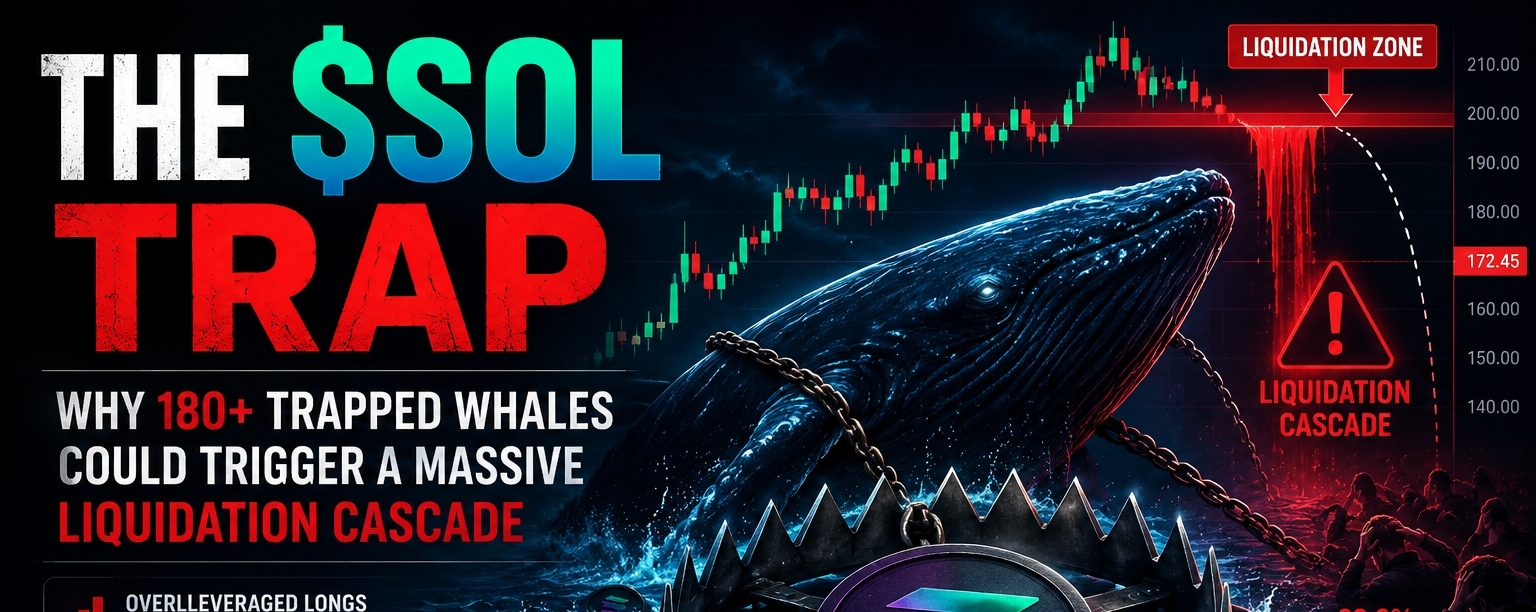
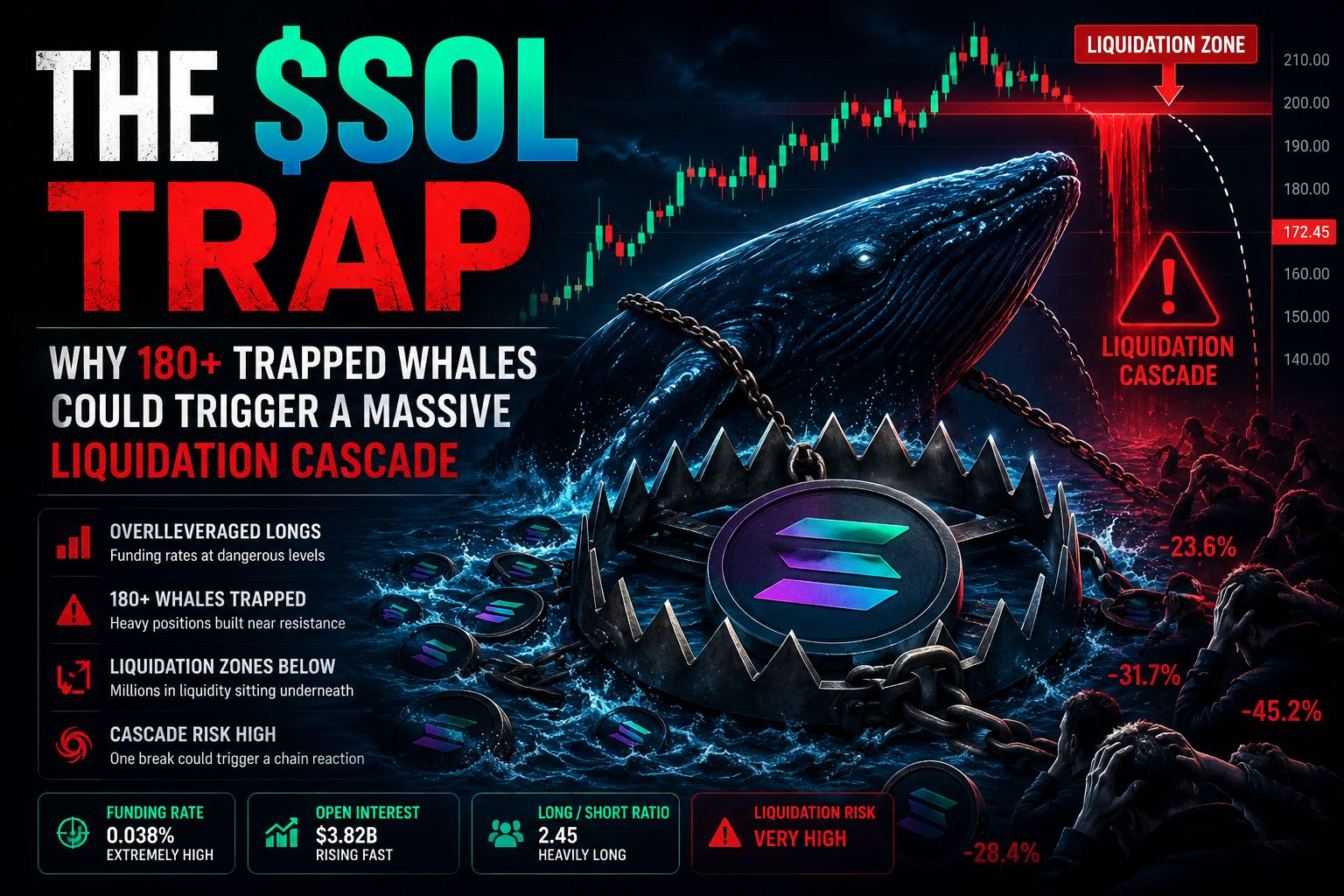
The $SOL Trap: Why 180+ Trapped Whales Could Trigger a Massive Liquidation Cascade
$SOL is starting to look dangerous again.
Not because price is weak.
Because too many traders suddenly became confident at the same time.
Over the last sessions, leveraged longs aggressively piled into SOL after the breakout reclaim, while funding stayed elevated and open interest expanded faster than spot demand.
That combination usually creates one thing:
A liquidity trap.
What Most Retail Traders Are Missing
Retail sees:
- bullish candles
- breakout confirmations
- influencers calling for new highs
Whales see:
- crowded positioning
- late momentum entries
- liquidation fuel sitting below price
The market does not reward crowded confidence for long.
And right now, SOL is beginning to show signs of imbalance.
The Hidden Problem Behind The Rally
A healthy rally is driven by:
- strong spot buying
- stable funding
- sustainable volume
But when:
- open interest rises aggressively
- funding overheats
- price slows near resistance
…the probability of a flush increases sharply.
This is where trapped whales become important.
Several large wallets entered heavily during the recent expansion phase expecting immediate continuation.
Instead:
- momentum slowed
- volume weakened near highs
- liquidity started stacking underneath the market
That creates vulnerability.
If SOL loses key support zones, those oversized leveraged positions can begin unwinding rapidly.
And once liquidation engines activate, the market usually accelerates violently.
Why Liquidation Cascades Become Brutal
Most traders think crashes happen because of fear.
In reality, many crashes are automated.
Here’s how the chain reaction works:
1. Price loses support
2. Leveraged longs get liquidated
3. Forced selling pushes price lower
4. More positions become underwater
5. Liquidation algorithms trigger again
6. Panic spreads across retail
That is the liquidation cascade.
And SOL has historically been one of the fastest-moving assets during these events because of how aggressively traders leverage it during momentum phases.
What Smart Money Is Watching Now
Whales are not chasing candles here.
They are watching:
- funding reset levels
- spot absorption
- exchange inflows
- leverage overcrowding
If smart money sees retail overexposed while momentum weakens, they often push price toward high-liquidity liquidation zones intentionally.
This is why many “healthy pullbacks” suddenly become violent flushes.
Not because fundamentals changed overnight.
Because liquidity became too attractive.
Bullish Scenario
SOL remains strong if:
- buyers defend high-volume support zones
- funding cools without heavy downside
- spot demand returns aggressively
In that case:
- trapped shorts can fuel another expansion leg
- whales may continue accumulation
- momentum traders re-enter higher
Bearish Scenario
Danger begins if:
- support breaks with rising volume
- funding stays elevated during weakness
- open interest fails to reset
That setup can trigger:
- cascading long liquidations
- rapid volatility spikes
- emotional retail exits
And those moves usually happen much faster than traders expect.
Final Thought
Most retail traders buy after confirmation.
Whales usually distribute into confirmation.
That does not mean SOL is bearish long term.
But it does mean the current structure is entering a zone where liquidity matters more than emotions.
Right now, this market is no longer about hype.
It is about who gets trapped next.
