I spent the better part of time watching founders try to slap a blockchain onto literally anything that breathes, but the current obsession with marrying crypto and AI usually makes me want to roll my eyes into the back of my head. Most of these projects treat the technology like a marketing slogan rather than a tool, promising some grand utopian future while completely ignoring how the plumbing actually works. That is why I found myself staring at Open Ledger recently, not because I drank the kool-aid, but because they seem to understand a fundamental social pain point that the rest of the industry is completely missing. When you have data, models, and autonomous agents all swirling around and creating value together, the whole machine breaks down if you cannot answer the simple questions of who gets credit, who gets paid, and who can verify the story after the fact.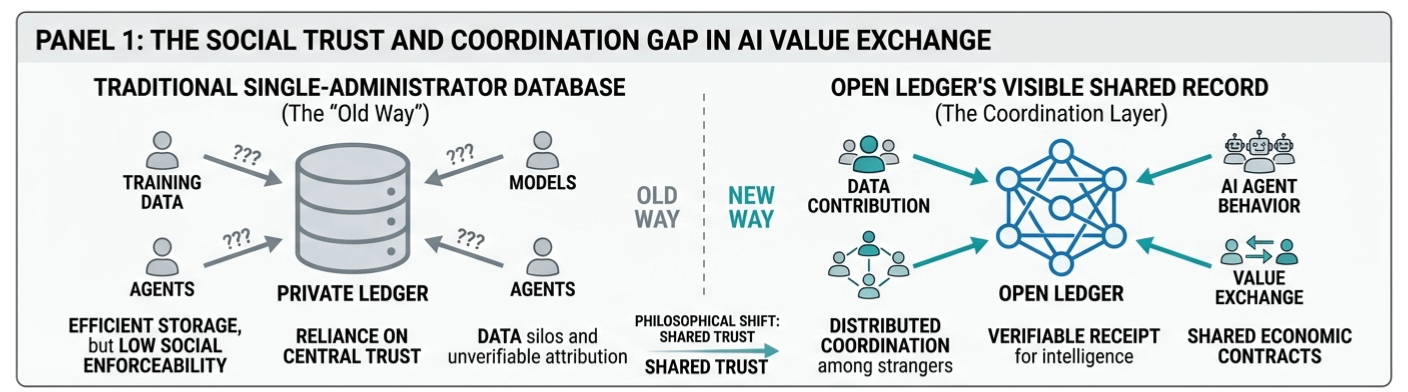
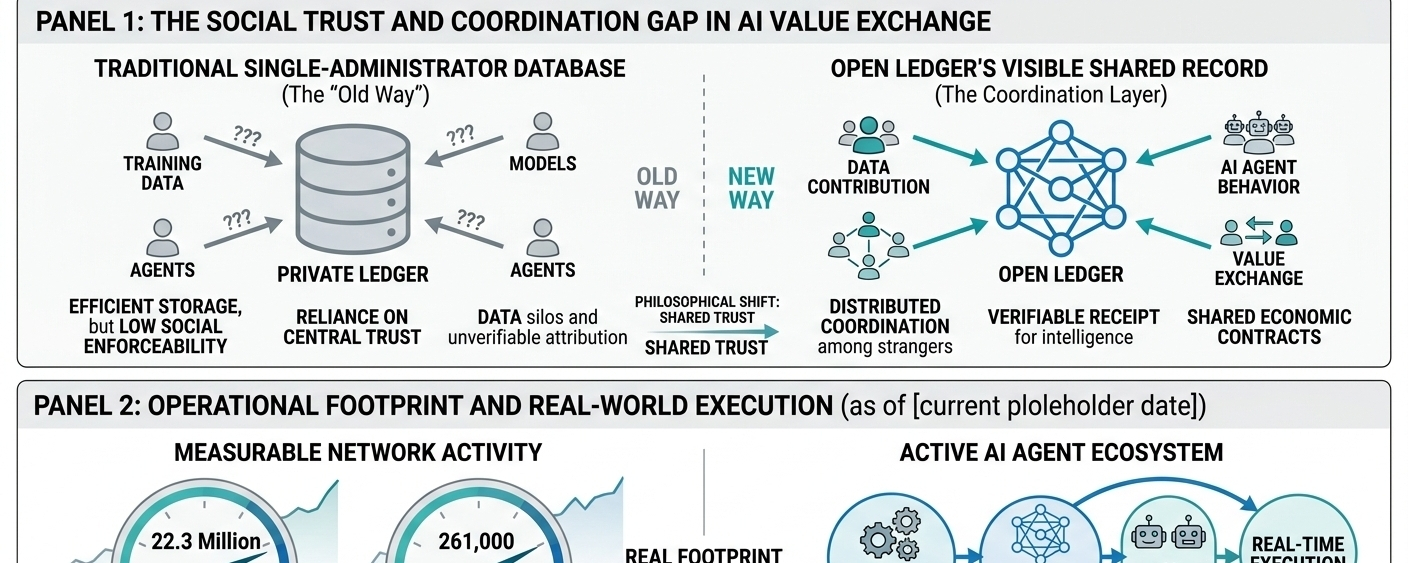
The average tech bro will look at this and tell you that we already have incredibly fast, efficient databases that can store trillions of data points for a fraction of the cost. They are right, but they are also missing the forest for the trees. Databases are brilliant at remembering facts, but they are absolutely miserable at making those facts socially enforceable across a group of total strangers. A traditional database can easily tell you that a specific row of data exists, but it cannot naturally turn that row into a shared economic contract between people who do not trust the same central administrator. That is the old way, where one corporate giant holds the keys and everyone else just has to cross their fingers and pray the books are balanced fairly. Open Ledger is taking a different bet by focusing entirely on attribution and value exchange, attempting to build a working coordination layer where the chain is actually part of the operating environment for AI itself.
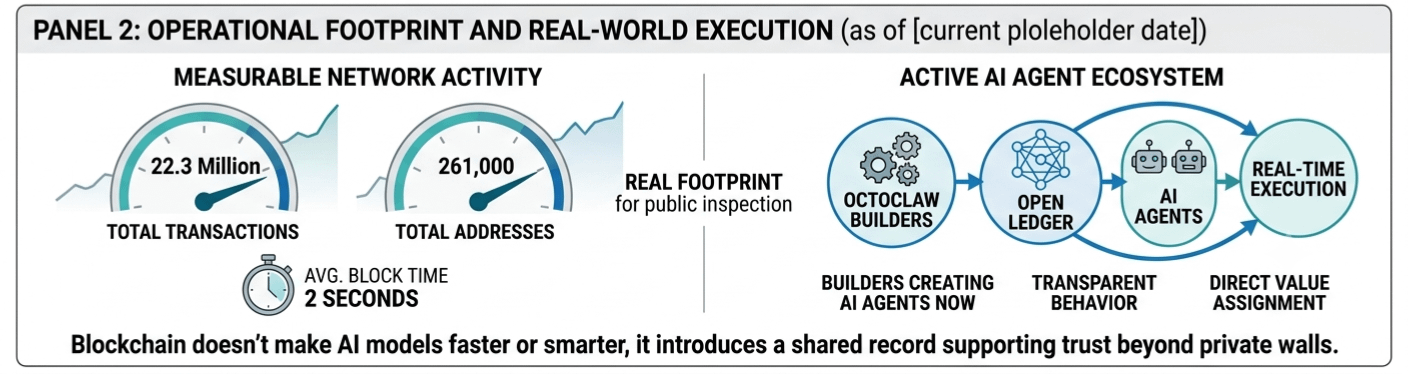
If you look under the hood, this is not just some theoretical concept deck floating around in a whitepaper. The network already has over twenty two million total transactions and more than two hundred sixty thousand addresses, all moving along with an average block time of two seconds. Now, those numbers do not prove that the project will inevitably conquer the world, but they do matter because they show a real, living footprint that outsiders can inspect right now. They are putting this into practice with things like their OctoClaw ecosystem, pushing builders to actually execute with AI agents in real time rather than just talking about it. The big reality check here is that blockchain does not magically make an AI model smarter or faster than a database ever could, and anyone telling you otherwise is selling snake oil. What it actually does is introduce a shared record where data contribution and agent behavior can be made visible enough to support trust beyond one organization's private walls.
When you strip away all the hype and the technical jargon, it comes down to a deeply philosophical shift in how we handle the future of intelligence. A database assumes one single owner can keep the books straight, which works perfectly fine until you realize that the future of AI involves thousands of models being trained, combined, and reused across completely different teams who have zero reason to trust each other. Relying on a single private ledger in that scenario is like trying to run a global shipping port by having every captain keep track of their own cargo on a private notepad. Open Ledger is interesting because it is not pretending that storage and fairness are the same thing. It recognizes that as AI scales, we do not just need a bigger digital warehouse to dump our data into, we need a transparent, unalterable receipt for the intelligence itself.