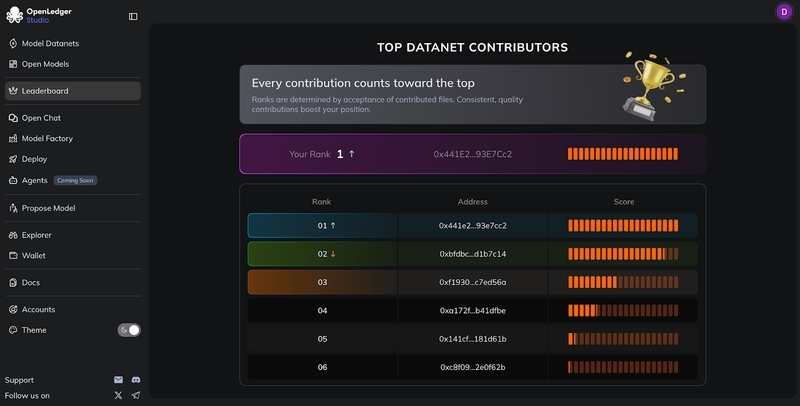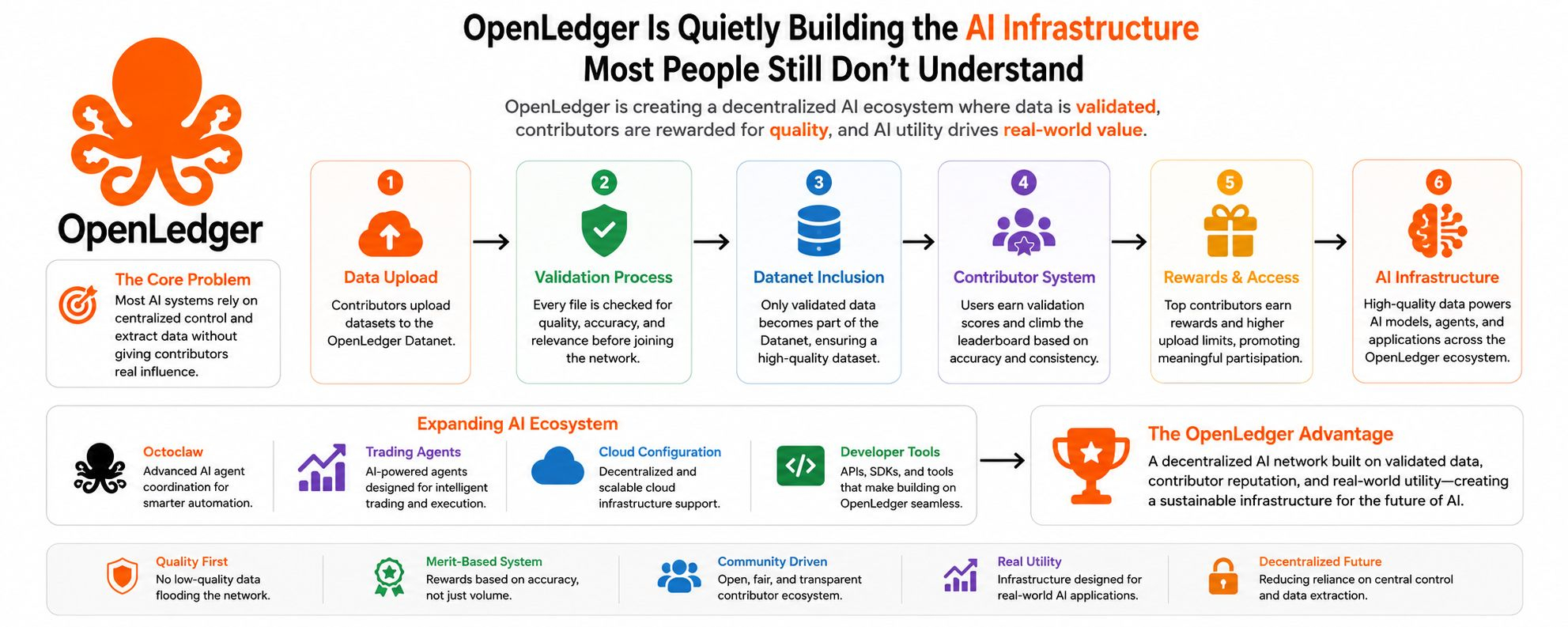
The more time I spend studying AI infrastructure projects, the more obvious one problem becomes: most systems still depend too heavily on centralized control. Data gets collected from everywhere, but very few people actually contribute to shaping the network itself. That imbalance is exactly why OpenLedger caught my attention in the first place.
What makes OpenLedger interesting isn’t just the technology around OPEN, but the way the ecosystem treats data as something that needs structure, validation, and accountability instead of endless extraction. The Datanet system reflects that clearly. Every uploaded file goes through a validation process before it becomes part of the network. The platform checks whether the data actually matches the purpose and quality standards of the Datanet instead of blindly accepting everything users submit. That may sound simple, but it solves a problem that quietly hurts many AI systems today: low quality data flooding decentralized networks.
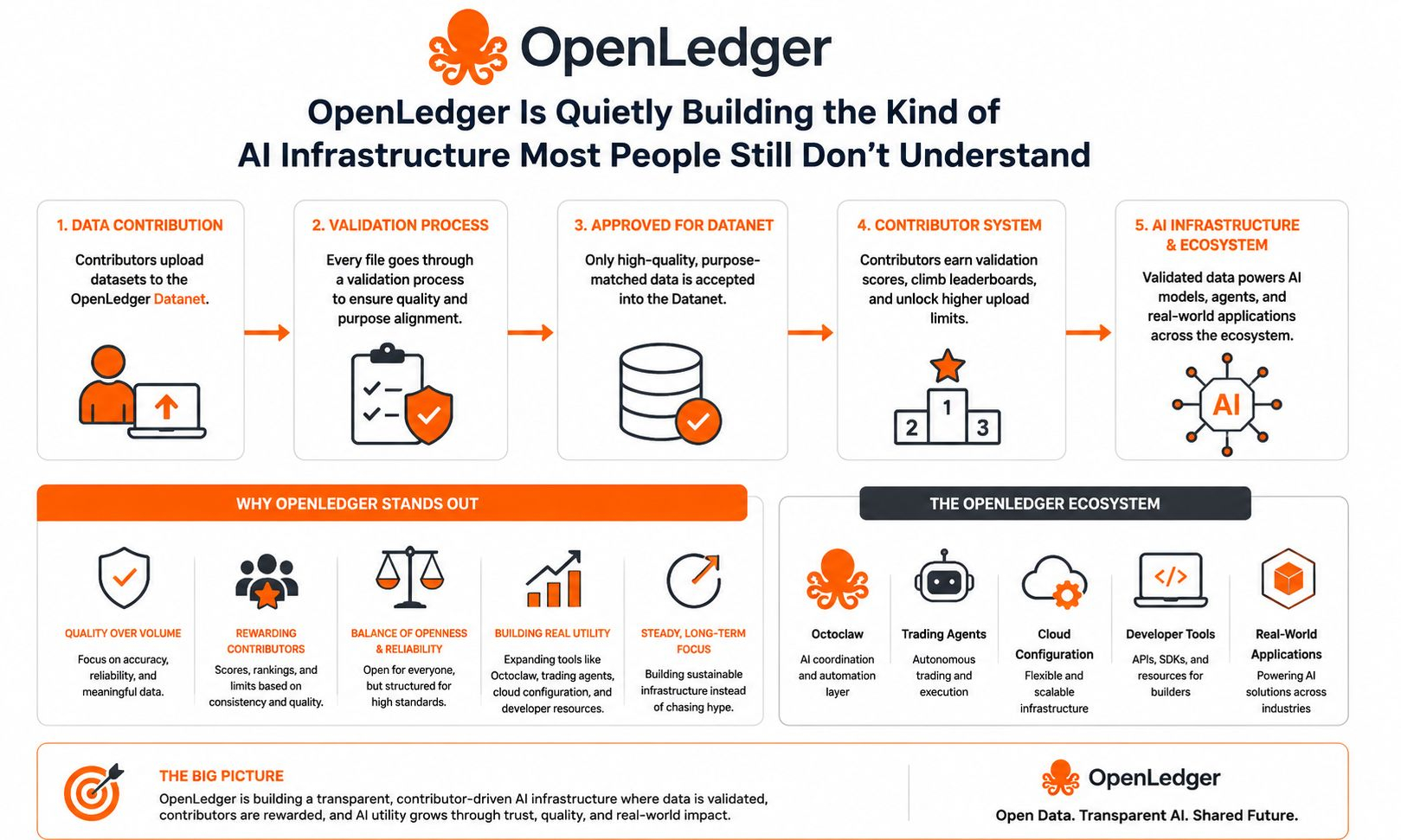
I also find the contributor model surprisingly practical. Validation scores, leaderboard rankings, and upload restrictions create a balance between openness and reliability. Contributors are rewarded for accuracy and consistency rather than just volume. In a space where many platforms chase activity metrics alone, OpenLedger seems more focused on meaningful participation.
Another thing that stood out to me is how the ecosystem keeps expanding beyond basic infrastructure. The recent direction around Octoclaw, trading agents, cloud configuration, and developer focused tools shows that OpenLedger is trying to make AI coordination usable in real environments, not just theoretical. Even the vibe around the project feels different. Instead of promising some instant revolution, the team appears focused on building systems that improve steadily over time.
I think that’s why OpenLedger feels more credible than many projects I’ve researched recently. The platform doesn’t rely entirely on hype cycles or exaggerated narratives. It’s building an environment where validated data, contributor reputation, and AI utility are connected in a way that actually makes sense.
And honestly, in today’s AI landscape, that kind of structure may end up mattering far more than people expect.