

@OpenLedger | $OPEN | #OpenLedger
Crypto has entered a phase where almost every second project wants to connect itself with AI. Some call themselves intelligent agents. Some present themselves as trading assistants. Some post market updates, analyze charts, reply to users, and create the feeling that they are actively participating in the market.
But when you look deeper, many of these so-called AI trading agents are still very limited.
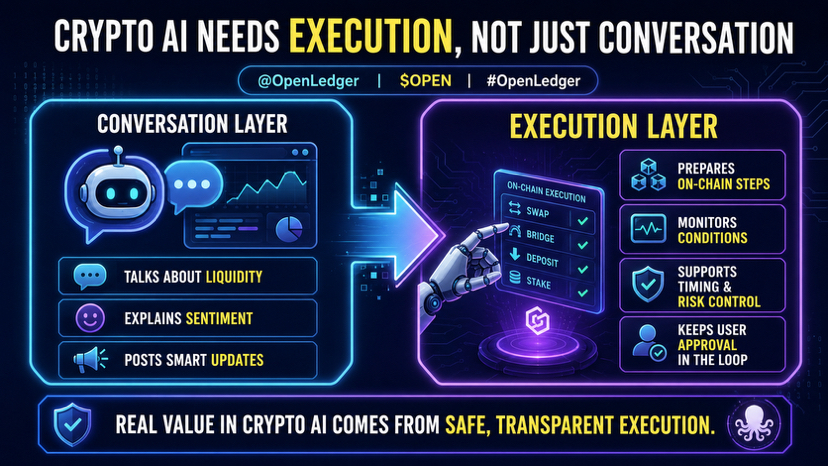
They can talk about liquidity.They can explain market sentiment.They can summarize on-chain activity.They can write smart-sounding posts.
But talking about trading is not the same as executing a real on-chain strategy.
This is where the difference becomes important.
A chatbot can describe what is happening in the market. A real execution tool should help users act on that information safely, transparently, and with clear control. In crypto, the real value is not only in analysis. The real value is in execution, timing, risk control, and trust.
That is why OpenLedger’s direction with OctoClaw feels interesting.
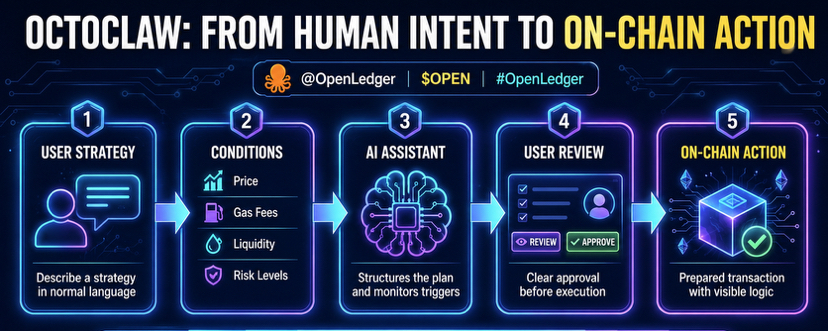
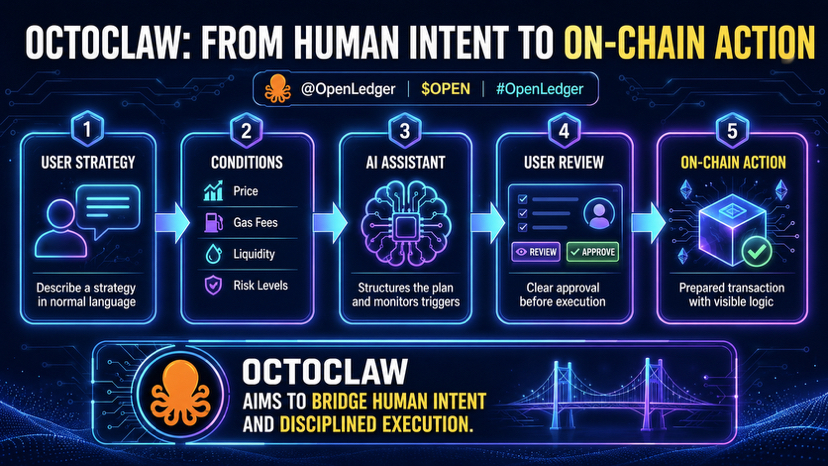
Instead of only building another AI personality that talks about crypto, OctoClaw appears to focus on the missing layer between human intent and on-chain action. The idea is simple but powerful: users should be able to describe a strategy in normal language, and the system should help turn that strategy into structured on-chain steps.
For example, a user may want to set conditions around price, gas fees, portfolio movement, liquidity, or risk levels. A normal chatbot can explain the idea. But a stronger system should help prepare the action, monitor the conditions, and make the process easier without removing user control.
That last part matters a lot.
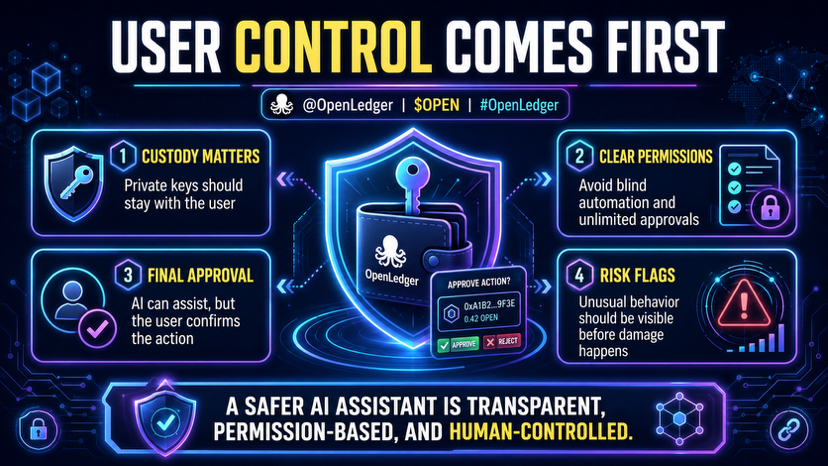
In crypto, custody is everything. Any AI tool that touches funds without clear permission creates serious risk. Private keys, unlimited approvals, blind automation, and unclear decision-making can become dangerous very quickly. AI can be helpful, but it should not become a black box controlling user assets.
OpenLedger’s approach seems more practical because the user remains in control. The AI can assist, prepare, monitor, and suggest, but the final on-chain action should still require clear user approval. This makes the system feel less like a risky robot trader and more like a disciplined execution assistant.
That is a healthier direction for crypto AI.
The market does not need more agents that only post clever threads. It needs tools that can be checked, traced, and trusted. If an AI suggests a route, users should understand why. If it prepares a transaction, the action should be visible. If something looks abnormal, the system should flag it before damage happens.
This is where verifiability becomes important.
A serious AI execution layer should not only focus on speed. It should also focus on transparency. Users need to know what data was used, what condition was triggered, what action was prepared, and where the risk exists. Without that visibility, AI trading tools become another hype cycle with a nicer interface.
OpenLedger’s broader idea fits into this bigger shift.
AI and blockchain should not only be combined for branding. Blockchain can add accountability, traceability, and permission-based execution to AI systems. AI can make crypto tools easier to use, but blockchain can make those AI actions more transparent and verifiable.
That combination is where real value may appear.
Of course, execution will decide everything.
Building an AI-powered on-chain assistant is not easy. Real crypto markets are messy. Gas fees change. Liquidity moves fast. Bridges fail. Oracles can lag. Smart contracts can behave unexpectedly. A good idea only becomes valuable when it works under real market pressure.
So the real question for OpenLedger is not whether the concept sounds strong.
The real question is whether OctoClaw can deliver reliable execution, safe user control, clear transaction logic, and real usage over time.
If it can, then OpenLedger may stand apart from the crowded AI crypto narrative. Not because it talks louder than others, but because it focuses on something more useful: turning AI from a conversation layer into an execution layer.
That is the shift crypto AI needs.
The future will not belong to bots that only sound intelligent.
It will belong to systems that can act carefully, transparently, and safely.
For me, this is why OpenLedger is worth watching.
Not as a hype story.
Not as a magic trading machine.
But as a possible step toward practical, verifiable AI execution in Web3.
#OpenLedger #OPEN