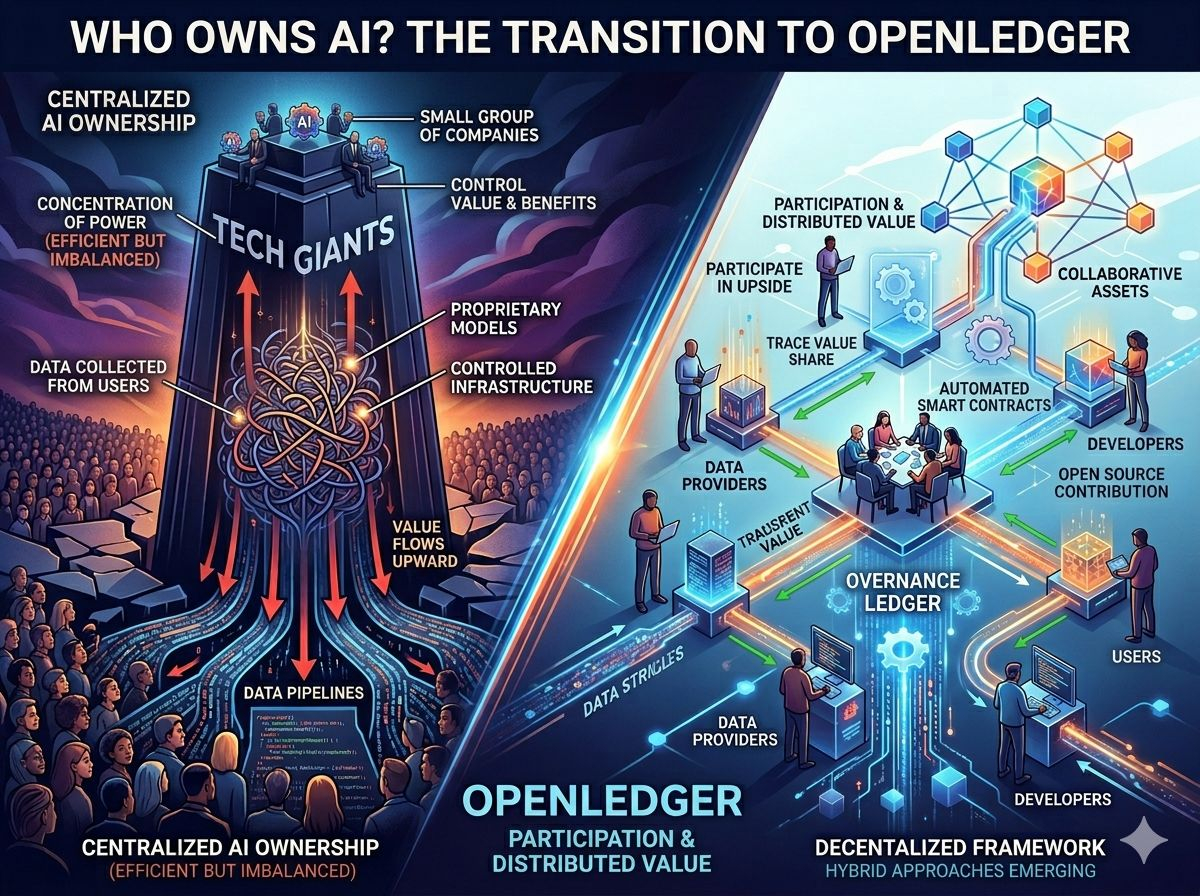
A new financial dynamic is forming where artificial intelligence and decentralized systems intersect, and it’s starting to reshape how value moves. The idea of an AI liquidity loop is simple on the surface but powerful in practice. Data flows into models, models generate outputs, those outputs create economic activity, and that activity feeds back into the system as incentives. What emerges is not just a cycle of innovation, but a continuous loop of value creation and distribution.
For years, liquidity has been a concept tied to capital markets, where assets move freely and efficiently between participants. Now that concept is expanding into the world of intelligence. Data, compute, and models are becoming liquid assets that can be exchanged, priced, and rewarded in real time. Instead of static ownership, these components exist within a dynamic system where contributions are constantly evaluated and compensated. This is where AI begins to function not just as a tool, but as an active participant in an economic network.
At the center of this loop is data. Every interaction, dataset, and refinement feeds into AI systems that improve over time. In traditional environments, this process is largely invisible and controlled by centralized platforms. In emerging on-chain ecosystems, however, data becomes traceable and monetizable. Contributors are no longer passive. They can provide inputs, validate outputs, and earn from the value their contributions generate. This creates a more direct connection between effort and reward.
Models act as the engine of the loop. As they process data and deliver results, they generate utility that can be priced within the network. Whether it’s predictions, content generation, or automation, each output carries economic weight. When these outputs are used, value flows back into the system through fees, tokens, or other incentive mechanisms. This feedback strengthens the loop, encouraging continuous participation and improvement.
Liquidity in this context is not just about money moving, it’s about value being accessible. Participants can enter the system at different points. Some contribute data, others provide computational power, and some build or refine models. Each role is connected through programmable incentives that ensure value circulates rather than accumulates in one place. This creates a more balanced ecosystem where growth is driven by participation, not just control.
The financial layer beneath this loop is what gives it structure. Token-based systems often act as the medium of exchange, aligning incentives across contributors. Smart contracts automate how rewards are distributed, reducing friction and increasing transparency. When designed effectively, these mechanisms can sustain long-term engagement and encourage higher-quality contributions. The system becomes self-reinforcing, with each cycle strengthening the next.
However, building this loop is not without challenges. Ensuring data quality is critical, especially in open systems where anyone can contribute. Without proper validation, the loop can weaken, as poor inputs lead to unreliable outputs. Reputation systems, staking mechanisms, and decentralized verification processes are all being explored to address this. These tools aim to maintain integrity without sacrificing openness.
Scalability also plays a major role. AI workloads demand significant resources, and integrating them with decentralized infrastructure requires careful design. Hybrid models are becoming more common, where heavy computation happens off-chain while coordination and value exchange remain on-chain. This balance allows the loop to function efficiently while preserving transparency and trust.
There are also broader considerations around ethics and governance. As value becomes more fluid and widely distributed, questions around fairness, privacy, and consent become more visible. Participants need clarity on how their data is used and how rewards are calculated. Governance models must evolve to ensure that decisions reflect the interests of the network rather than a small group of stakeholders.
Despite these challenges, the AI liquidity loop represents a significant shift in how digital economies operate. It moves away from linear models of value extraction and toward circular systems where value is continuously created and shared. This has the potential to unlock new forms of collaboration, where individuals and organizations can participate without needing centralized approval or control.
In the short term, experimentation will define the space. New protocols and platforms will test different ways to structure incentives and manage contributions. Some will struggle to maintain balance, while others will find sustainable models that attract long-term participation. The key will be aligning economic rewards with meaningful contributions, ensuring that the loop remains productive and not purely speculative.
Over time, as these systems mature, the implications could be far-reaching. AI could become a fully integrated financial layer where intelligence itself is liquid, accessible, and continuously generating value. This would not only change how technology is built, but also how wealth is distributed in a digital world. The loop would extend beyond individual platforms, connecting ecosystems and creating a broader network of shared intelligence.
The emergence of the AI liquidity loop signals a move toward a more interconnected and participatory future. It challenges traditional boundaries between technology and finance, blending them into a system where value flows as freely as information. As this loop strengthens, it will shape the next phase of innovation, one where intelligence is not just created, but actively traded, rewarded, and sustained within an evolving economic cycle.