I’ve been spending more time exploring projects that combine AI and blockchain, and honestly, most of them start sounding the same after a while. A lot of big promises, a lot of futuristic language, but not enough focus on how real people or developers would actually use the technology day to day.
That’s why OpenLedger caught my attention differently.
The more I looked into it, the more it felt like the team is trying to build something practical instead of just creating hype around artificial intelligence. What stood out to me most was how much attention they seem to give to infrastructure, usability, and compatibility rather than forcing users into an entirely new ecosystem that nobody understands.
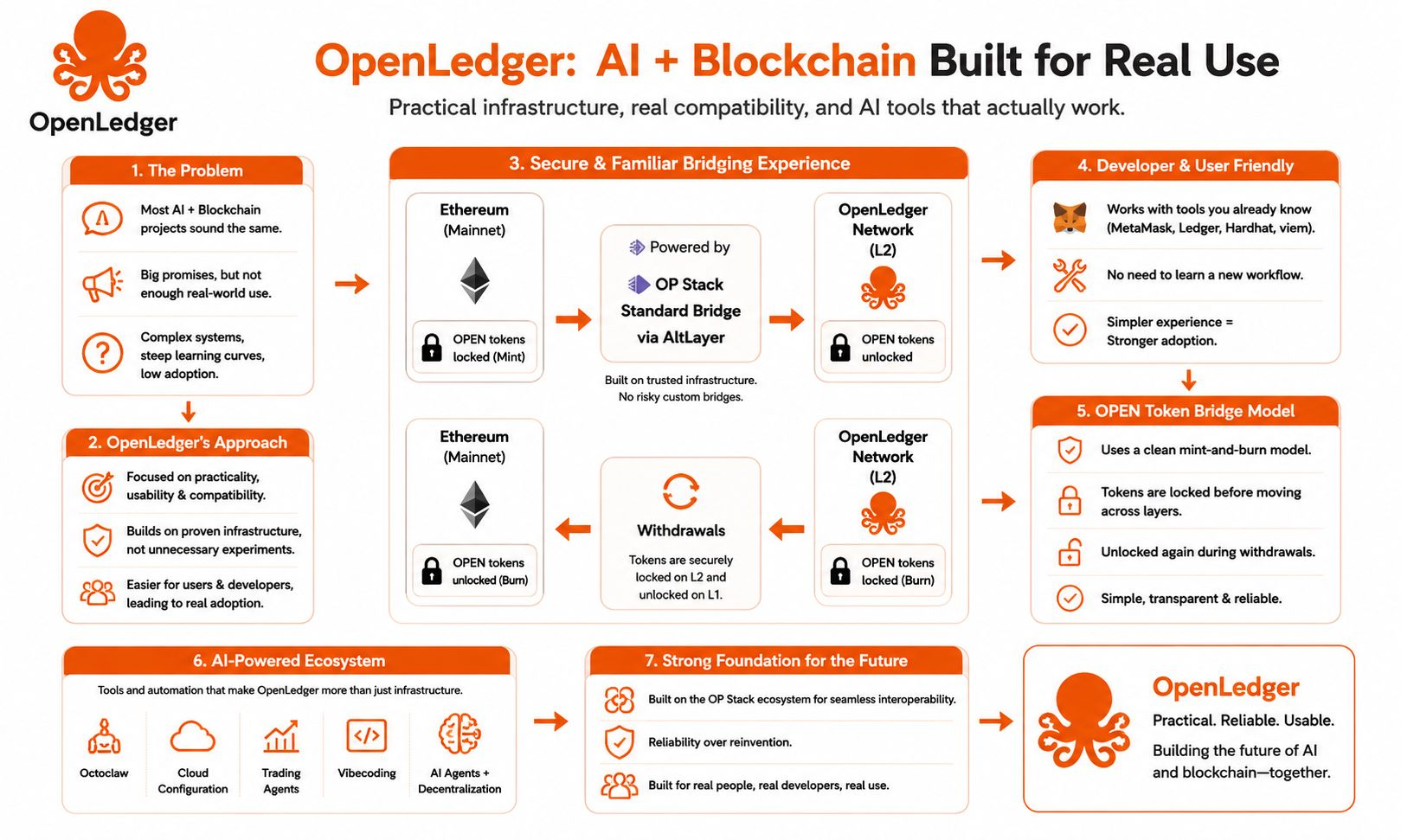
One thing I genuinely liked was the way OpenLedger handles bridging.
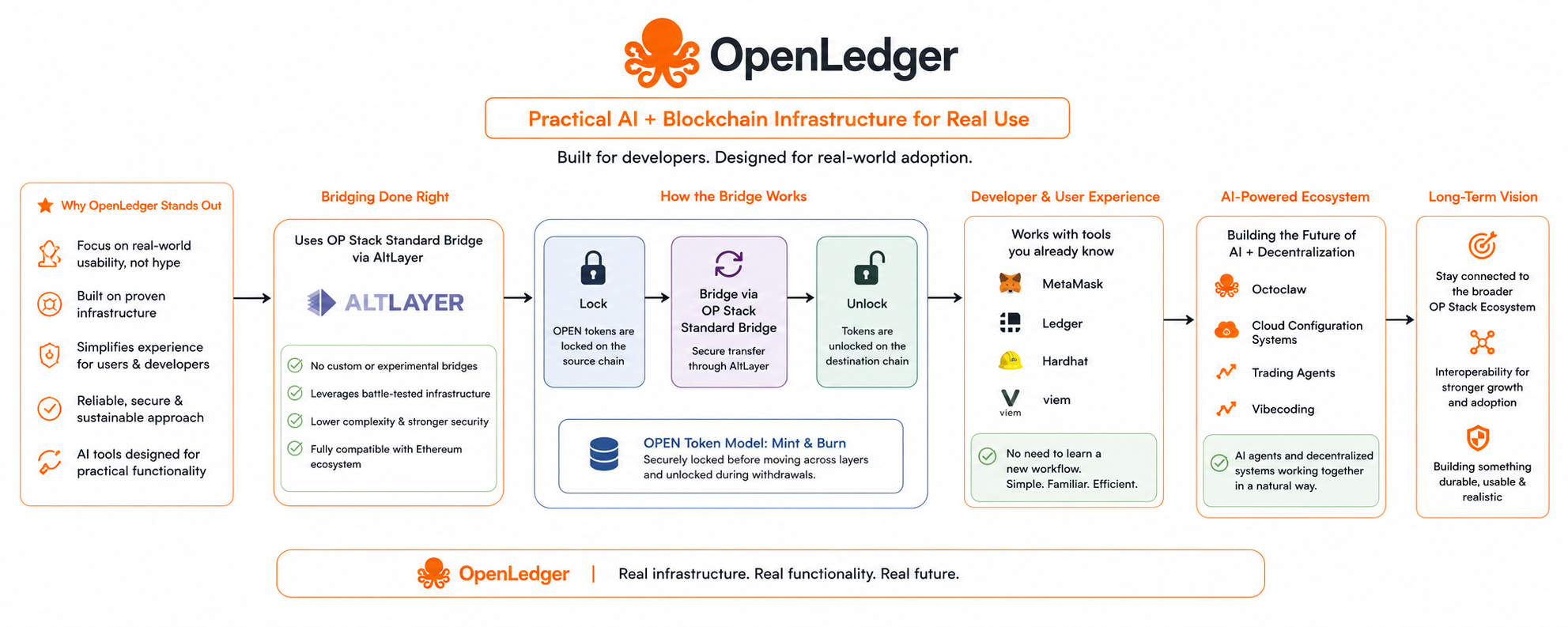
Usually when projects create custom bridges, it introduces extra complexity and, in many cases, additional security risks. We’ve already seen enough examples in crypto where experimental bridge systems became major weak points. OpenLedger didn’t go in that direction. Instead, it uses the OP Stack Standard Bridge through AltLayer, which immediately makes the whole setup feel more familiar and trustworthy.
To me, that says a lot about the mindset behind the project.
Rather than trying to reinvent every single component just to appear different, OpenLedger seems more focused on building on proven infrastructure that already works well inside the Ethereum ecosystem. That approach feels smarter and more sustainable in the long run.
I also think this matters because it makes the experience easier for normal users and developers. People can continue using tools they already know, like MetaMask, Ledger, Hardhat, and viem, without needing to learn an entirely new workflow. In blockchain, simplicity is underrated. Projects often forget that adoption only happens when systems become easier to use, not harder.
Another part that interested me was how the OPEN token functions inside the bridge system.
Instead of using some complicated experimental structure, OpenLedger follows a more familiar mint and burn model. Tokens are securely locked before they move across layers, and then unlocked again during withdrawals. It’s a cleaner and more understandable process, which honestly gives me more confidence as a user.
What I appreciate most is that OpenLedger didn’t heavily modify the core bridge architecture. A lot of security problems in crypto happen when teams start changing battle-tested systems too aggressively. OpenLedger seems to understand that reliability matters more than unnecessary customization.
Outside of the infrastructure itself, I’ve also been paying attention to the ecosystem they’re building around AI tools and automation.
Things like Octoclaw, cloud configuration systems, trading agents, and vibecoding make the project feel more alive and forward looking. It doesn’t feel like AI is being added only as a marketing word. Instead, it feels like OpenLedger is genuinely trying to create an environment where AI agents and decentralized systems can work together naturally.
That’s important because many AI blockchain projects still feel theoretical. They sound exciting in presentations, but you struggle to imagine how people would actually use them. OpenLedger feels different to me because the focus appears to be on real functionality and developer accessibility.
I also think staying connected to the broader OP Stack ecosystem is a smart decision. Interoperability will probably become one of the biggest advantages in blockchain over the next few years. Networks that stay compatible with larger ecosystems usually have a stronger foundation for growth.
At the end of the day, what makes OpenLedger interesting to me is not just the technology itself. It’s the feeling that the project is trying to build something durable, usable, and realistic in a space where many projects only chase attention.
And honestly, that kind of approach feels rare right now.