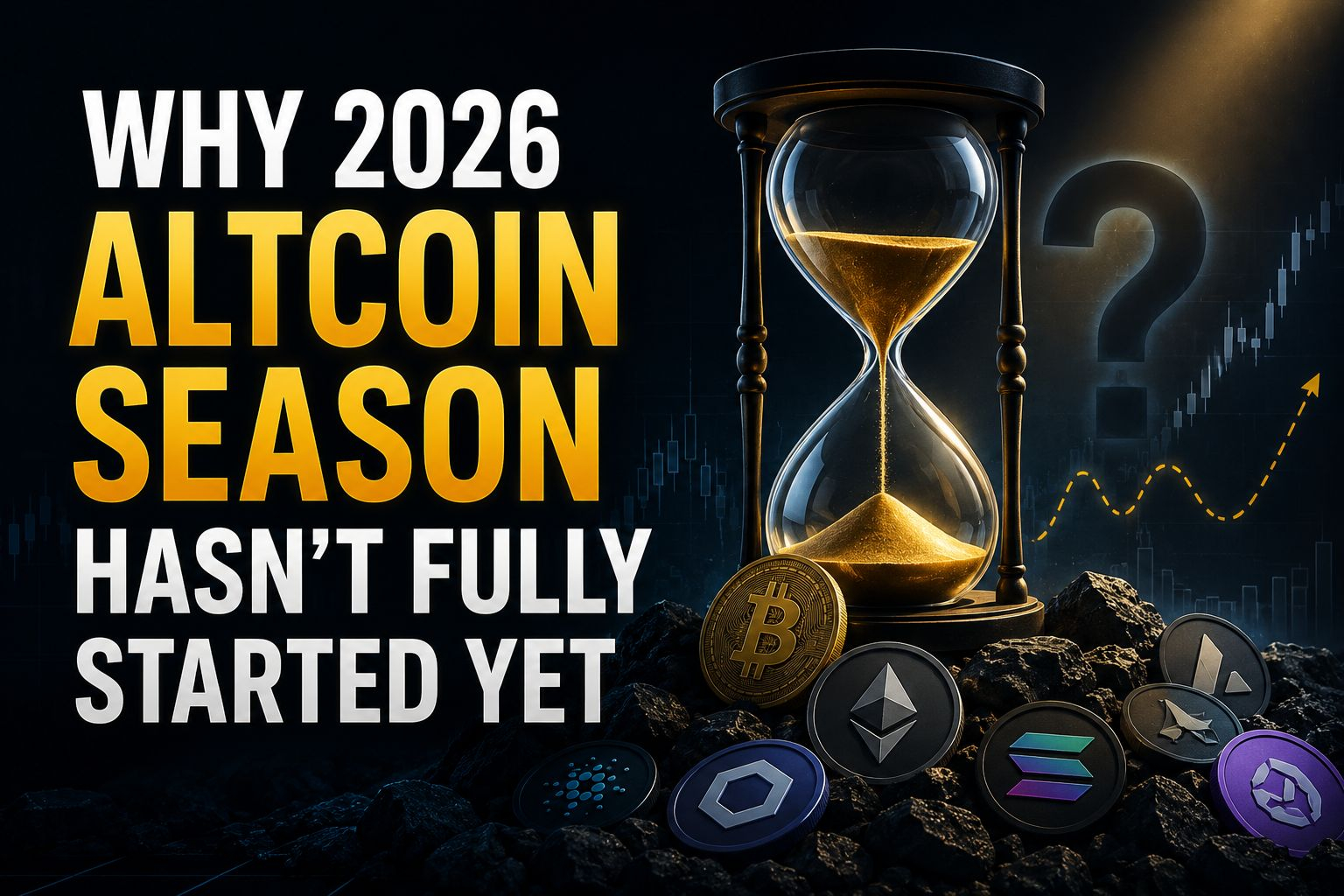


For months, crypto traders have been asking the same question: where is altseason? Bitcoin has remained strong, ETF inflows continue to dominate headlines, and while certain altcoins and meme tokens have seen short bursts of momentum, the broad, sustained altcoin rally many expected in 2026 has not fully materialized. The reason lies in a fundamental shift in how the crypto market now operates.
In previous cycles, capital typically rotated in a predictable sequence—first into Bitcoin, then Ethereum, followed by large-cap altcoins, and eventually into mid- and low-cap tokens. That flow created the explosive, market-wide altcoin seasons traders remember from 2017 and 2021. In 2026, however, this rotation has slowed significantly. Bitcoin continues to absorb the majority of liquidity, largely driven by institutional demand and the expansion of spot ETF products. Instead of capital cascading into altcoins, much of it remains concentrated at the top of the market.
The rise of ETFs has introduced a new structural dynamic. Institutional capital behaves very differently from retail speculation. Rather than chasing high-risk, smaller-cap tokens, institutions tend to allocate heavily toward Bitcoin and, to a lesser extent, Ethereum. This creates a liquidity imbalance where major assets grow stronger while altcoins compete over a much smaller pool of speculative capital. As a result, rallies in altcoins are often isolated and short-lived rather than broad and sustained.
Market indicators further support this view. The widely followed altcoin season index continues to signal that the market is still in what can be considered a “Bitcoin-dominant phase.” Historically, a true altseason only begins when the majority of top altcoins outperform Bitcoin over a sustained period. That condition has not yet been met, indicating that capital has not fully rotated into higher-risk assets.
Macroeconomic conditions are also playing a significant role. Global liquidity remains relatively tight compared to previous bull cycles, with high interest rates and cautious monetary policy limiting risk appetite across financial markets. In this environment, investors are more selective, prioritizing assets with stronger narratives or institutional backing. This explains why Bitcoin can maintain strength while many altcoins remain far below their previous highs.
Another defining characteristic of the current cycle is fragmentation within the altcoin market itself. Unlike previous cycles where most altcoins moved together, 2026 has become highly narrative-driven. Capital rotates quickly between sectors such as artificial intelligence, real-world asset tokenization, DePIN, gaming, and meme ecosystems. This leads to sharp but localized rallies, rather than a synchronized market-wide surge. In effect, what traders are witnessing is not the absence of opportunity, but the transformation of altseason into a series of smaller, sector-specific waves.
Ethereum’s role in this cycle is also critical. Historically, strong outperformance by Ethereum relative to Bitcoin has acted as a catalyst for broader altcoin rallies. However, Ethereum has spent much of this cycle competing with Bitcoin’s dominance rather than clearly leading the market. Until Ethereum establishes sustained strength against Bitcoin, the conditions for a full altcoin expansion may remain incomplete.
This does not mean altseason will not happen—it simply means it may not resemble what traders experienced in the past. The current market is more mature, more influenced by institutional capital, and more focused on utility-driven narratives. Instead of thousands of altcoins rising simultaneously, the next phase is likely to be more selective, with capital flowing into projects that align with major trends such as AI integration, stablecoin infrastructure, and tokenized real-world assets.
Ultimately, the expectation of a repeat of 2021 may be misleading. The crypto market has evolved into a more complex ecosystem where liquidity, macro conditions, and institutional behavior play a far greater role than before. Rather than waiting for a universal altcoin rally, traders may need to adapt to a new reality—one where success depends less on broad market timing and more on identifying the right narratives at the right moment.