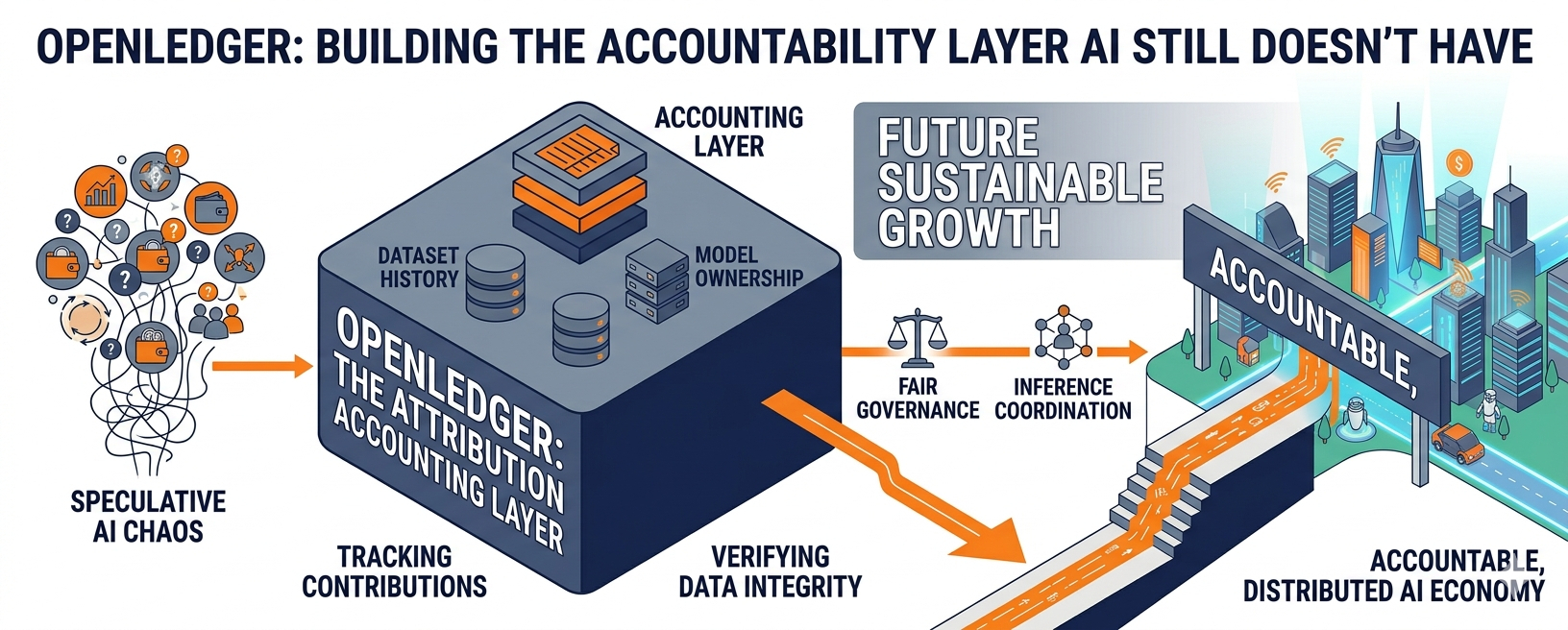

It was close to midnight when I started noticing something odd again in the AI sector. Wallet activity across several AI-related ecosystems had suddenly picked up, but most of it looked familiar in the worst way. Big spikes, fast liquidity rotations the same wallets moving funds in circles. It felt more like people trading narratives than people actually using infrastructure.
That has become pretty normal in crypto.
Every project wants to call itself the future of AI now but once you look past social media momentum most ecosystems feel empty. The activity disappears quickly. The usage patterns rarely look organic.
Then I came across @OpenLedger and the behavior looked completely different.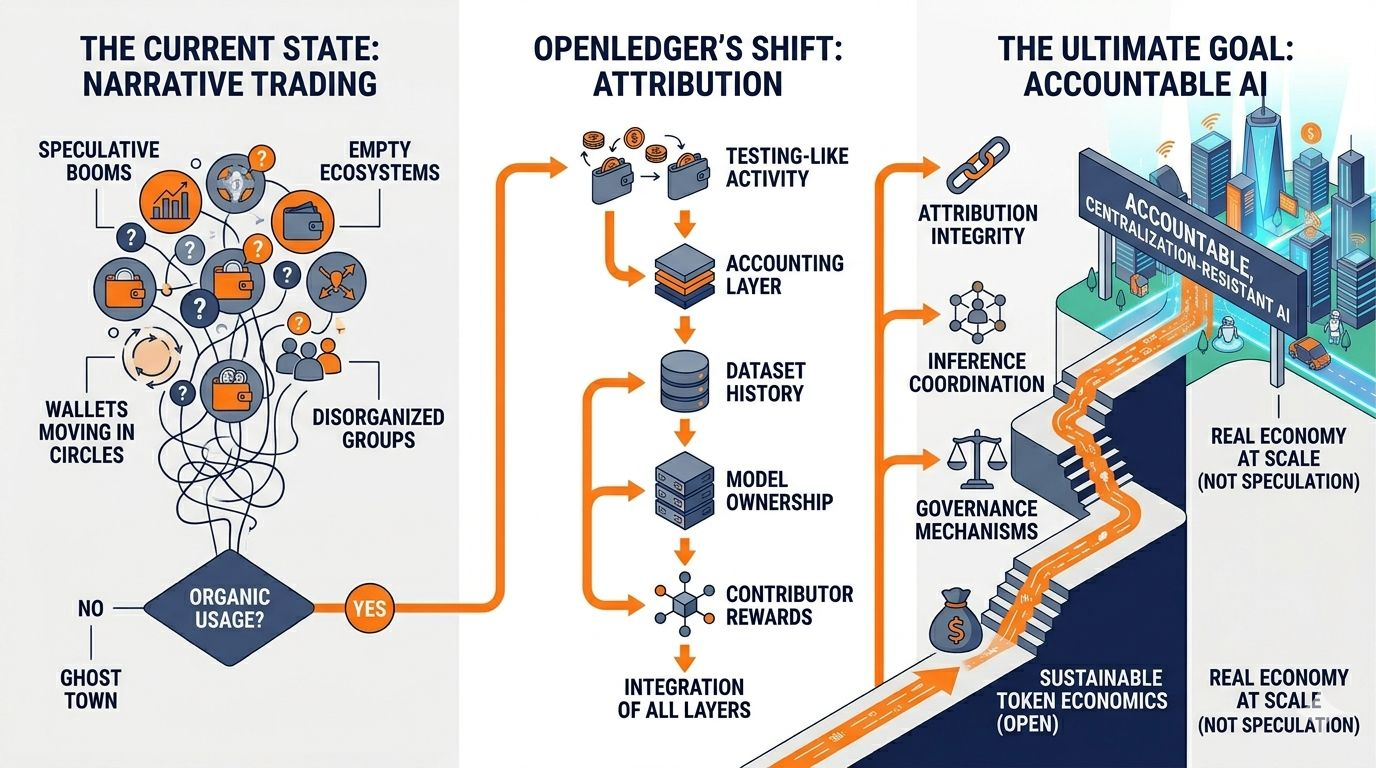
The transactions were smaller. Repetitive. Consistent over time. Some wallets kept interacting with inference-related contracts for days instead of jumping in and out after short speculative moves. It didn’t look exciting honestly. And that was exactly what made it interesting.
It looked like a system actually being tested.
That was the point where I stopped viewing OpenLedger as just another AI token trying to ride the current narrative cycle. The project seems focused on a much deeper problem that the AI industry still hasn’t solved properly: ownership.
Right now, most AI systems operate inside closed platforms. Data goes in, models improve, companies capture the value and the people contributing information or activity usually disappear from the economic picture completely. Everything becomes centralized behind the model itself.
OpenLedger appears to be approaching the problem differently.
Instead of only tracking transactions, the network is trying to track contribution history tied to datasets, models and eventually AI agents operating across different ecosystems. In other words, it’s trying to create a system where intelligence can carry attribution with it.
That sounds simple until you think about how difficult it actually is.
Most AI crypto projects focus on compute markets, decentralized training or agent ecosystems. OpenLedger seems more interested in the accounting layer underneath all of that. Who contributed value? Where did that value move? Who should be rewarded later if a model or agent becomes useful at scale?
Those questions become extremely complicated once autonomous systems start interacting with each other continuously.
I noticed some of that complexity while interacting with parts of the ecosystem tied to inference activity. A few transactions took longer than expected. Certain execution paths felt heavier than normal blockchain interactions. Oddly enough that made the project more convincing to me.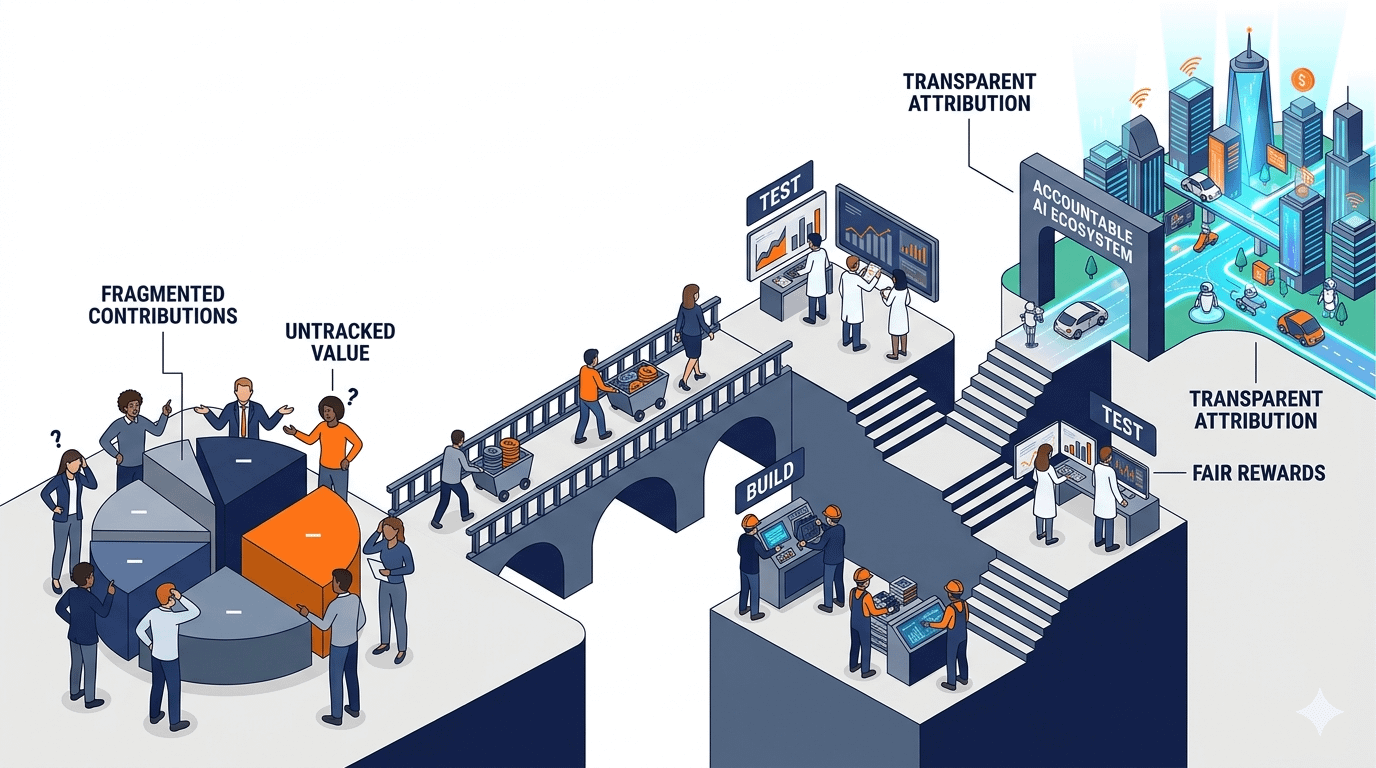
Real infrastructure usually feels inefficient before it feels smooth.
Trying to coordinate blockchain verification, attribution tracking, contributor rewards and AI activity at the same time is not lightweight engineering. Most protocols struggle balancing even two of those layers properly.
You can see pieces of this idea in earlier projects. Ocean Protocol explored tokenized data ownership but never really broke into mainstream adoption. Bittensor pushed decentralized intelligence through subnet competition. Filecoin showed how difficult long-term infrastructure coordination becomes once economics and technical performance start depending on each other.
OpenLedger is dealing with an additional problem on top of all that: attribution integrity.
Traditional blockchains mostly need to protect transaction validity and network consensus. OpenLedger also has to convince participants that contribution measurement itself is fair. If people stop trusting the attribution system, the reward structure weakens immediately.
That creates governance problems too.
At some point, someone has to define what counts as legitimate participation, acceptable data sourcing, low-quality inference activity or malicious agent behavior. Those decisions eventually turn into economic power inside the ecosystem whether people realize it early or not.
The OPEN token structure is also worth watching closely.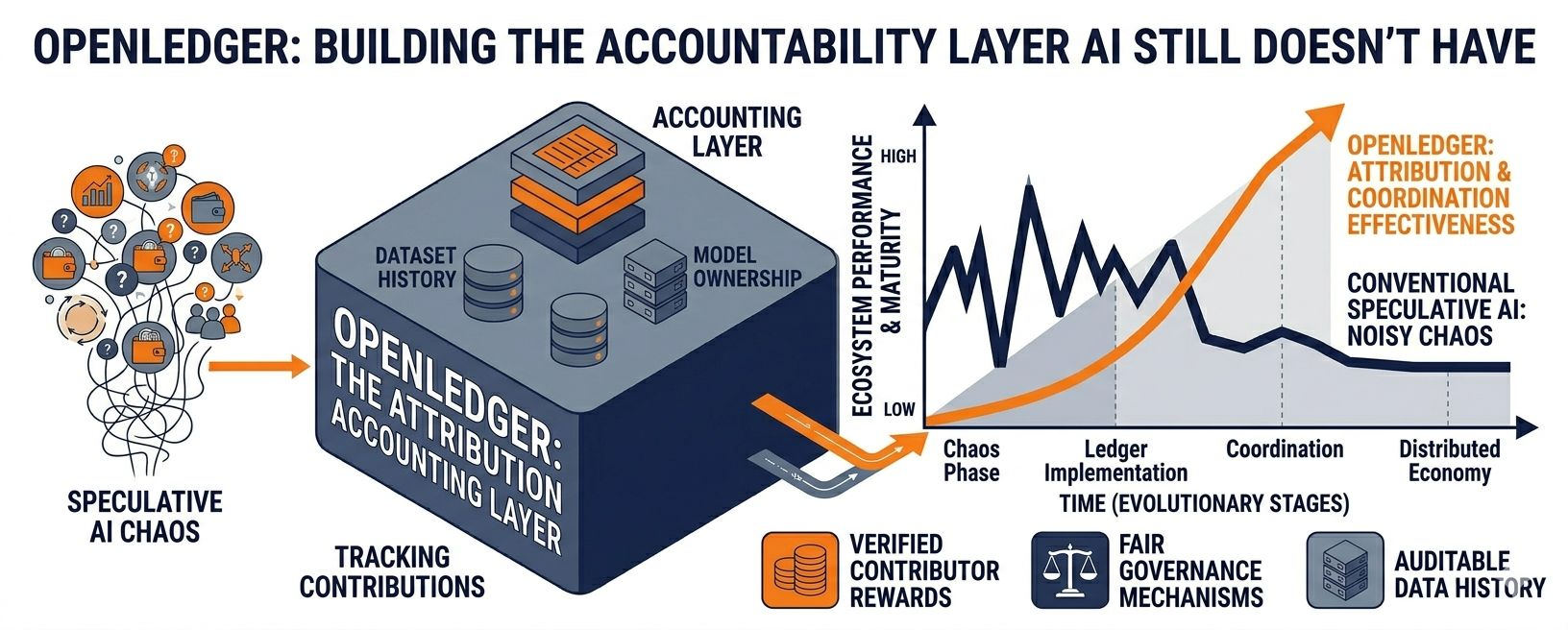
From what I’ve seen the token seems tied to contributor incentives, inference coordination and ecosystem participation rather than existing purely as a speculative asset. Of course, crypto has produced plenty of ecosystems that looked sustainable until emissions slowed down and usage disappeared overnight.
That part still needs time to prove itself.
The real test is whether developers, datasets and autonomous agents continue using the network once the initial AI hype cools off. Competition in this sector is already getting aggressive and larger ecosystems are entering the space with far more capital, visibility and infrastructure.
Still, after spending hours looking through the architecture and wallet behavior one thing kept standing out to me.
OpenLedger doesn’t feel like a blockchain trying to make AI smarter.
It feels like a blockchain trying to make AI accountable before these systems become too large and too centralized to track later.
That distinction might not seem important right now. But if autonomous agents eventually start interacting with real economies at scale, attribution and ownership may end up mattering just as much as intelligence itself.