
Lately I keep noticing how people talk about AI data differently. It used to be treated like fuel. Something models consume and move past. Now the conversation feels quieter. More people seem to ask who owns the data layer and who keeps earning after the model is built.
That shift kept pulling me back to OpenLedger. Not because it promises some new AI narrative. More because it seems built around the idea that data itself may become an asset people expect returns from.
I think that changes the whole framing. If AI models keep generating value over time then the inputs behind them stop looking disposable. Data starts looking closer to infrastructure. Maybe even something yield bearing if incentives hold.
@OpenLedger feels interesting here because it does not only focus on models. The network keeps data contributors inside the value loop. The blockchain architecture ties participation, contribution and AI activity together instead of separating them.
The part I kept thinking about was data monetization. OpenLedger treats contributors less like one time suppliers and more like ongoing participants. If data keeps feeding models and agents inside the network then value capture becomes a bigger question.
That is where the idea gets uncomfortable too. Yield only works if the asset keeps producing value. So OpenLedger depends heavily on whether data quality can stay high while incentives stay active.
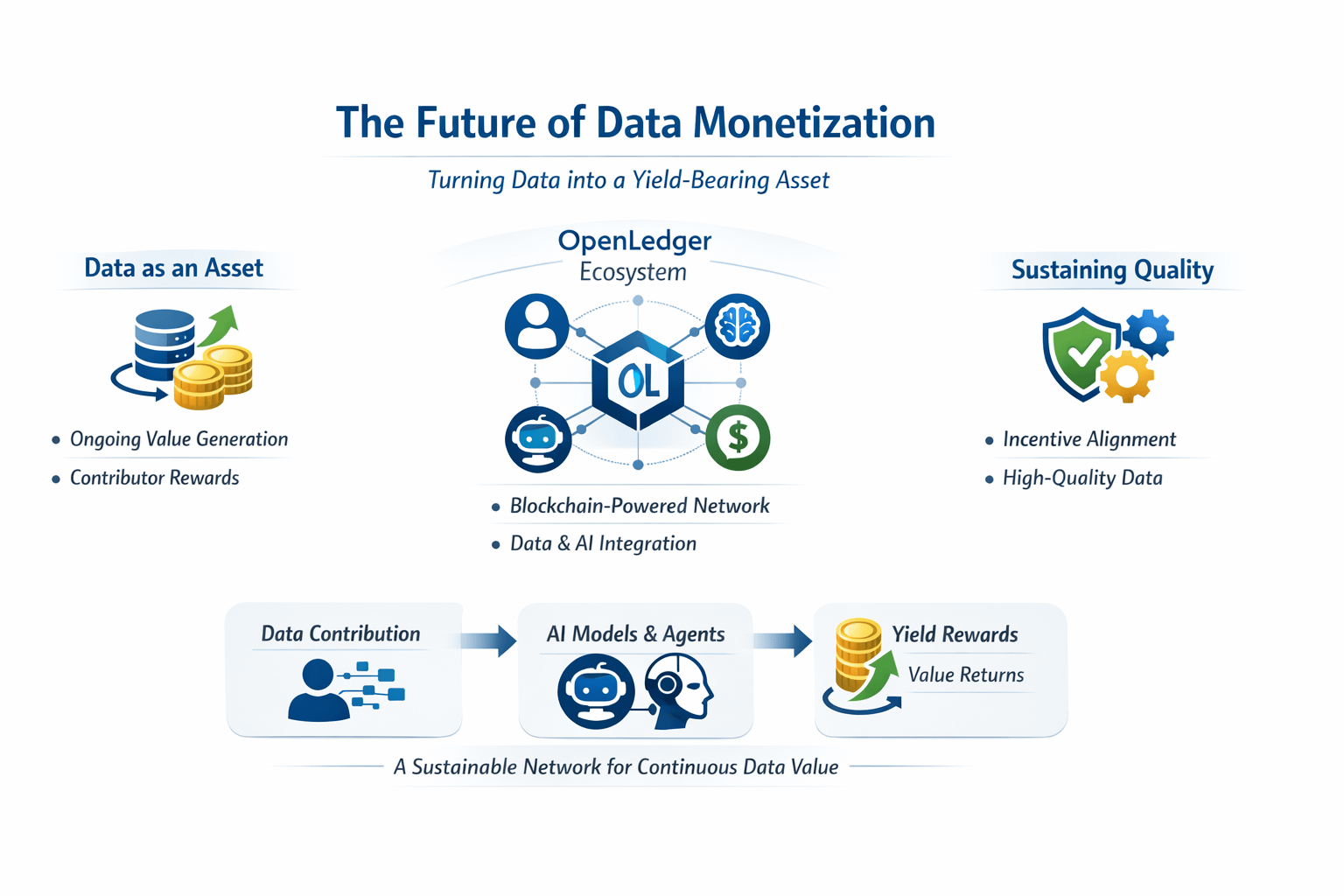
I have seen many systems where rewards attract quantity first and quality later becomes a problem. OpenLedger tries to solve this through contributor incentives and participation design but I still wonder how stable that becomes at scale.
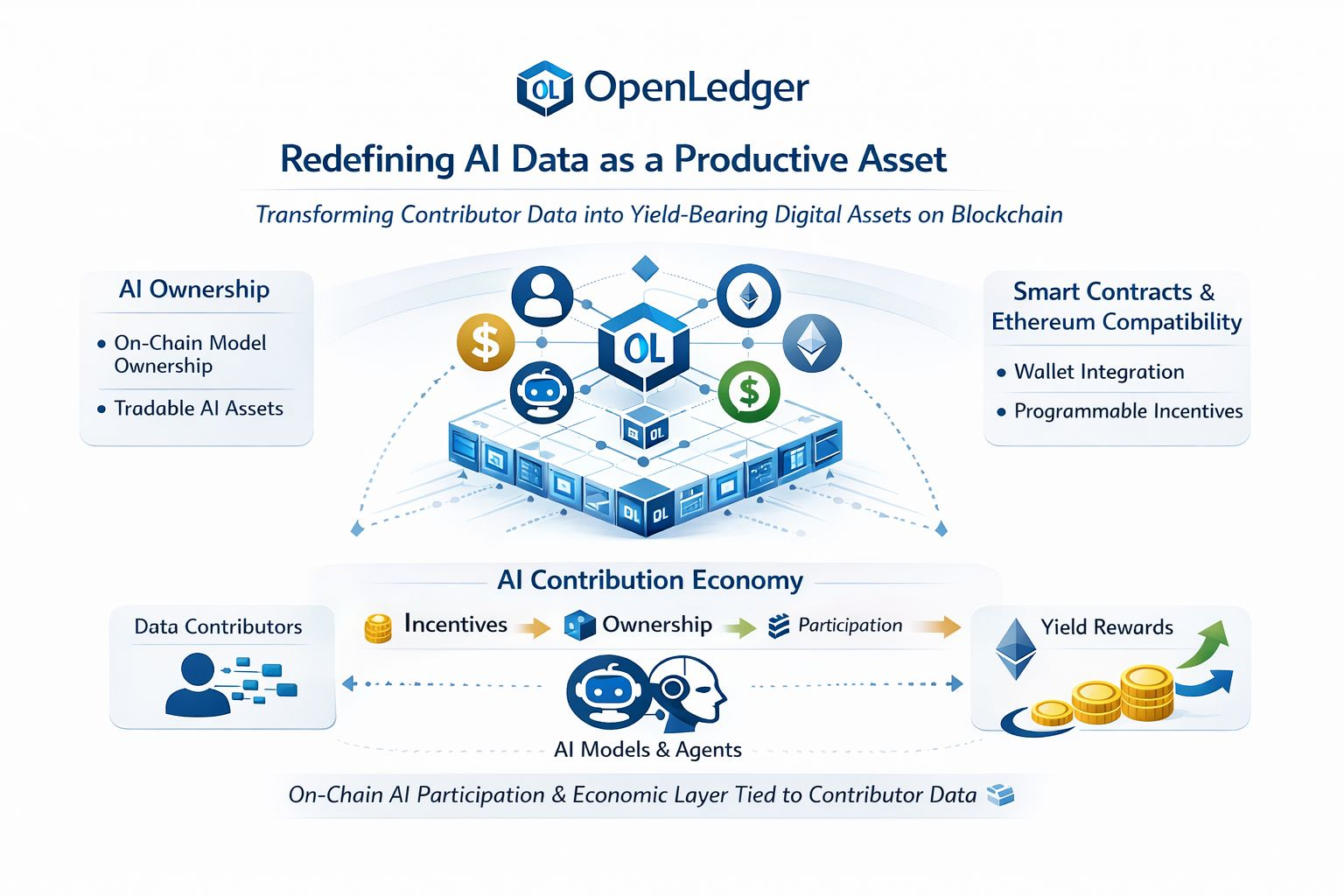
The AI ownership angle also matters more than people think. @OpenLedger pushes model ownership and liquidity on-chain instead of leaving models as closed products. That changes how value moves across the network.
If models become tradable and linked to contributors then data stops being invisible. It becomes part of an economic layer. That feels very different from the normal AI cycle where contributors disappear after training ends.
The agent side makes this even more interesting. OpenLedger allows AI agents to participate inside the network itself. Agents deploy, interactA and operate while staying connected to the economic system around them.
I do think the Ethereum compatibility matters here too. Wallet integration and smart contracts make participation easier because users already understand the environment. OpenLedger does not force a separate ecosystem mindset.
Still I keep questioning whether users really care about ownership. Most people follow rewards first. If incentives weaken would contributors still stay because they believe in data ownership.
There is also the speculation issue. AI narratives move fast. Markets price future expectations long before infrastructure proves itself. OpenLedger feels more structural than narrative driven but markets rarely reward patience.
Maybe that is why this idea stays with me. OpenLedger is quietly asking whether AI data can act more like a productive asset than raw material.
I am not fully sure the market is ready for that yet. It still feels easier for people to trade AI stories than to value the systems feeding them. Maybe @OpenLedger is arriving exactly on time. Or maybe it is arriving before people understand what the asset even is.
