
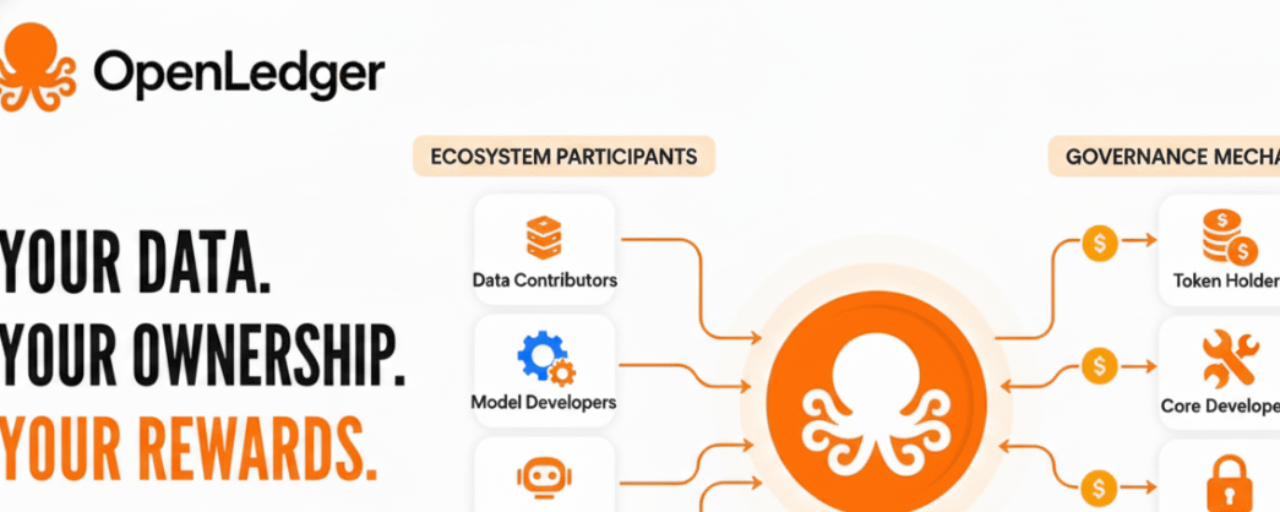


i've been thinking about governance in crypto projects for a while now and honestly most of it is theater. you get a forum, some snapshot votes, a few whales push through whatever they wanted anyway and the community feels like they participated. i've seen that playbook enough times that i basically tune out when projects talk about "decentralized governance" without any specifics.
but OpenLedger's situation is genuinely different and i think the stakes are higher than people realize right now.
here's the thing. most governance failures in crypto are annoying but survivable. a bad treasury decision, a poorly designed fee change, a misallocated grant. painful but recoverable. but when the protocol you're governing is infrastructure that autonomous AI agents are running on top of, the consequences of getting governance wrong scale differently. an agent managing real capital operates based on rules the protocol sets. if those rules get changed by a governance process that got captured or rushed or just badly designed, the downstream effects aren't just token price. they're operational.
so the question of who gets to decide what in OpenLedger's governance isn't abstract. it's pretty load bearing.
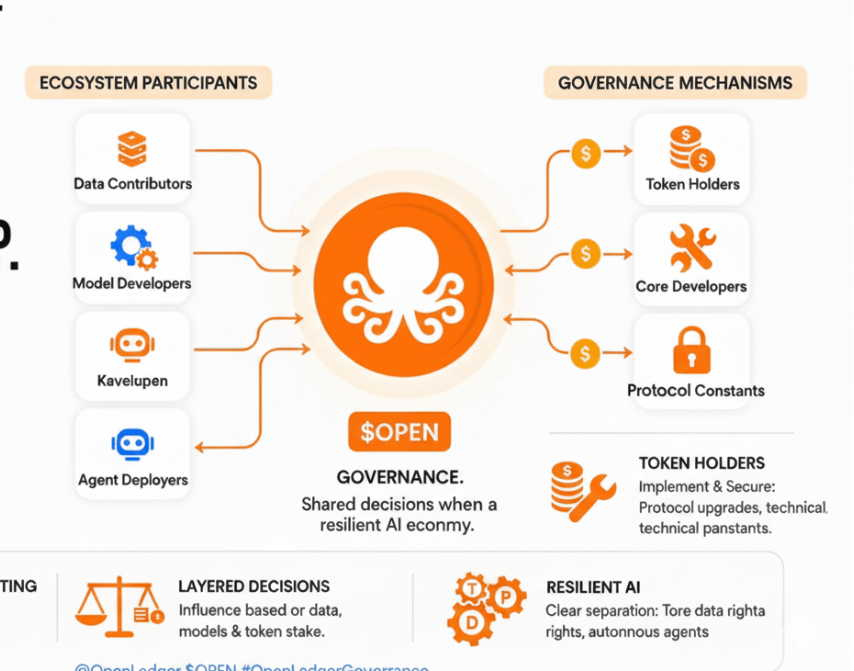
what i think has to be figured out clearly is the separation between decisions that belong to token holders, decisions that belong to core developers and decisions that are basically protocol constants that shouldn't be touched by either without extraordinary process. those three categories exist in every serious protocol but most projects blur them until something goes wrong.
the staking and contribution weight angle matters here too. if governance influence is purely capital weighted then the people who actually use the network, data contributors, model developers, agent deployers, get drowned out by people who just bought a bag. that's not a governance system that produces good technical decisions. it's a system that produces decisions that benefit large holders which is a different thing entirely.
OpenLedger has a real opportunity to build governance that reflects actual ecosystem contribution rather than just token size. whether that happens or not is probably one of the most important unsexy questions in the project right now.