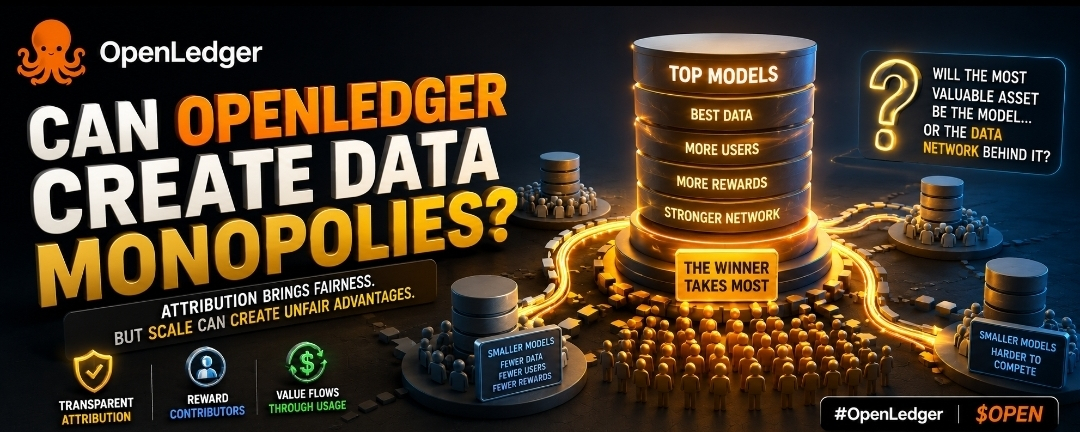
The more I think about AI networks, the less I believe compute will be the biggest advantage.
Data might be.
That is why OpenLedger caught my attention. Most people see it as an attribution network that helps track contributions and reward data providers. Fair enough. But there may be a second-order effect that nobody talks about enough.
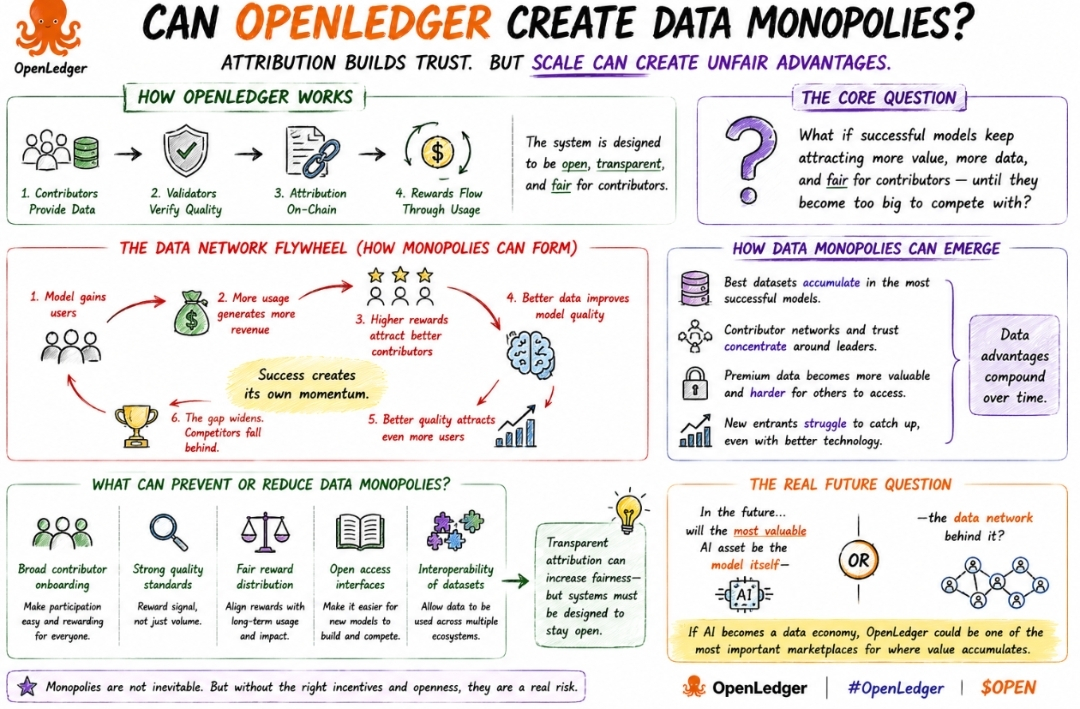
What happens if the best datasets keep attracting more value than everyone else?
Imagine two AI models. One starts gaining traction because its data is slightly better. More users arrive. More revenue is generated. Better contributors join because rewards look attractive. The model improves again and pulls even further ahead.
Nothing unfair happened.
Yet the gap keeps growing.
We have seen similar patterns before. Large marketplaces attract more buyers because they already have sellers. Large social networks attract users because everyone is already there. Success creates its own momentum.
AI data networks could work the same way.
If attribution becomes valuable, premium datasets may become increasingly difficult to compete against. New entrants might still launch better models, but catching up to years of accumulated data relationships could be much harder.
I am not saying OpenLedger will create monopolies. In fact, transparent attribution could make markets more open than they are today.
Still, it raises an interesting question.
In the future, will the most valuable AI asset be the model itself—or the data network behind it?