I keep seeing a pattern that makes me slightly uncomfortable:
━━━━━━━━━━━━━━━
The most hyped AI crypto projects rarely struggle with tech… they struggle with incentives
━━━━━━━━━━━━━━━
Everyone talks about “decentralized AI,” “data ownership,” “AI agents,” but very few people ask the uncomfortable question:
Who actually gets paid… and why would anyone share valuable data in the first place?
That’s what pulled me into OpenLedger (OPEN).
Honestly… I didn’t expect much at first. Another AI + blockchain pitch isn’t exactly rare in 2026.
But the deeper I looked, the more it felt like it’s trying to solve a real bottleneck in the AI economy:
👉 data liquidity
👉 model monetization
👉 agent coordination
Not just “build AI on-chain,” but actually create markets around intelligence itself.
━━━━━━━━━━━━━━━
⚡ WHAT OPENLEDGER IS TRYING TO DO
━━━━━━━━━━━━━━━
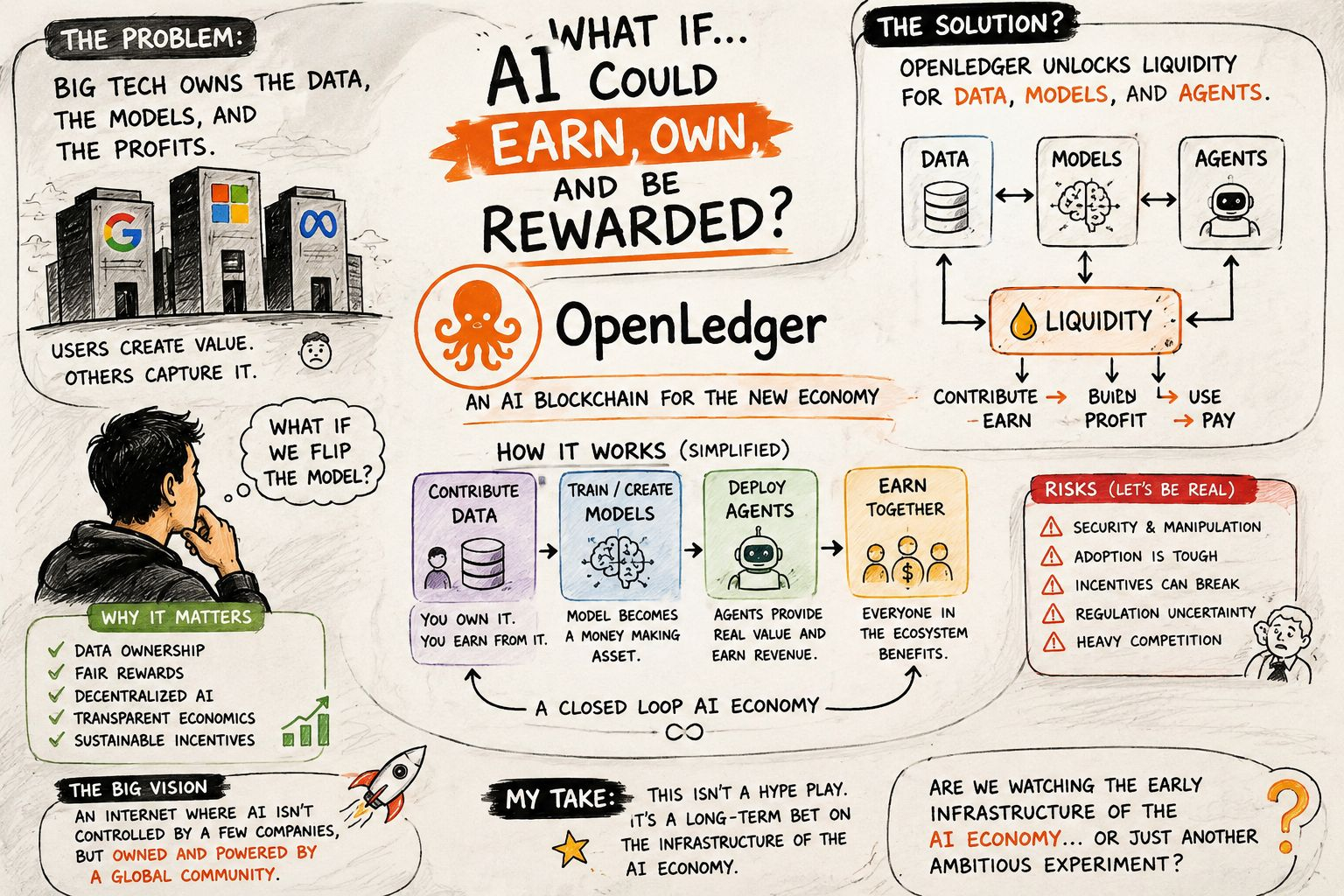
At its core, OpenLedger is positioning itself as an AI blockchain where:
• data can be monetized directly
• models can earn based on usage
• agents can operate as economic actors
Think of it less like “another L1” and more like a coordination layer for AI value flows.
Instead of data sitting in closed silos (Big Tech style), the idea is:
✔ contribute data → get rewarded
✔ train models → earn revenue share
✔ deploy agents → get paid per utility
It’s basically trying to turn AI into a fully financialized ecosystem.
━━━━━━━━━━━━━━━
⚙️ ARCHITECTURE (SIMPLIFIED)
━━━━━━━━━━━━━━━
What caught my attention is the modular approach:
• Data layer → where information is contributed & validated
• Model layer → AI models trained/registered as assets
• Agent layer → autonomous programs interacting with users/services
• Incentive layer → tokenized rewards for usage & contribution
In theory, every interaction in the system has an economic footprint.
This is where things get interesting…
Because if designed correctly, it creates a closed-loop AI economy:
data → models → agents → users → new data
━━━━━━━━━━━━━━━
🌐 ECOSYSTEM IDEA
━━━━━━━━━━━━━━━
OpenLedger is essentially betting on a future where:
• AI agents don’t just respond
• they transact
• they compete
• they earn revenue
And developers don’t just build apps…
They build economic agents with income streams
This ties directly into bigger narratives:
• AI agents economy
• autonomous finance (DeFAI)
• decentralized compute markets
• data ownership rails
• tokenized intelligence
━━━━━━━━━━━━━━━
🧠 HERE'S MY TAKE
━━━━━━━━━━━━━━━
This is where I’m split.
On one hand, the thesis is powerful:
If AI becomes the dominant interface of the internet, then whoever controls data + model monetization rails sits in a very strong position.
But…
I’ve seen similar ideas struggle because:
❌ incentives collapse at scale
❌ data quality becomes gameable
❌ “decentralized” often re-centralizes around a few actors
I’m still skeptical about whether OpenLedger can keep the system honest when real money flows in.
━━━━━━━━━━━━━━━
⚠️ REAL RISKS (NOT IGNORED)
━━━━━━━━━━━━━━━
Let’s be honest about what could go wrong:
❌ Security risk
AI + financial incentives = attack surface explosion
(adversarial data, model poisoning, agent manipulation)
❌ Adoption risk
Why would top-tier AI builders leave existing infra unless rewards are significantly better?
❌ Execution risk
Building AI infra + blockchain infra + incentive design is three hard problems stacked together
❌ Competition
Every major ecosystem is moving toward AI integrations (Ethereum L2s, Cosmos appchains, centralized AI clouds)
❌ Regulatory uncertainty
Tokenizing data + AI outputs could easily collide with privacy and IP laws
━━━━━━━━━━━━━━━
👀 WHAT I'M WATCHING
━━━━━━━━━━━━━━━
The signal I care about isn’t price.
It’s this:
• Are real datasets being contributed?
• Are models actually being reused across apps?
• Are agents generating measurable economic activity?
• Or is it just “infrastructure narrative” with low real usage?
Because this space has a graveyard of “AI + blockchain” ideas that never reached product-market fit.
━━━━━━━━━━━━━━━
💣 BIGGER THESIS
━━━━━━━━━━━━━━━
If OpenLedger or similar systems work, the implication is huge:
We don’t just get AI tools…
We get an AI economy layer where intelligence itself becomes a tradable asset class.
That changes how value flows across the internet.
But if it fails, it reinforces a simpler reality:
AI might remain centralized longer than crypto natives expect.
━━━━━━━━━━━━━━━
FINAL THOUGHT
━━━━━━━━━━━━━━━
This isn’t a trade for next week.
It’s a question about where AI value actually accumulates in the next decade.
━━━━━━━━━━━━━━━
Are we looking at the early infrastructure of a machine-driven economy…
or just another ambitious attempt to tokenize something that doesn’t want to be tokenized?