
I keep thinking about how everyone talks about AI and blockchain as if the problem is already solved once you make things transparent.
A few weeks ago, I was watching a discussion about AI-generated content. The debate quickly turned into a familiar argument: creators want credit, developers want data, users want better AI. Everyone agreed that attribution matters. But as I listened, I realized something was missing. Knowing where something came from is important, but it doesn't automatically make a system trustworthy.
That thought brought me back to OpenLedger.
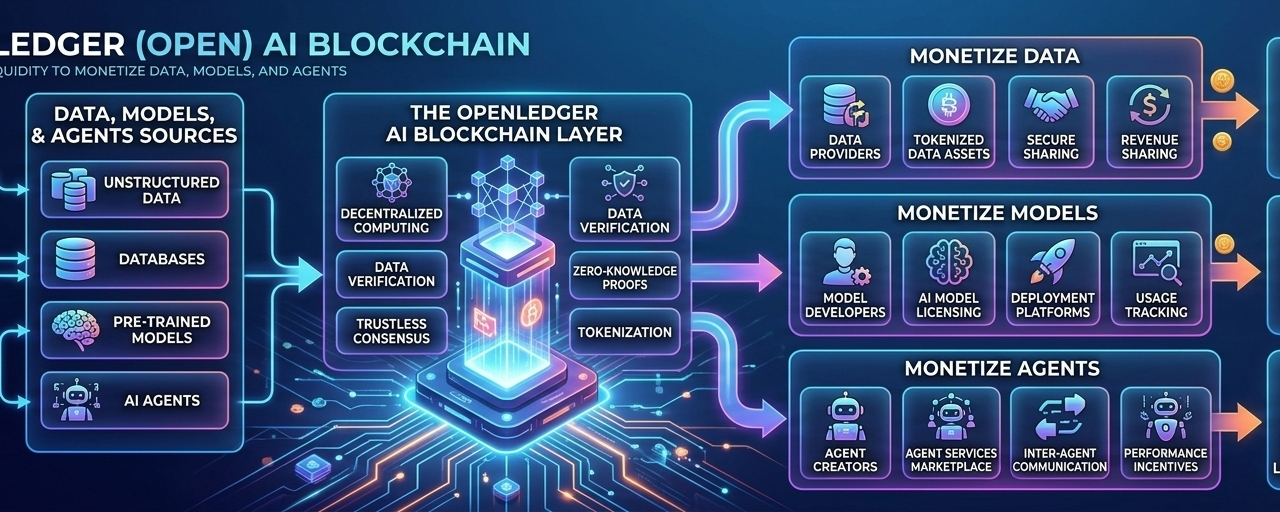
At first glance, OpenLedger's idea seems straightforward. It wants to create an ecosystem where data, AI models, and agents can be tracked, attributed, and monetized. Contributors provide data, models learn from it, and rewards can flow back to the people who created value in the first place.
On paper, that sounds logical.
But real systems are never tested on paper.
Imagine a food delivery app. Knowing which restaurant prepared your meal is useful. Knowing where the ingredients came from is even better. Yet none of that matters if the food arrives cold, late, or damaged. Transparency helps, but execution is what people actually experience.
I think OpenLedger sits right in the middle of this tension.
The project talks a lot about proof of attribution, Datanets, and verifiable AI. Those concepts are important because modern AI often feels like a black box. Data goes in, outputs come out, and nobody really knows who contributed what along the way. OpenLedger is trying to make those invisible connections visible.
What's interesting is that the project seems to be moving beyond theory. The ecosystem now includes staking, AI development tools, network infrastructure, explorers, and AI agent experiences like OctoClaw. That shift matters because building technology is one challenge; getting people to use it consistently is another.
The deeper question isn't whether attribution works. The deeper question is whether attribution can stay meaningful when the network grows.
History shows that systems usually break at scale. Incentives become distorted. Low-quality contributions appear. Participants optimize for rewards instead of outcomes. What looks elegant in a whitepaper becomes messy in practice.
That's why I don't view OpenLedger primarily as an AI project or a blockchain project.
I see it as an incentive experiment.
Can a network create enough visibility for contributors to trust the system, while remaining useful enough for developers and users to keep showing up?
That balance feels much harder than the technology itself.
If OpenLedger succeeds, it won't be because blockchain was added to AI. It will be because the project managed to connect three things that are usually disconnected: contribution, attribution, and value creation.
And honestly, that's what keeps my attention.
The future of AI may not belong to the biggest models or the loudest ecosystems. It may belong to the systems that can answer a much simpler question:
When value is created, can everyone involved clearly see where it came from, who helped create it, and why they should trust the outcome?
OpenLedger is attempting to answer that question. Whether the answer holds up over time is still unfolding, and that's probably the most interesting part of the story.
