sister has a son with autism. nonverbal until he was four. for two years she lived in online support groups at 3am. not the big public ones. small private facebook groups. 40 moms. maybe 50 on a good month. they shared the ugliest, most beautiful, most specific details. how to cut a sandwich so he'd eat it. which sound machine worked after 47 failed tries. what to say to the dentist who doesn't understand. how to hold him during a meltdown without making it worse.
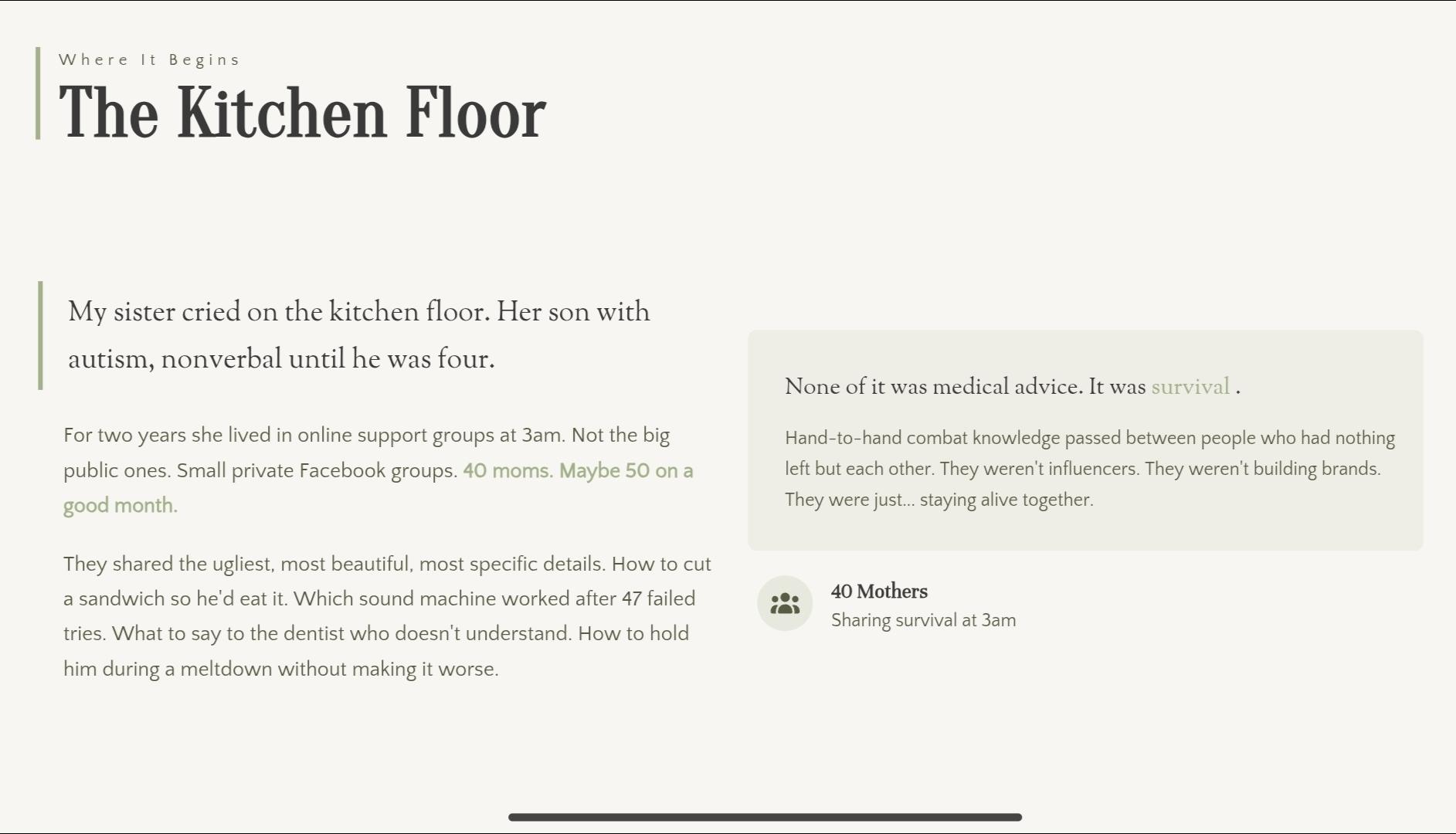
none of it was medical advice. it was survival. hand-to-hand combat knowledge passed between people who had nothing left but each other. they weren't influencers. they weren't building brands. they were just... staying alive together.six months ago some parenting ai app launched. "smart support for special needs families." 30 a month. clean interface. soft colors. "powered by real parent experiences." my sister tried it. the first suggestion it gave her for a meltdown strategy? word for word what she had written in her group two years ago. her exact phrasing. her exact sequence. just... polished. anonymized. monetized.
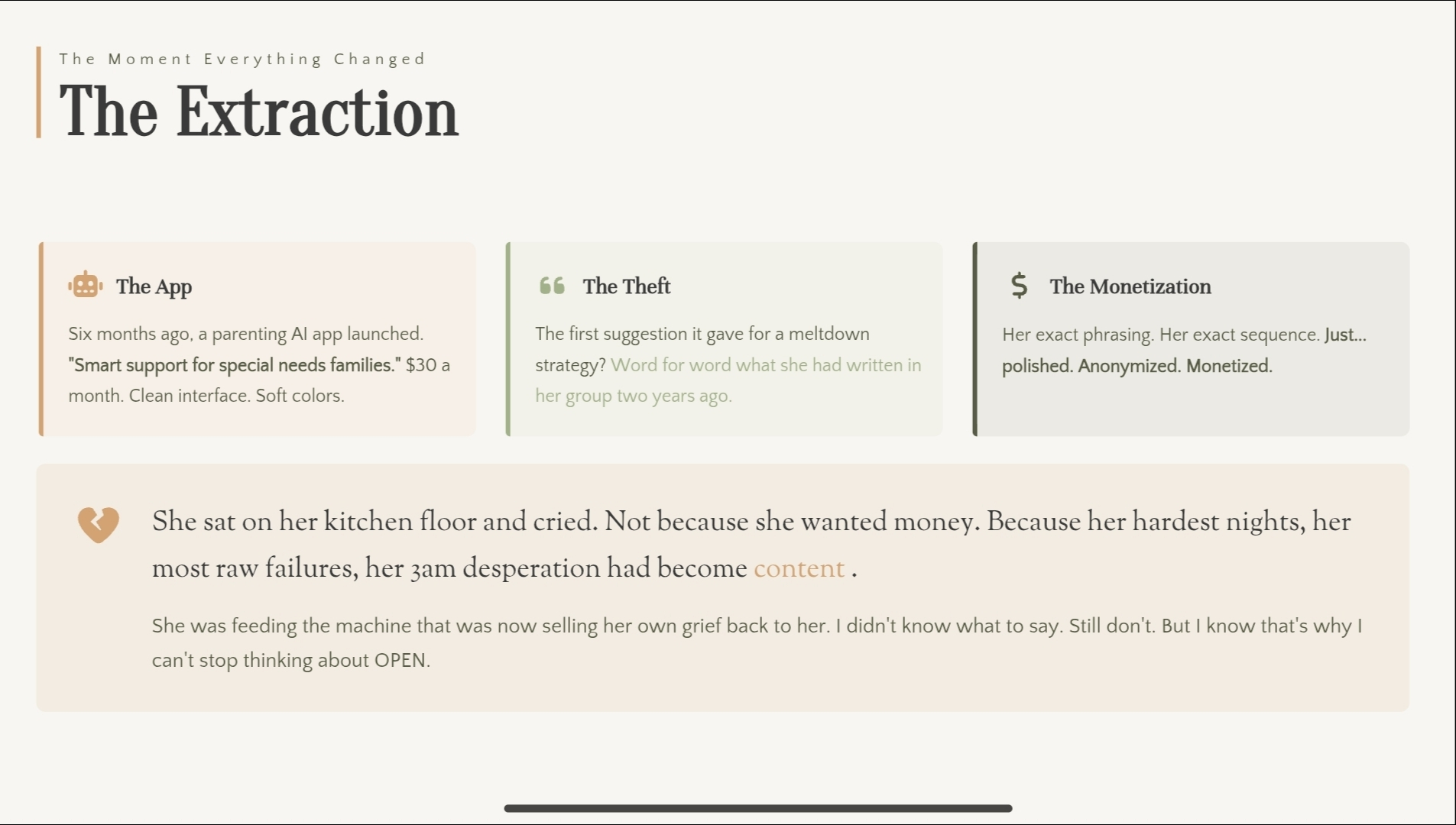
she sat on her kitchen floor and cried. not because she wanted money. because her hardest nights, her most raw failures, her 3am desperation had become content. she was feeding the machine that was now selling her own grief back to her.
i didn't know what to say. still don't.
but i know that's why i can't stop thinking about OPEN.
every ai project right now is built on this exact theft. not theft like "someone hacked your wallet." theft like "we made it normal to harvest human struggle and sell it as a product." we call it training data. we call it user generated content. we call it community. fancy words for the same extraction.
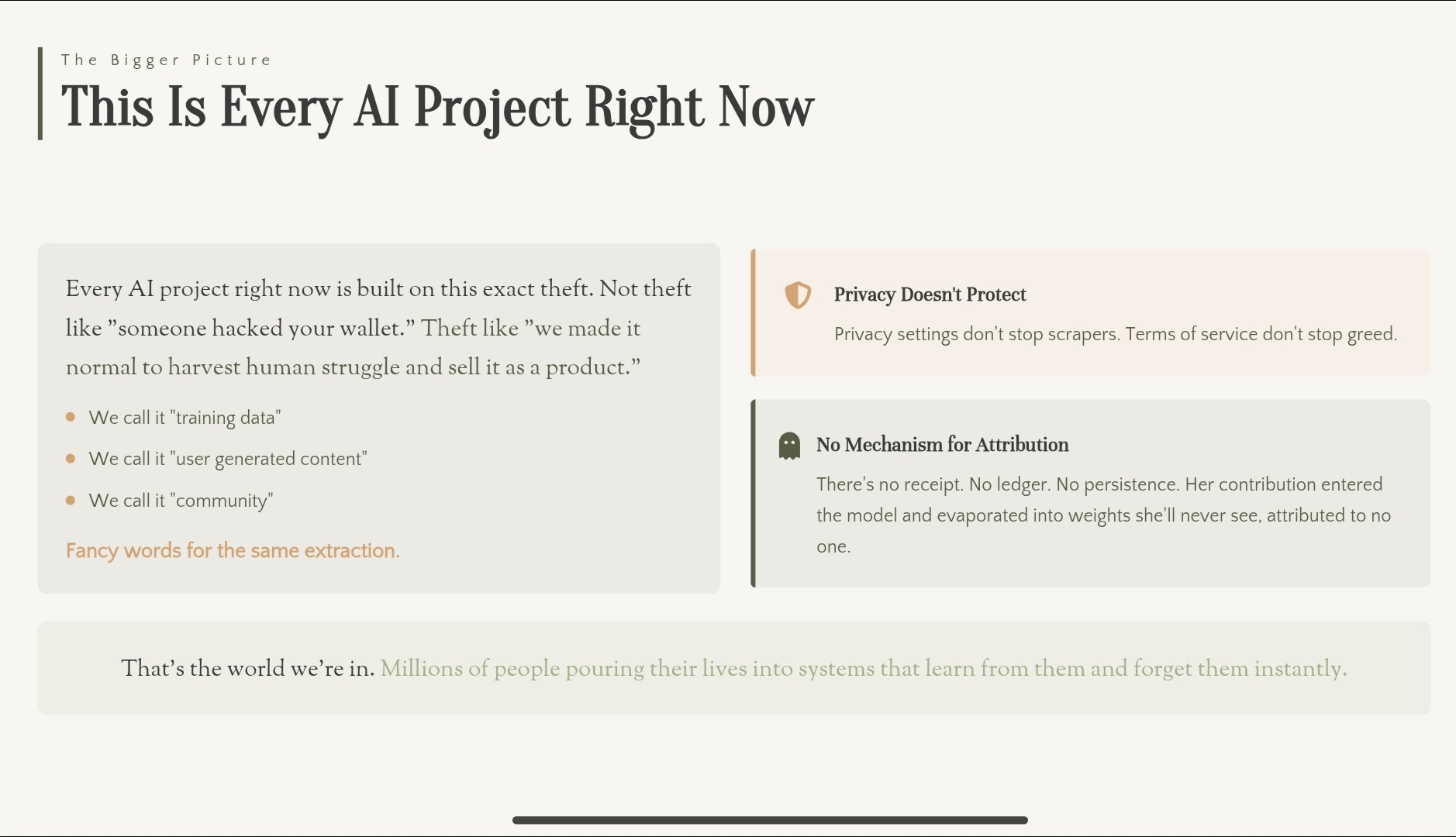
my sister didn't consent. none of those moms did. the group was private. but privacy settings don't stop scrapers. terms of service don't stop greed. and the worst part? there's no mechanism for her to say "that was mine." no receipt. no ledger. no persistence. her contribution entered the model and evaporated into weights she'll never see, attributed to no one.that's the world we're in. millions of people pouring their lives into systems that learn from them and forget them instantly.openledger is the first project i've seen that seems actually angry about this. not performatively. structurally.
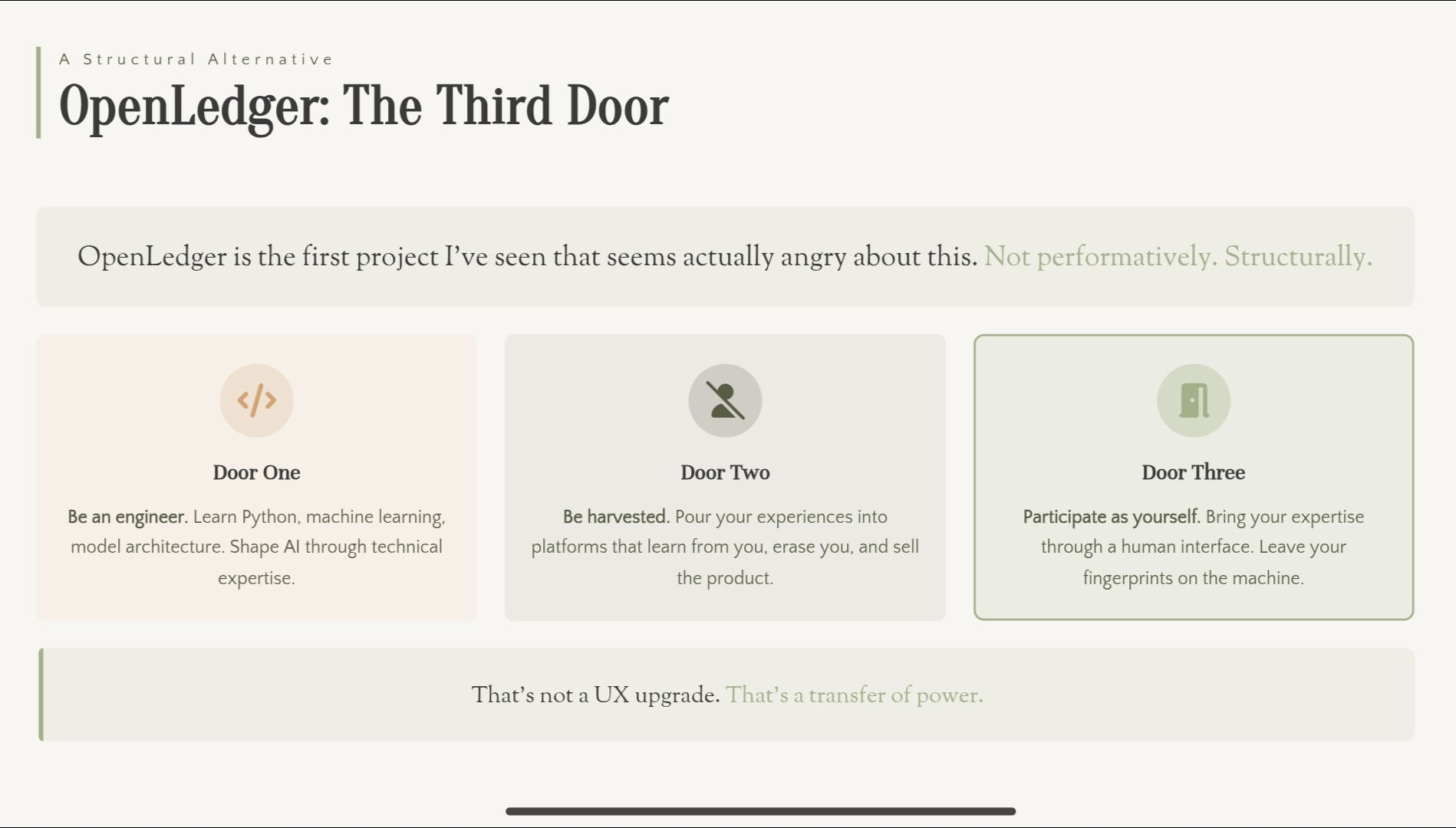
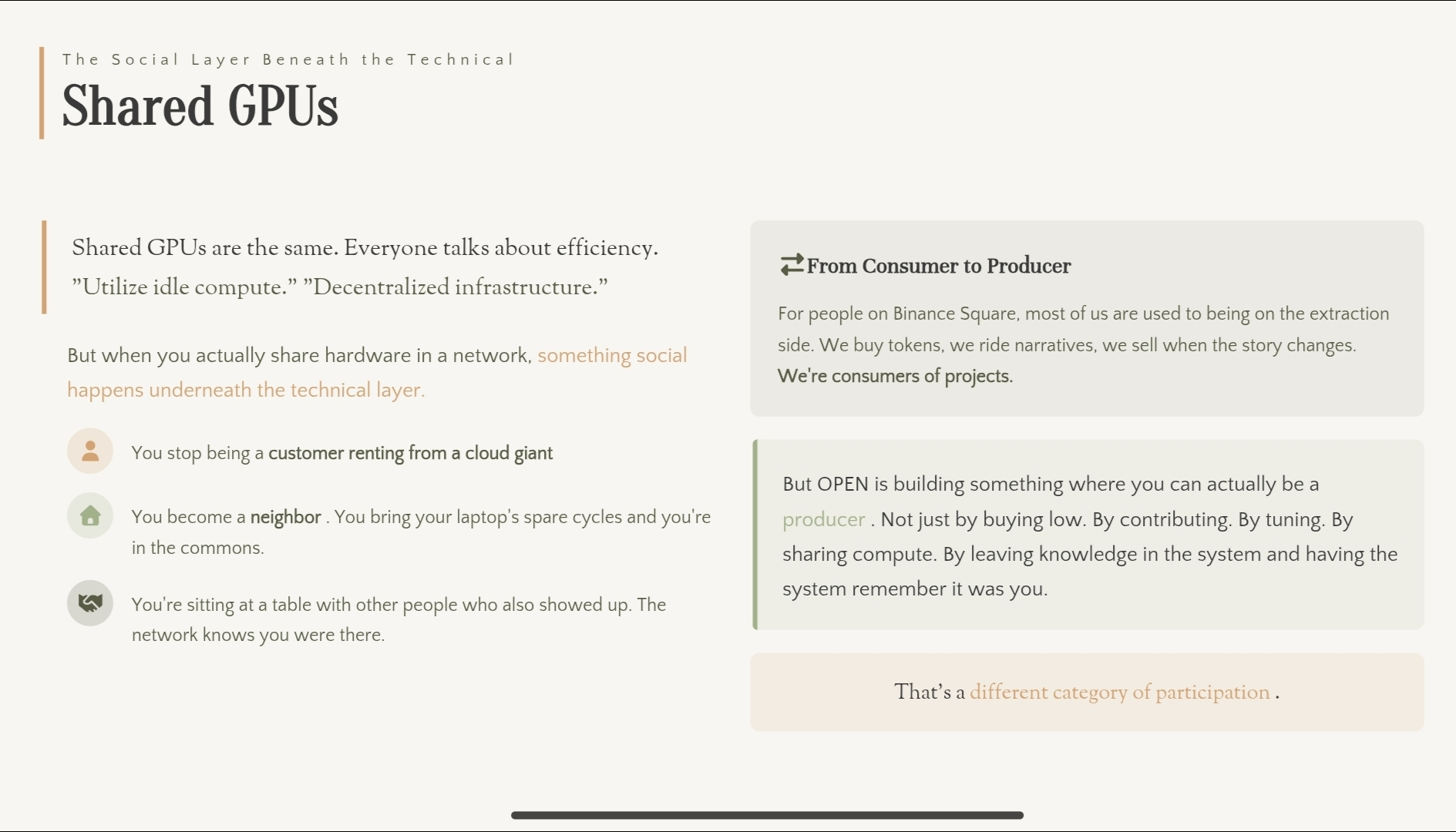
gui fine-tuning sounds like a feature for nerds. "no-code model adjustment." but what it actually means is: my sister could have shaped that ai directly. her knowledge, her phrasing, her actual lived experience could have been the input, not the stolen output. she wouldn't need to learn python. she wouldn't need to be technical. she would just need to be herself. and the model would get better because she touched it.think about that. right now, shaping an ai model requires either being an engineer or being harvested. those are your options. openledger adds a third door: participate with your actual expertise, through an interface that speaks human, and leave your fingerprints on the machine.that's not a ux upgrade. that's a transfer of power.shared gpus are the same. everyone talks about efficiency. "utilize idle compute." "decentralized infrastructure." but when you actually share hardware in a network, something social happens underneath the technical layer. you stop being a customer renting from a cloud giant. you become a neighbor. you bring your laptop's spare cycles and you're in the commons. you're sitting at a table with other people who also showed up. the network knows you were there because your compute processed something real.
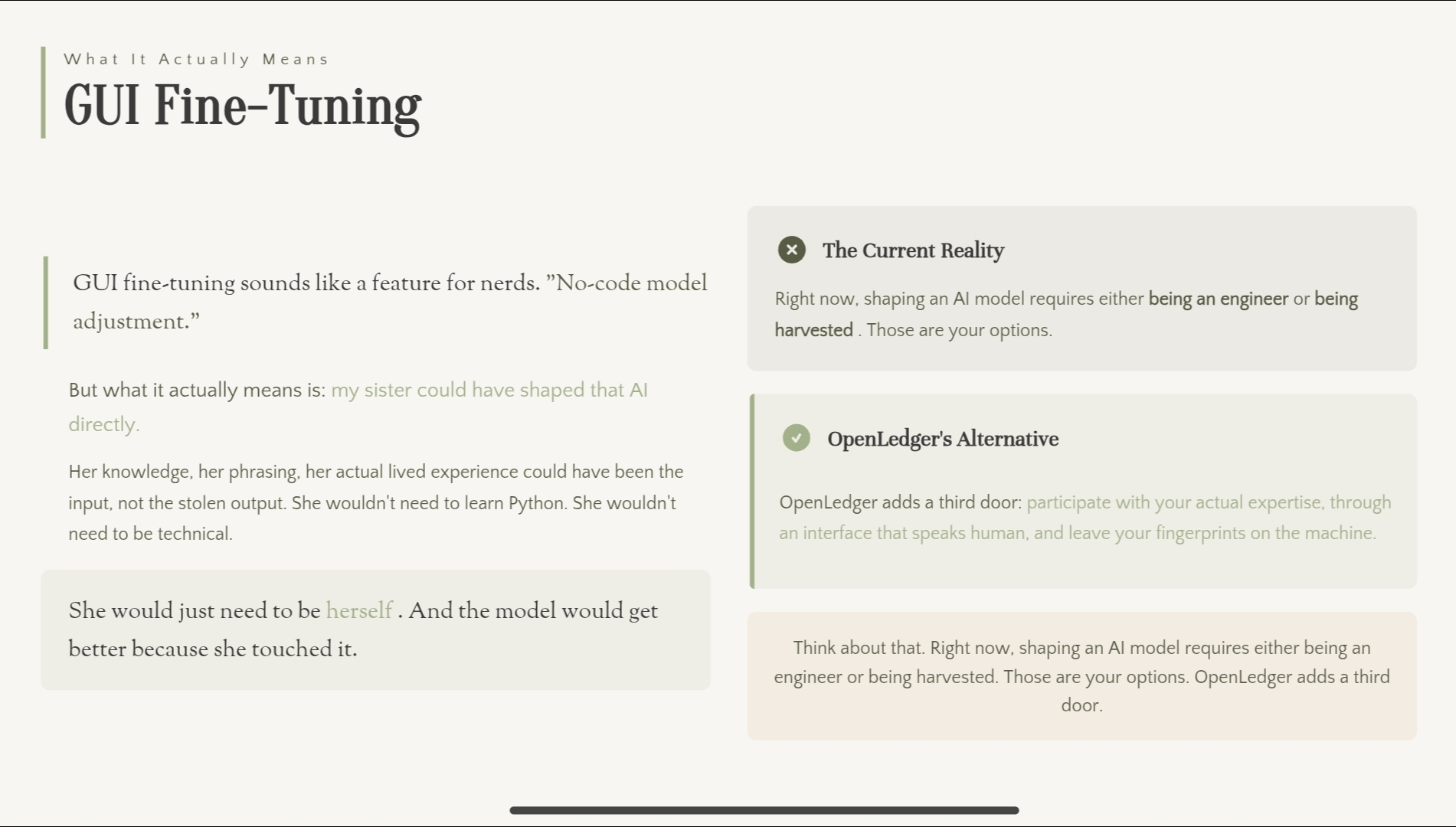
and here's where it gets interesting for people on binance square. most of us here are used to being on the extraction side. we buy tokens, we ride narratives, we sell when the story changes. we're consumers of projects. but OPEN is building something where you can actually be a producer. not just by buying low. by contributing. by tuning. by sharing compute. by leaving knowledge in the system and having the system remember it was you.
that's a different category of participation.
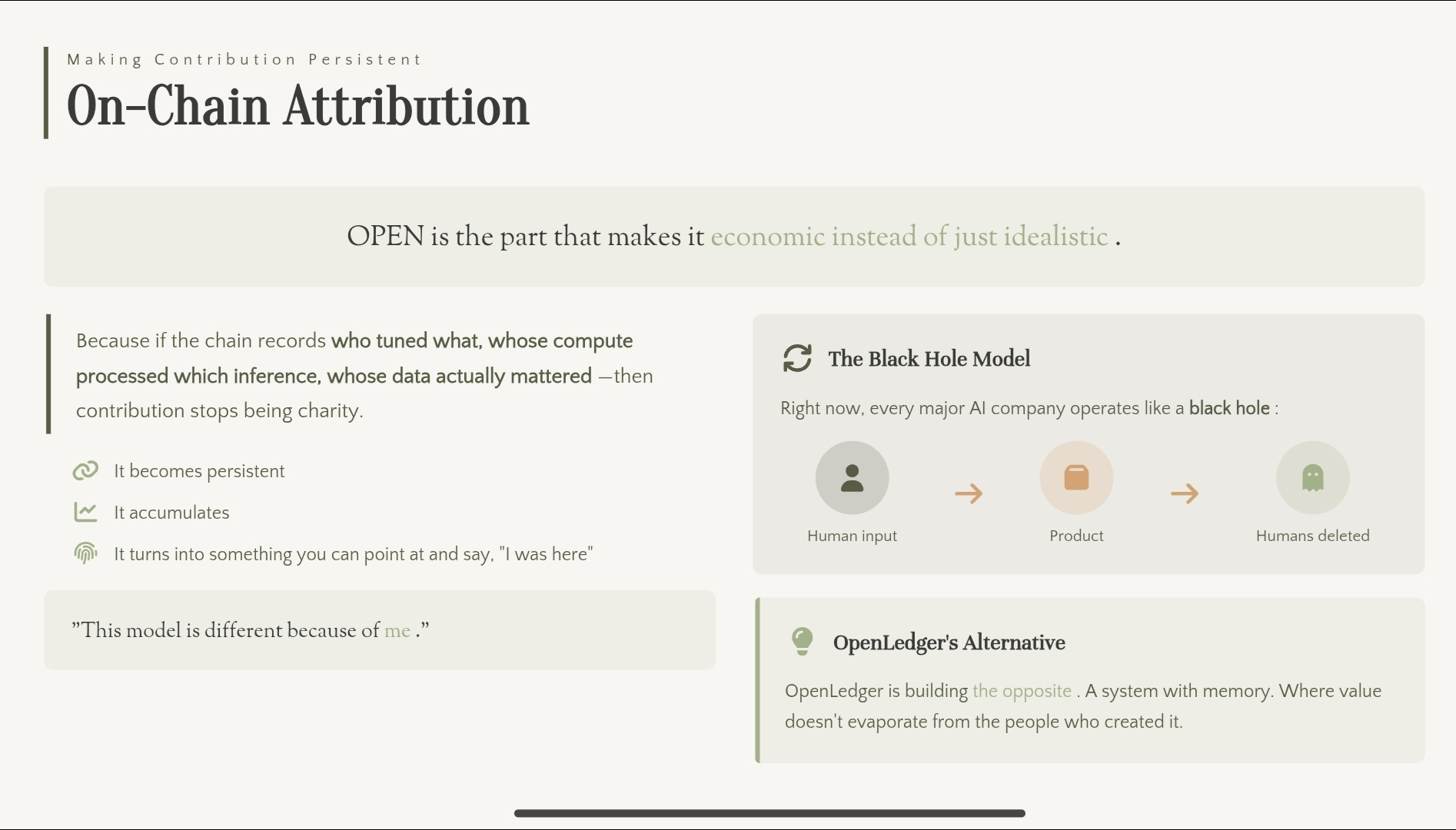
OPEN is the part that makes it economic instead of just idealistic.
b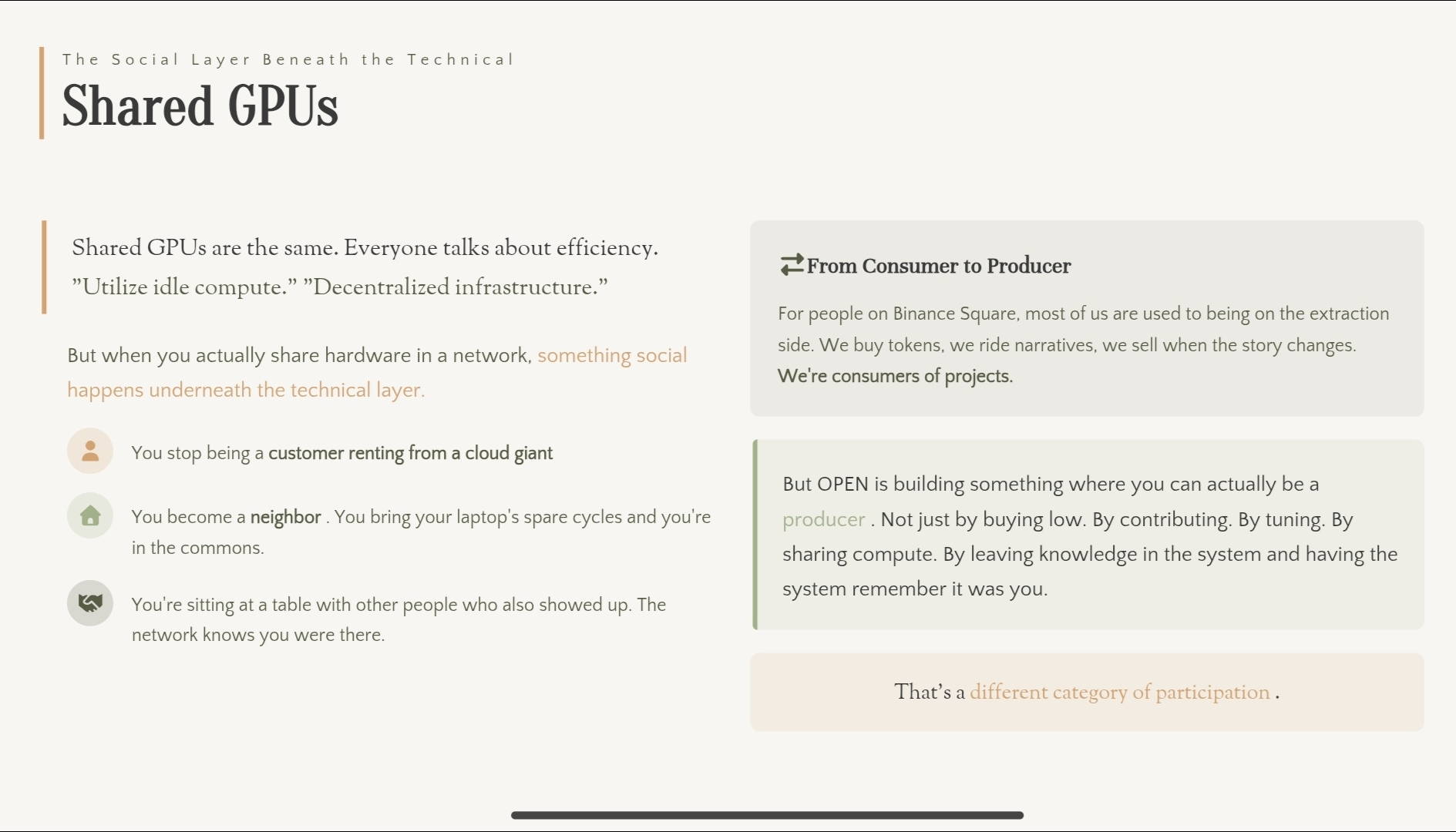 ecause if the chain records who tuned what, whose compute processed which inference, whose data actually mattered—then contribution stops being charity. it becomes persistent. it accumulates. it turns into something you can point at and say, "i was here. this model is different because of me."right now, every major ai company operates like a black hole. human input goes in. product comes out. the humans? deleted from the ledger. we've normalized extraction so hard that we call it "user experience." we call it "seamless." we celebrate the invisibility of the people who built the thing.
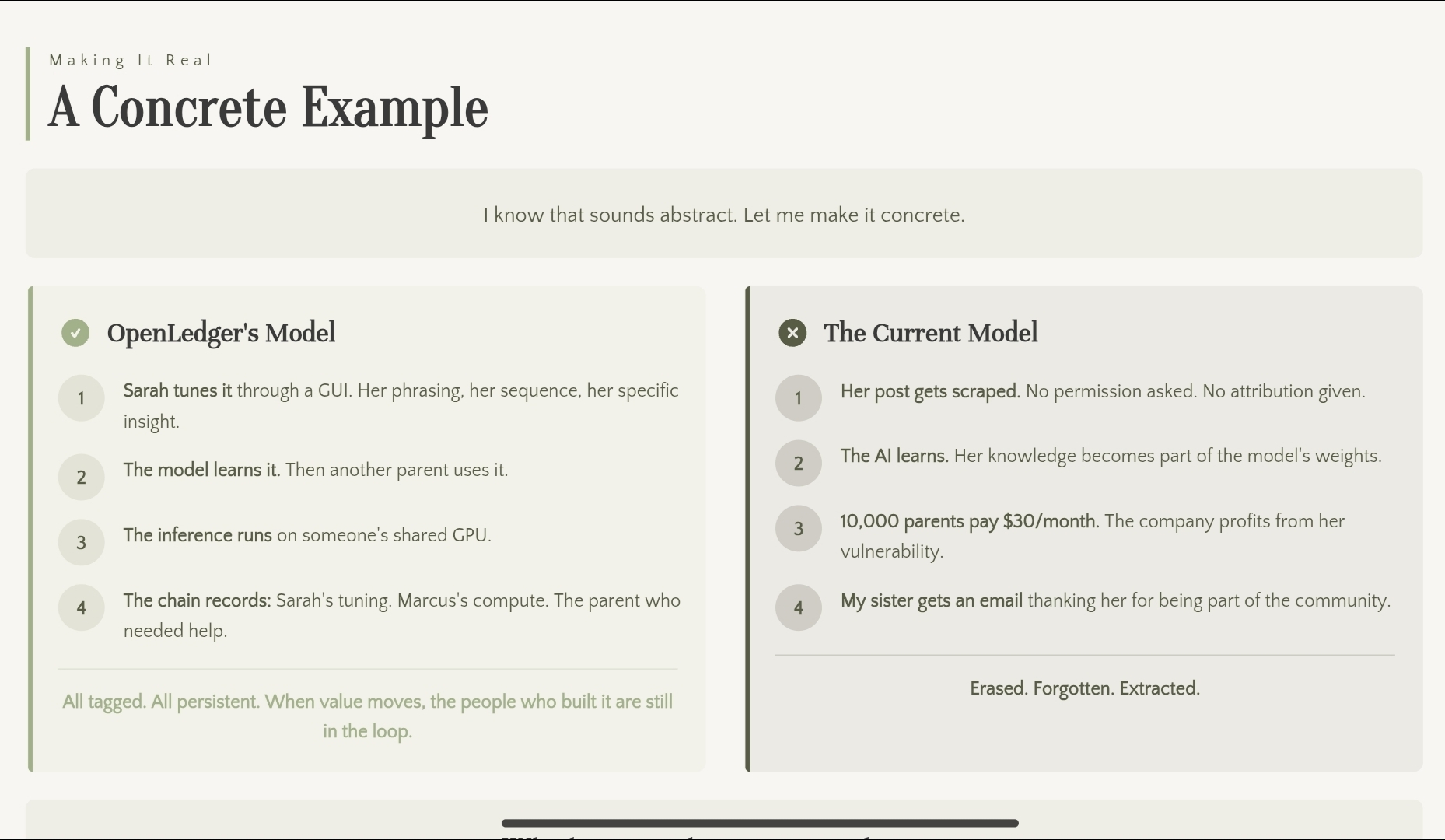
openledger is building the opposite. a system with memory. where value doesn't evaporate from the people who created it.i know that sounds abstract. let me make it concrete.imagine my sister's meltdown strategy. in openledger's model, she tunes it through a gui. her phrasing, her sequence, her specific insight. the model learns it. then another parent uses it. the inference runs on someone's shared gpu. the chain records: sarah's tuning. marcus's compute. the parent who needed help. all tagged. all persistent. when value moves, the people who built it are still in the loop.compare that to the current model: her post gets scraped. the ai learns. 10,000 parents pay 30. my sister gets an email thanking her for being part of the community.
which system do you want to live in?
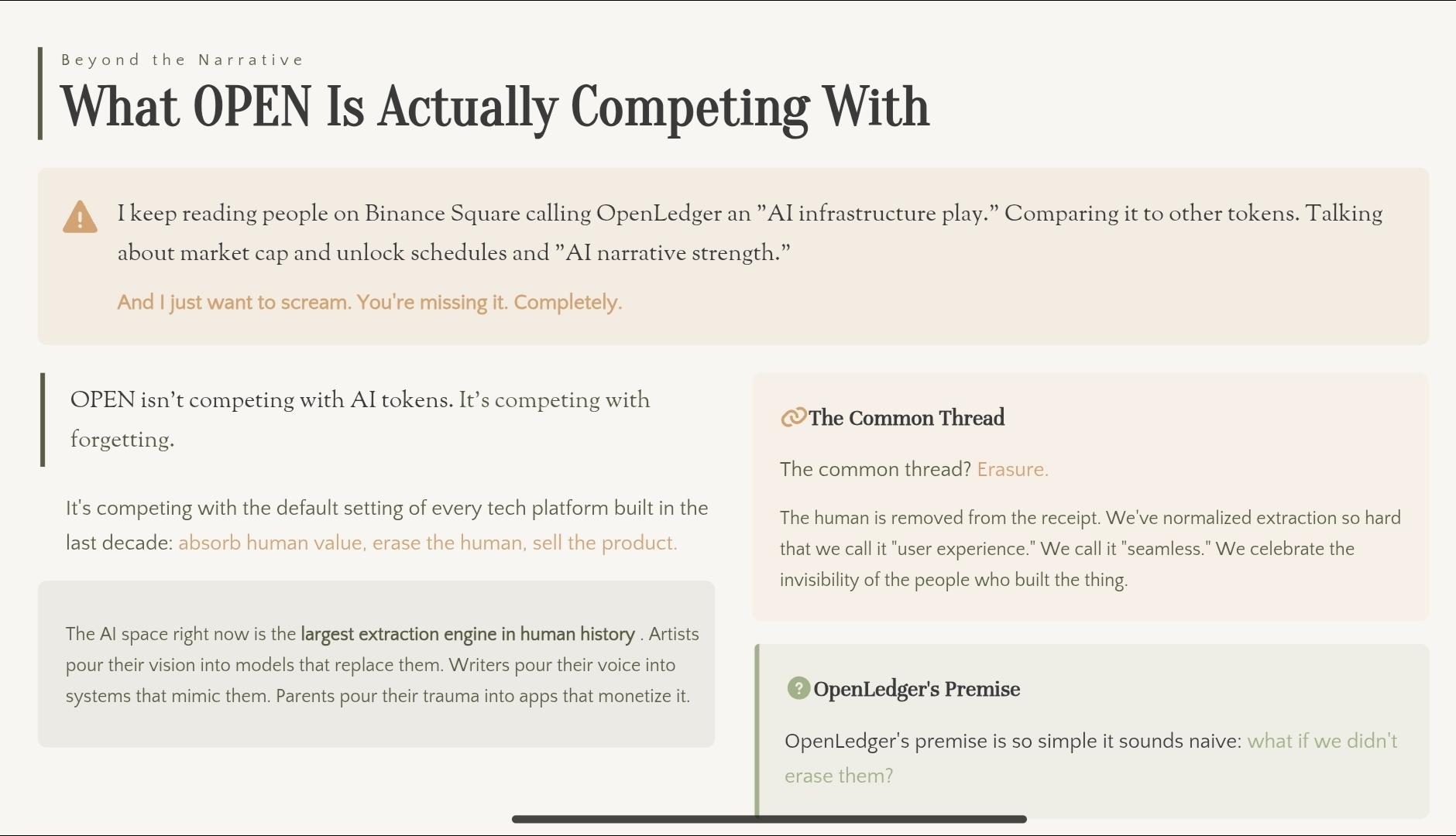
i keep reading people on binance square calling openledger an "ai infrastructure play." comparing it to other tokens in the sector. talking about market cap and unlock schedules and "ai narrative strength."and i just want to scream. you're missing it. completely.OPEN isn't competing with ai tokens. it's competing with forgetting. it's competing with the default setting of every tech platform built in the last decade: absorb human value, erase the human, sell the product.the ai space right now is the largest extraction engine in human history. artists pour their vision into models that replace them. writers pour their voice into systems that mimic them. parents pour their trauma into apps that monetize it. and the common thread? erasure. the human is removed from the receipt.openledger's premise is so simple it sounds naive: what if we didn't erase them?what if the mom who figured out the sandwich could prove it was her? what if the gpu owner who processed that inference got tagged? what if the artist who shaped the style got attributed? what if contribution was persistent, not disposable?it's not about getting rich. it's about not being disappeared.
i know the risks. i know the coordination is brutal. you need gui tuners who actually show up with real knowledge. gpu providers who stay online and don't just chase the highest yield elsewhere. model consumers who are willing to use a system that's messier than chatgpt because it's fairer. token economics that don't collapse under the weight of good intentions. one piece wobbles and the whole thing gets wobbly. that's real.but here's what i keep coming back to.
in that support group, my sister and those 40 moms built something real. a commons. a shared workshop of survival. and when the ai app scraped it, they didn't just lose potential income. they lost trust. they stopped sharing. the group went quiet. knowledge that was flowing hand-to-hand went back into isolation. moms who were saving each other retreated to figuring it out alone again.
that's the cost of extraction. it's not financial. it's relational. it breaks the commons. it makes people hide their best insights because they've learned that sharing means being harvested.
OPEN is trying to build a system where commons don't die when money shows up. where the table stays shared. where the people who brought the knowledge are still sitting there when the value arrives. where you don't have to choose between helping someone and protecting yourself.
i'm not a dev. i'm not an ai researcher. i'm not a whale. i'm just a guy who watched his sister cry on a kitchen floor because her hardest nights had become a subscription feature with soft colors and a monthly fee.and i'm telling you: OPEN matters. not because of the chart. not because of the yield. because of the premise. because it's the only project i've found that treats human contribution like it's actually human. not data. not content. not training material. not "user generated" anything. human.
gui tuning. shared gpus. on-chain attribution. it all sounds technical when you read the docs. but the emotional translation is simpler: you matter. you stay. you don't get erased when the product gets popular.
in 2026, in the middle of an ai gold rush where everyone is racing to abstract humans out of every loop, to make interfaces so smooth that the people behind them disappear, openledger is building the opposite. more human. messier. slower. but honest.
my sister doesn't know what a token is. she doesn't care about market caps or vesting schedules. but i told her about OPEN last week. about the idea that contribution could persist. that her 3am post could stay tagged to her. that she wouldn't have to choose between helping another mom and being harvested.
and for the first time since that app launched, she looked hopeful.not about money. about dignity.that's the trade. not ai infrastructure. not another layer in the stack. human persistence.
and if you're on binance square scrolling past another token pitch, i get it. i do. but maybe ask yourself: what system do you actually want to live in? the one that forgets you? or the one that remembers?