
🚨 More than 80% of the world's data is never monetized.
Not because it's worthless.
Because the people creating it have no way to capture its value.
That might become one of the biggest bottlenecks in the AI economy.
And it's why OpenLedger caught my attention. 🧵
━━━━━━━━━━━━━━━
Everyone is talking about AI.
Fewer people are talking about where AI actually gets its intelligence from.
Models are only as valuable as the data they're trained on.
Yet the current system is strange:
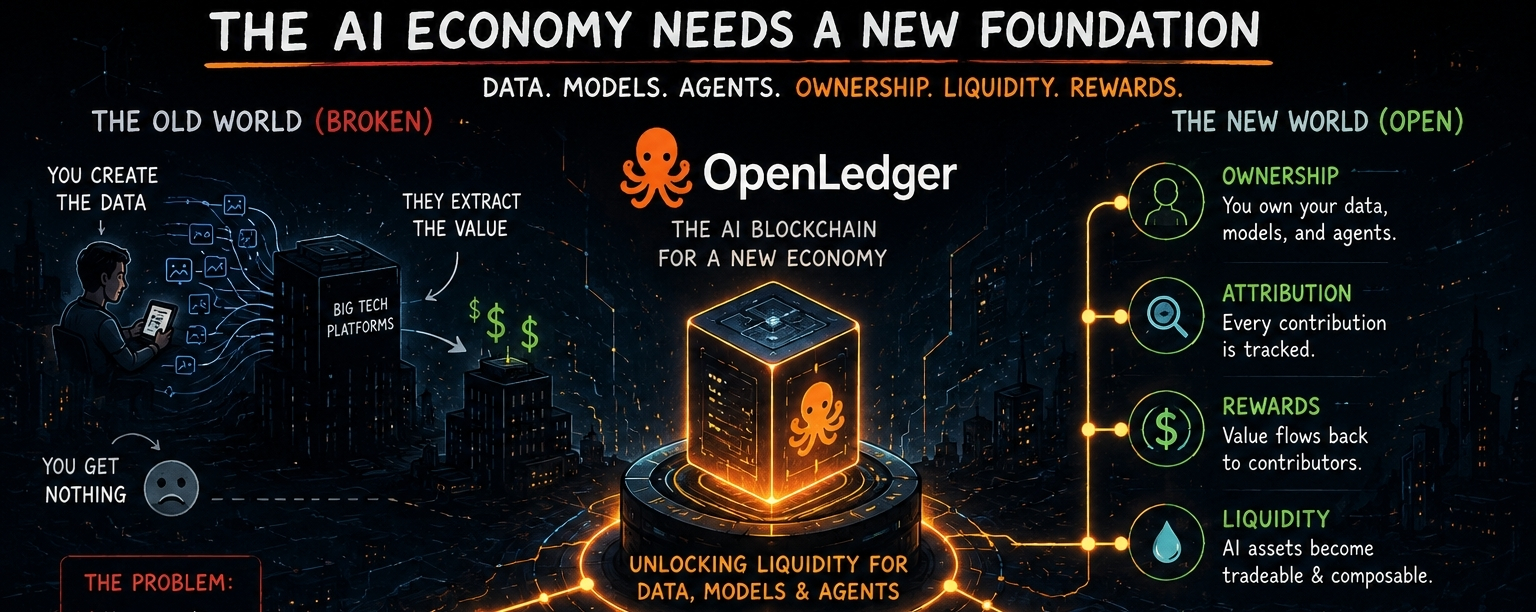
• Platforms own the data
• Users create the data
• AI companies consume the data
• Value rarely flows back to contributors
That feels increasingly unsustainable.
━━━━━━━━━━━━━━━
This becomes an even bigger problem as AI agents enter crypto.
We're moving toward a world where:
⚡ AI agents execute trades
⚡ AI agents manage portfolios
⚡ AI agents create content
⚡ AI agents negotiate with other agents
But who owns the data behind those decisions?
Who gets rewarded when AI generates value from it?
That's still largely unresolved.
━━━━━━━━━━━━━━━
What caught my attention about OpenLedger is that it's approaching AI infrastructure from a different angle.
Instead of focusing only on models...
It's focusing on the economic layer behind AI.
The ownership layer.
The incentive layer.
The monetization layer.
━━━━━━━━━━━━━━━
At a high level, OpenLedger is building an AI-focused blockchain designed to unlock liquidity for:
• Data
• Models
• AI agents
The idea is simple.
If data powers AI...
Then data should become an asset class.
━━━━━━━━━━━━━━━
Here's where things get interesting.
Most AI systems operate like black boxes.
Data goes in.
Models come out.
Value gets created.
But attribution often disappears.
OpenLedger is attempting to create transparent pathways that connect:
Data → Models → Agents → Value Creation
If successful, contributors can potentially be rewarded based on their role in the process.
━━━━━━━━━━━━━━━
⚡ TECHNOLOGY
From what I've researched, OpenLedger is designed specifically for AI-native applications.
Rather than forcing AI workloads into infrastructure built for other purposes.
The focus appears to be on:
• Verifiable data contribution
• AI asset ownership
• Attribution tracking
• Incentive distribution
These sound simple.
They're not.
They're some of the hardest coordination problems in AI.
━━━━━━━━━━━━━━━
⚡ ARCHITECTURE
The broader vision seems centered around creating an ecosystem where:
Data providers contribute data.
Developers build models.
AI agents consume intelligence.
Value flows back through the network.
Instead of one centralized company capturing everything.
It's an attempt to align incentives across the entire AI stack.
━━━━━━━━━━━━━━━
⚡ WHY THIS MATTERS
Crypto has already solved parts of digital ownership.
AI is creating entirely new ownership questions.
Who owns generated intelligence?
Who owns model outputs?
Who owns the data feeding autonomous agents?
These questions aren't theoretical anymore.
They're becoming infrastructure questions.
━━━━━━━━━━━━━━━
And infrastructure tends to become extremely valuable when adoption arrives.
Not because it's exciting.
Because everyone eventually needs it.
━━━━━━━━━━━━━━━
⚡ ECOSYSTEM POTENTIAL
If OpenLedger succeeds, it could sit at the intersection of several major narratives:
• AI agents
• Autonomous finance
• Data ownership
• Decentralized AI
• Tokenized digital assets
• Web3 infrastructure
That's a surprisingly large surface area.
━━━━━━━━━━━━━━━
But I'm still skeptical.
And investors should be.
━━━━━━━━━━━━━━━
❌ EXECUTION RISK
Building blockchain infrastructure is difficult.
Building AI infrastructure is difficult.
Building both simultaneously is exponentially harder.
Many projects underestimate this challenge.
━━━━━━━━━━━━━━━
❌ COMPETITION
OpenLedger isn't operating in a vacuum.
The AI-crypto sector is becoming crowded.
New protocols appear almost every month.
Having a compelling vision is one thing.
Achieving network effects is another.
━━━━━━━━━━━━━━━
❌ ADOPTION CHALLENGES
The biggest challenge may not be technology.
It may be behavior.
Developers already have existing workflows.
Enterprises already have existing data pipelines.
Changing habits is often harder than writing code.
━━━━━━━━━━━━━━━
❌ REGULATORY UNCERTAINTY
Data ownership.
AI attribution.
Digital intellectual property.
These areas remain legally unclear across much of the world.
That uncertainty creates both opportunity and risk.
━━━━━━━━━━━━━━━
🧠 HERE'S MY TAKE
Most crypto investors focus on applications.
I spend more time looking at infrastructure.
Applications come and go.
Infrastructure often compounds.
OpenLedger appears to be making a bet that the future AI economy will require transparent ownership and incentive systems.
That's a thesis I find increasingly difficult to ignore.
━━━━━━━━━━━━━━━
👀 WHAT I'M WATCHING
• Developer adoption
• AI agent integrations
• Data contribution activity
• Ecosystem growth
• Real-world usage
• Sustainability of incentives
Those metrics matter far more than short-term price action.
━━━━━━━━━━━━━━━
💣 BIGGER THESIS
The real opportunity may not be AI models themselves.
The real opportunity may be the infrastructure that coordinates:
Data
Intelligence
Ownership
Economic rewards
If AI becomes a foundational layer of the internet...
Then the systems governing AI ownership could become just as important as the models themselves.
━━━━━━━━━━━━━━━
This isn't a trade for next week.
This is a thesis worth watching.
The market may be underestimating how important data attribution and AI ownership become once autonomous agents start operating at scale.
If that future arrives, protocols building the economic rails for AI could become critical infrastructure.
Or they could discover that the market values convenience over decentralization.
And that's the question I keep coming back to:
Are we looking at the future infrastructure of the AI economy, or just another ambitious experiment trying to solve a problem most people haven't recognized yet?