Whenever people talk about AI, the conversation usually revolves around larger models, better performance, and more powerful automation. Those things are important, but I often feel the discussion misses something fundamental.
Where does the value actually go?
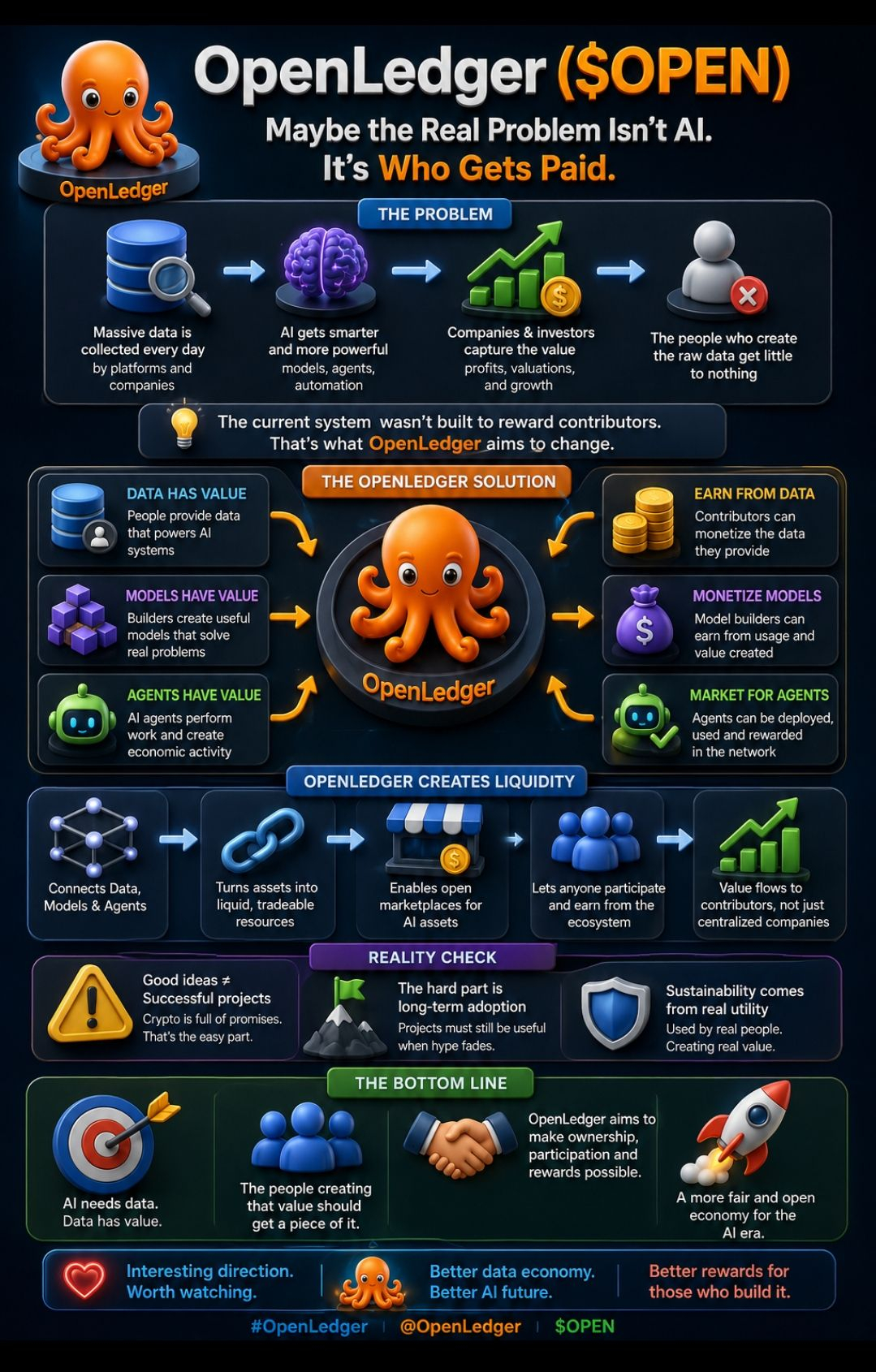
Every AI system depends on data. That data comes from individuals, communities, businesses, applications, and countless daily interactions happening online. Without those contributions, the models people admire today would not exist. Yet the people providing that foundation rarely share in the economic value created from it.
That imbalance has become difficult to ignore.
This is one reason OpenLedger caught my attention. Not because it combines blockchain and AI, but because it focuses on a different problem. Instead of asking how to build smarter models, it asks how value can be connected back to the participants who help create it.
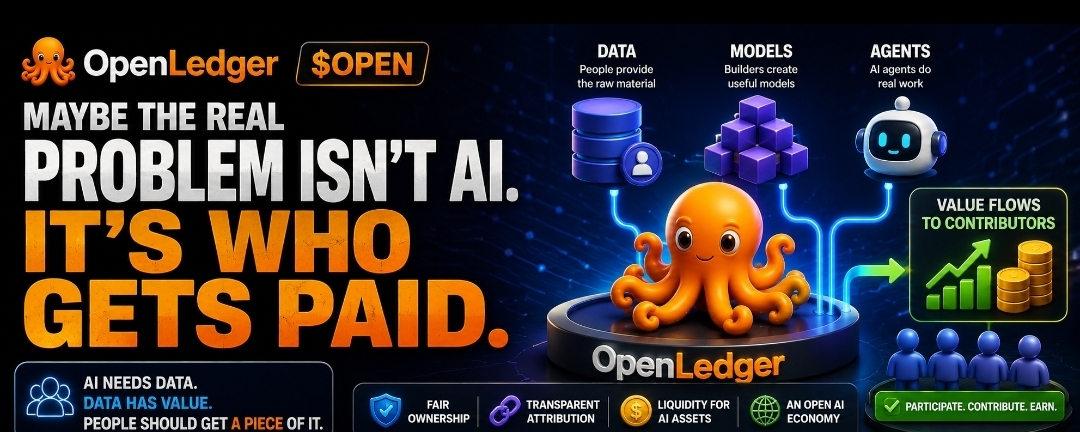
The idea is simple on the surface. Data has value. Useful models have value. Autonomous agents performing work have value. If these assets generate economic activity, there should be a framework that allows people to participate in that value rather than watching it accumulate elsewhere.
Of course, having a good idea and building a successful network are very different things. Crypto history is filled with ambitious concepts that never achieved meaningful adoption.
Still, I find this direction more interesting than another short-lived trend. As AI becomes a larger part of the digital economy, ownership, attribution, and participation may become just as important as intelligence itself.