
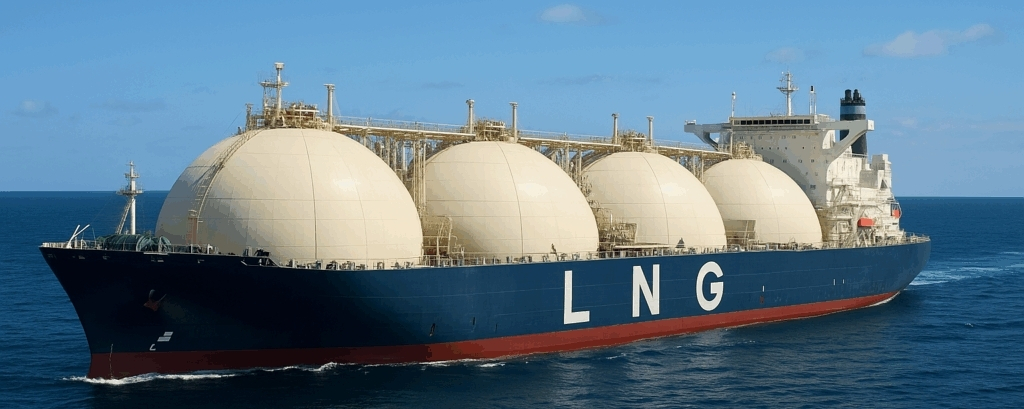
The image shows a large LNG carrier moving across the open sea, carrying liquefied natural gas in its massive spherical storage tanks. These ships play a major role in today’s global energy system because they allow natural gas to be transported across oceans from producing countries to consuming markets.
Liquefied Natural Gas, commonly known as LNG, is natural gas that has been cooled to extremely low temperatures until it becomes liquid. This process reduces its volume, making it much easier to store and transport. Once the LNG reaches its destination, it is converted back into gas and supplied to power plants, industries, homes, and businesses.
LNG carriers are highly specialized vessels. Their large insulated tanks are designed to keep the gas cold and stable during long sea journeys. These ships connect energy exporters and importers, helping countries secure fuel supplies even when pipelines are not available. This makes LNG an important part of global energy security.
The demand for LNG has grown as countries look for flexible energy sources. Many nations use LNG to support electricity generation, reduce dependence on coal, and balance energy shortages during peak demand. Because LNG can be shipped worldwide, it gives buyers more options and makes the energy market more competitive.
However, LNG also comes with challenges. Building LNG terminals, carriers, and storage facilities requires huge investment. Prices can change quickly due to global demand, weather, shipping costs, and geopolitical tensions. Any disruption in sea routes or supply agreements can affect energy markets and national economies.
Overall, the LNG ship in this image represents more than transportation. It represents global energy movement, trade power, and the connection between natural resources and economic stability. As the world continues to search for reliable and cleaner energy options, LNG will remain a key part of the international energy landscape.