
Franklin Templeton Signals Institutional Confidence in XRP
Franklin Templeton is highlighting a growing institutional focus on XRP, marking a shift in how major financial firms approach digital assets. Recent commentary from the firm reflects XRP’s transition from retail discussion into structured, professional portfolio analysis.
Institutional View of the XRP Ledger
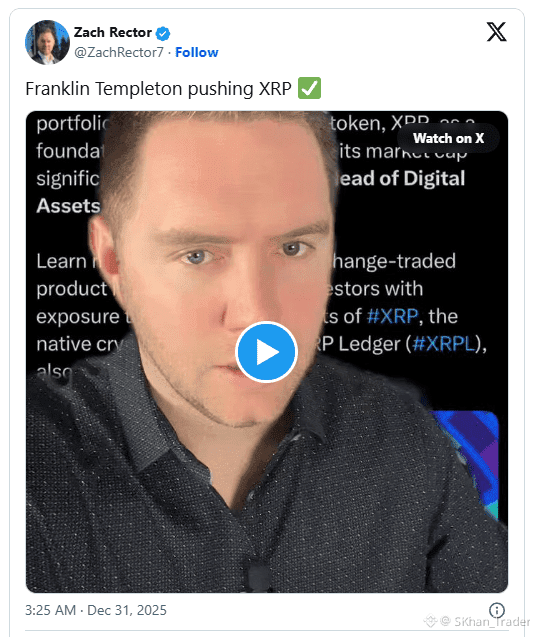
Roger Bayston, Head of Digital Assets at Franklin Templeton, described the XRP Ledger as “a payments-first blockchain enabling real-time, low-cost settlement and cross-border transaction efficiency.” His explanation emphasizes operational performance and practical utility rather than abstract concepts, aligning with the metrics institutions prioritize: transaction speed, reliability, and finality.
This functional description underlines the XRP Ledger’s long-standing performance and suitability for professional evaluation. Institutions focus on networks with proven stability, consistent throughput, and predictable outcomes—criteria the XRP Ledger has met over time.
XRP’s Strategic Portfolio Role
Bayston also positioned XRP as “a foundational building block given its market cap significance” within diversified digital asset portfolios. This framing highlights XRP’s structural importance, distinguishing it from speculative or narrative-driven assets.
With trillions of dollars under management, Franklin Templeton’s statements carry substantial institutional weight. Market capitalization, liquidity, and trading depth are key considerations for large-scale allocations, and XRP’s established infrastructure and broad adoption make it suitable for inclusion in professional portfolios.
Spot XRP ETF Reinforces Confidence
The launch of Franklin Templeton’s spot XRP ETF further strengthens the firm’s position. ETFs require regulatory approval, custody arrangements, and internal alignment, all of which indicate institutional trust in the underlying asset.
By emphasizing XRP’s practical utility and strategic role, Franklin Templeton illustrates a methodical approach to digital assets. The firm treats XRP as a functional component of financial portfolios, reflecting the increasing sophistication of institutional engagement in the cryptocurrency market.
