

 For most of Web3’s short history, data has been treated like luggage something applications carry along, but never truly integrate into their core logic. Smart contracts execute rules, tokens move value, and governance votes decide outcomes. Data, meanwhile, is quietly pushed aside into storage systems that sit outside the real decision-making layer.
Walrus Protocol challenges that separation at a structural level. Instead of asking where data is stored, Walrus asks a more powerful question: how data behaves inside decentralized systems. On Sui, Walrus is not building storage as a service. It is building data as infrastructure something applications can reason about, enforce rules on, and react to in real time.
This is a subtle shift, but it fundamentally changes what Web3 applications can become.
The Core Limitation Web3 Rarely Admits
Blockchains are excellent judges but terrible archivists. They decide what is valid, but they cannot practically remember much. Large files, evolving datasets, media assets, and application state quickly overwhelm on-chain systems. So developers compromise: execution stays decentralized, memory does not.
That compromise quietly shapes application design. Data becomes passive. Smart contracts reference it, but cannot truly control it. Availability is assumed, not enforced. Privacy is handled off-chain. Logic and data drift apart.
Walrus exists because that model no longer scales.
Data That Smart Contracts Can Actually Reason About
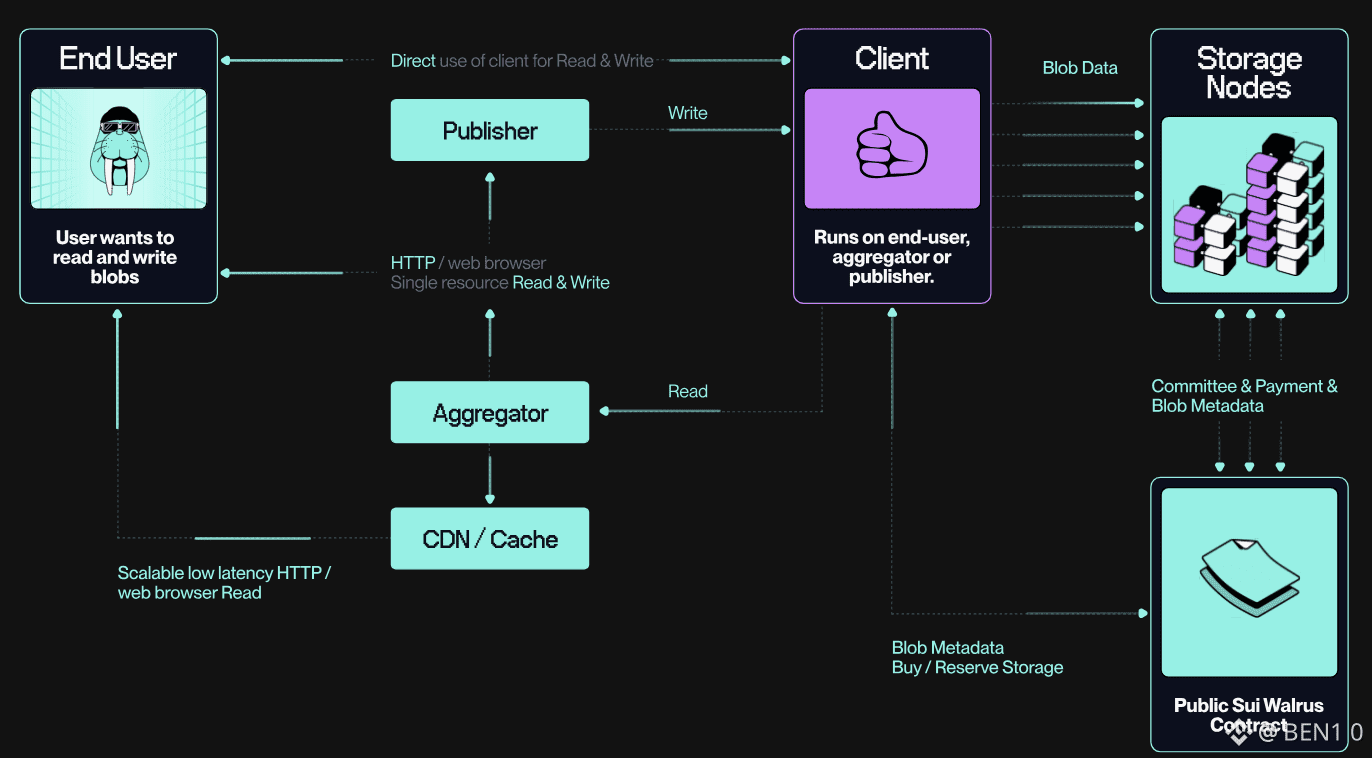
Walrus does not push raw data into Sui. Instead, it turns data into stateful commitments. When information is uploaded, it is fragmented using erasure coding and distributed across independent nodes. What lands on-chain is not the data itself, but cryptographic proofs that the data exists, remains available, and is bound by economic guarantees.
Time-based conditions can unlock or restrict data. Application logic can react to availability events. In other words, data stops being something applications point to it becomes something they operate on.
This is what makes Walrus programmable, not just decentralized.
Why Programmable Data Changes Application Design
Once data becomes enforceable, developers stop designing around uncertainty. They no longer need fallback servers, emergency gateways, or centralized pinning services “just in case.” The protocol itself guarantees availability under defined conditions.
This enables new patterns:
AI agents can rely on decentralized datasets without custodial risk
Media platforms can automate access, royalties, or distribution at the data layer
Decentralized websites can exist without trusting external hosts
Applications can tie governance, permissions, and logic directly to data objects
In this model, storage is not a background service. It is part of the application’s state machine.
WAL: An Economic Layer for Data Reliability
The WAL is not positioned as a speculative asset. It is a coordination tool. Users pay WAL for specific data guarantees. Operators stake WAL to signal reliability. Failure is penalized economically, not socially.
This aligns incentives in a way traditional storage systems cannot. Reliability is priced. Availability is enforced. Long-term participation is rewarded more than short-term opportunism.
Because payments and obligations are encoded into the system, trust shifts away from operators and toward protocol mechanics.
Why This Works Especially Well on Sui
Sui’s object-centric design just fits programmable data in a way that feels natural. Here, data commitments aren’t just afterthoughts—they’re front and center. You can reference them, move them around, update versions, or even lock them down without cluttering up the whole system.
If you’re a developer, storage isn’t some awkward add-on. It actually feels built-in. Apps on Sui don’t come off as a bunch of random parts stitched together they act like real, unified systems.
Walrus does not slow Sui down. It absorbs complexity that execution layers were never meant to handle.
The Trade-Offs Are Real and Intentional
Walrus doesn’t pretend decentralization comes for free. Sure, erasure coding means extra work for your computer. You need enough operators to stick around, or availability drops. The price of WAL can swing, so costs aren’t always easy to predict. And honestly, developers have to put in more effort to get up to speed compared to centralized platforms.
But here’s the thing: all these trade-offs are out in the open. You’re not giving up control, privacy, or verifiability just for the sake of convenience. Apps pick Walrus when they care more about having real sovereignty than taking the easy route.
That clarity is part of its strength.
The Bigger Picture
Walrus is not trying to replace cloud storage or outcompete centralized platforms on speed. Its ambition is narrower and deeper: to make data accountable inside decentralized systems.
As Web3 moves beyond simple financial primitives into AI, social platforms, and persistent digital environments, data stops being an accessory. It becomes the system.
Walrus is one of the first protocols to treat it that way.
If it succeeds, the most important change will not be visible. Developers will stop talking about storage altogether because data will finally behave like a native part of Web3, not an uncomfortable exception.
That is how real infrastructure wins.