


"Hey bro, I know Software Wallets, Hardware wallets but what's Paper wallet? What's that Bro?"
Bro, imagine you have a secret bank vault full of gold.
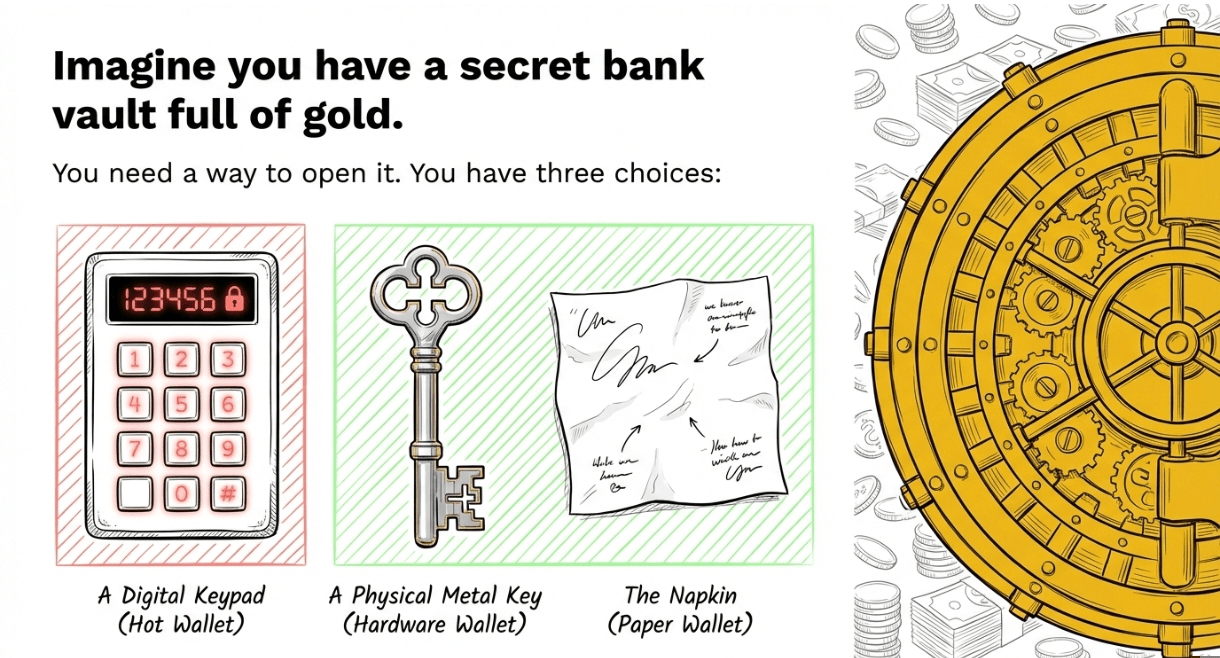
Instead of having a digital keypad (Hot Wallet) or a physical metal key (Hardware Wallet), you just write the Combination Code on a napkin, fold it up, and hide it inside your favorite book.
...If you want to open the vault, you have to physically find that napkin and type in the code. If the house burns down or your dog eats the napkin, the gold is gone forever.
That napkin is a Paper Wallet.
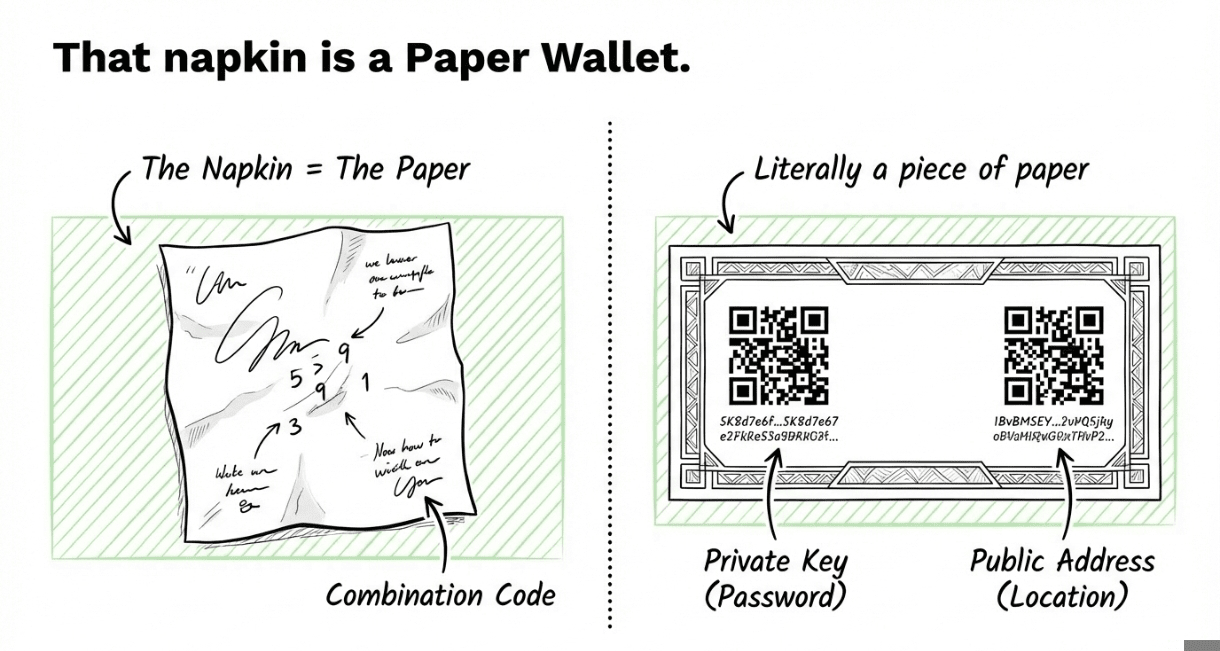
A Paper Wallet is the most "low-tech" version of Cold Storage. It is literally a piece of paper with your Private Key (the password) and Public Address (the deposit box) printed on it, usually as QR codes.
Because it is paper, it is 100% immune to hackers. A Russian hacker cannot hack a piece of paper sitting in your sock drawer. It is "Air Gapped" by nature.
Okay, but how does it actually work?
Here are a couple of details that make it trickier than it sounds:
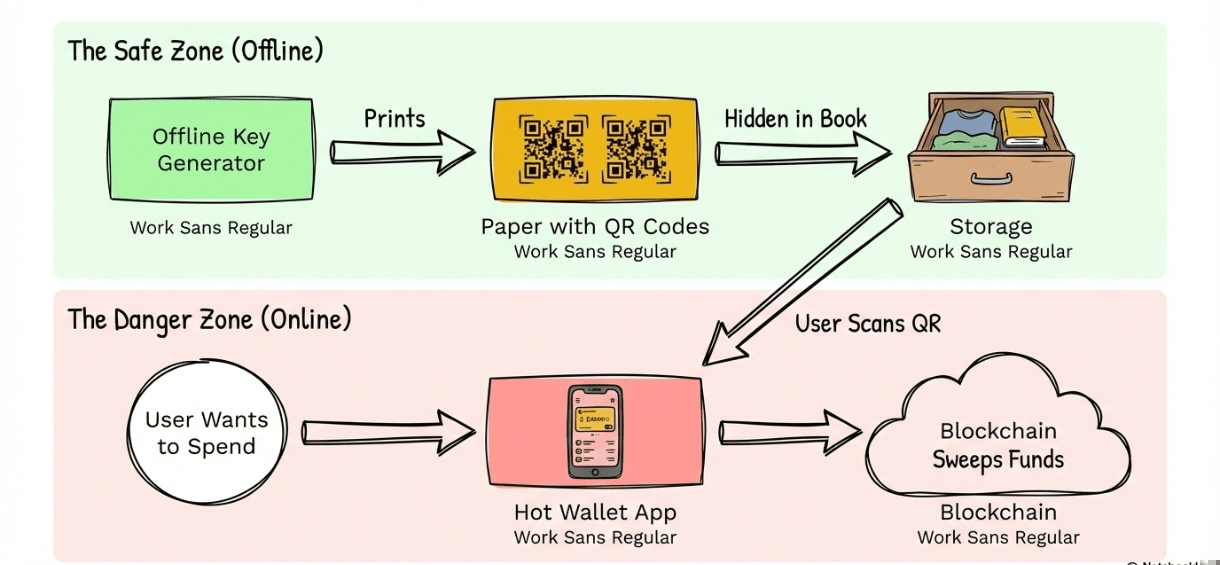
The "Sweep" Mechanic: You can't easily spend some of the money on the paper. To use it, you usually have to "Sweep" (transfer) the entire balance off the paper and onto a Hot Wallet (like MetaMask). It’s like breaking a piggy bank—once you crack it open, you have to take everything out.
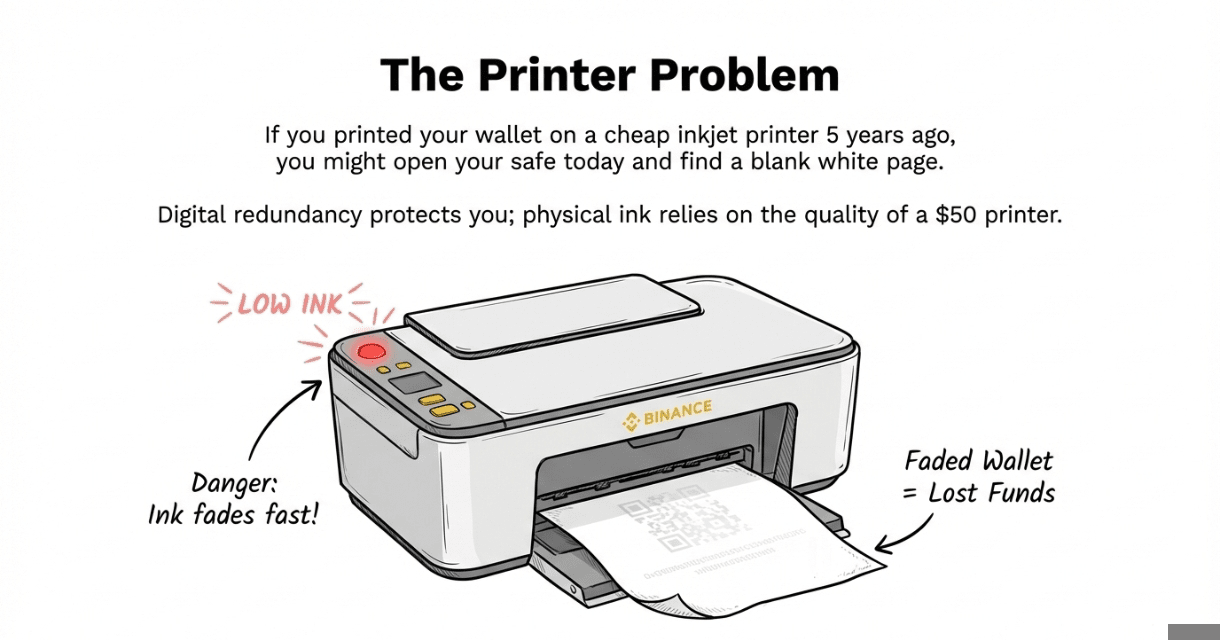
The "Ink" Risk: It sounds secure, but paper is fragile. Ink fades, paper rots, and water destroys it. If you printed it on a cheap inkjet printer 5 years ago, you might open your safe today and find a blank white page. Your money is gone.
Before fancy $100 Ledgers existed, this was the only way to hold Bitcoin offline. It’s free to make. But honestly? It’s dangerous for beginners. Hardware wallets were invented specifically because Paper Wallets were too easy to lose or destroy.