


Walrus is a decentralized storage and data availability protocol built on the Sui blockchain that aims to solve one of the most critical infrastructure challenges in Web3: scalable, secure, cost-efficient storage for large data sets and media files. Unlike traditional storage networks that focus on archival data, Walrus enables programmable, on-chain storage with real-time access, economic incentives, and strong reliability guarantees.
At its core, Walrus empowers developers and users to store, retrieve, and manage large binary files (“blobs”) such as videos, images, datasets, AI model weights, and more — all within a decentralized ecosystem. The protocol is designed to ensure data remains available and verifiable even in the presence of node failures or malicious actors, bringing Web3 storage closer to real world usability.
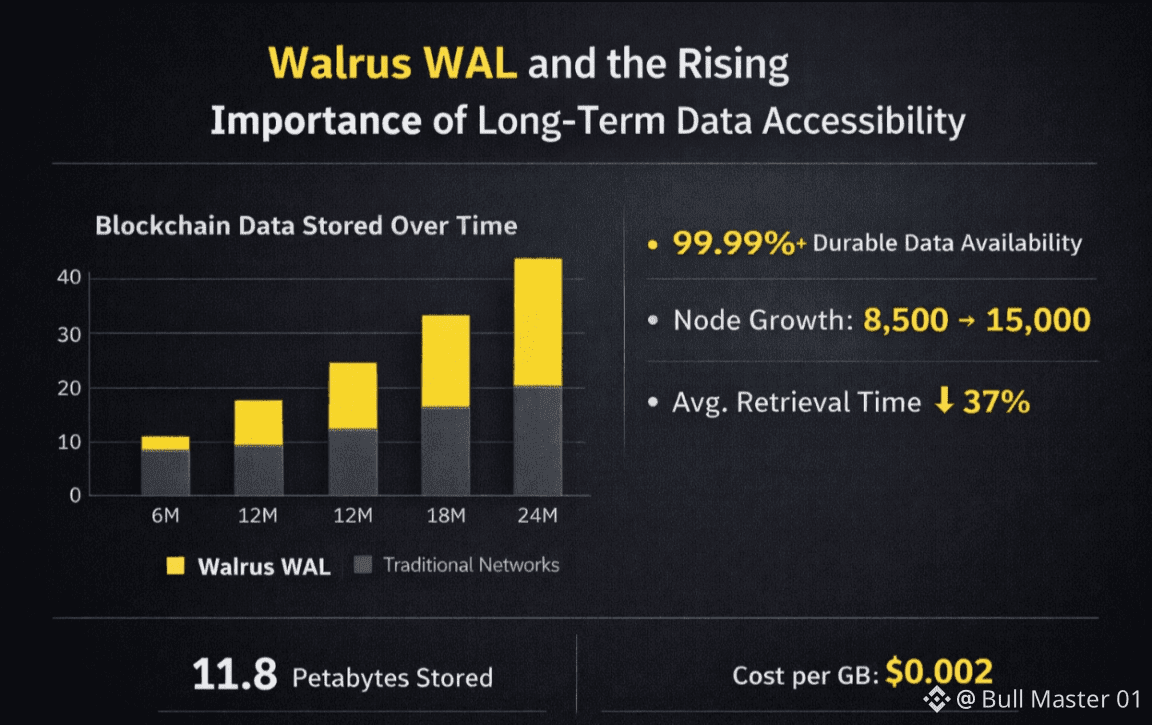
Built on Sui Programmable Storage for Web3
Walrus leverages the Sui Layer-1 blockchain as its coordination layer. This integration enables several critical capabilities:
Every storage operation from payment to availability proofs is coordinated via Sui smart contracts.
Storage space and stored blobs are represented as on-chain objects, making them manageable using native Sui tools.
Programmable logic allows developers to interact with stored data via smart contracts, enabling dynamic application behavior and custom business logic.
The result is programmable decentralized storage not just a passive archive, but a usable resource that apps can query, update, and build upon. This positions Walrus as more than a storage layer; it becomes a foundation for advanced Web3 applications, such as decentralized websites, multimedia dApps, and even AI systems that require verified dataset storage.
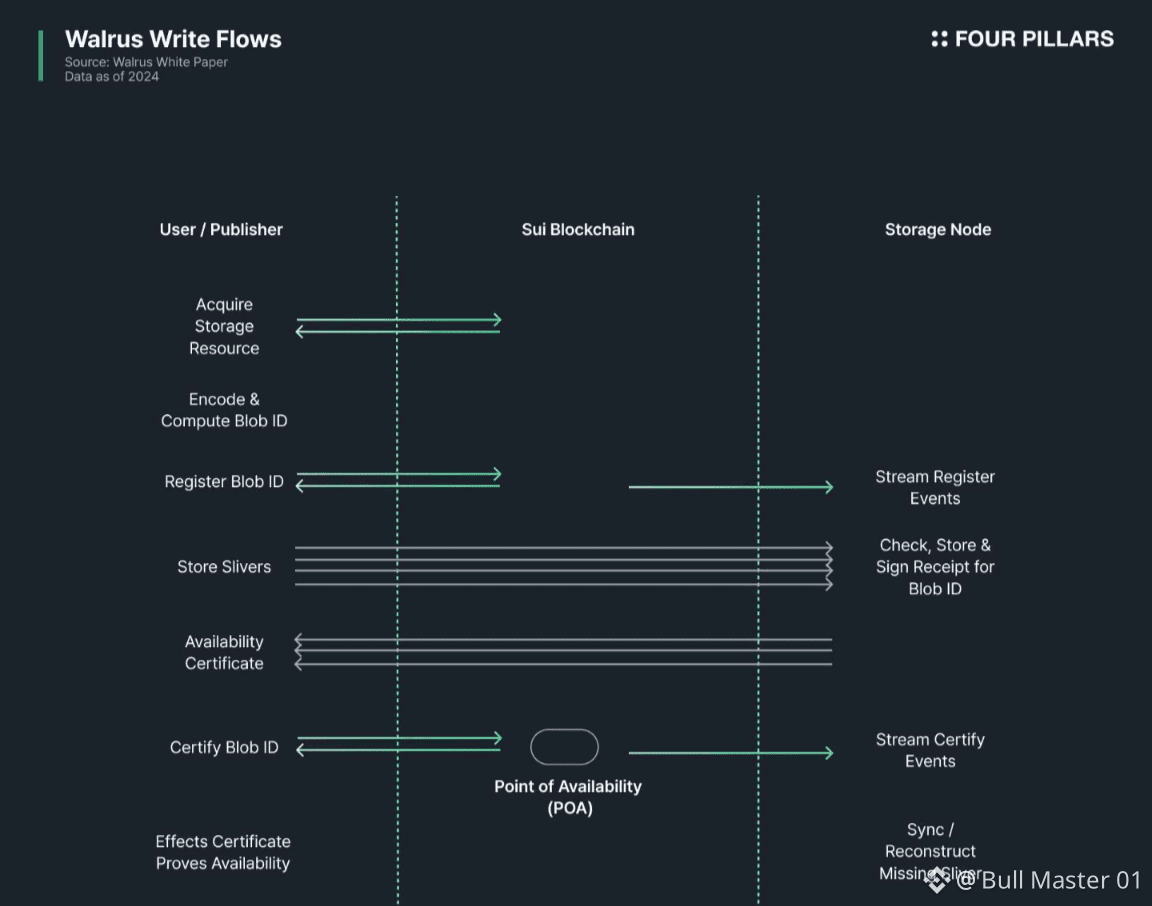
How Walrus Stores Data RedStuff and Erasure Coding
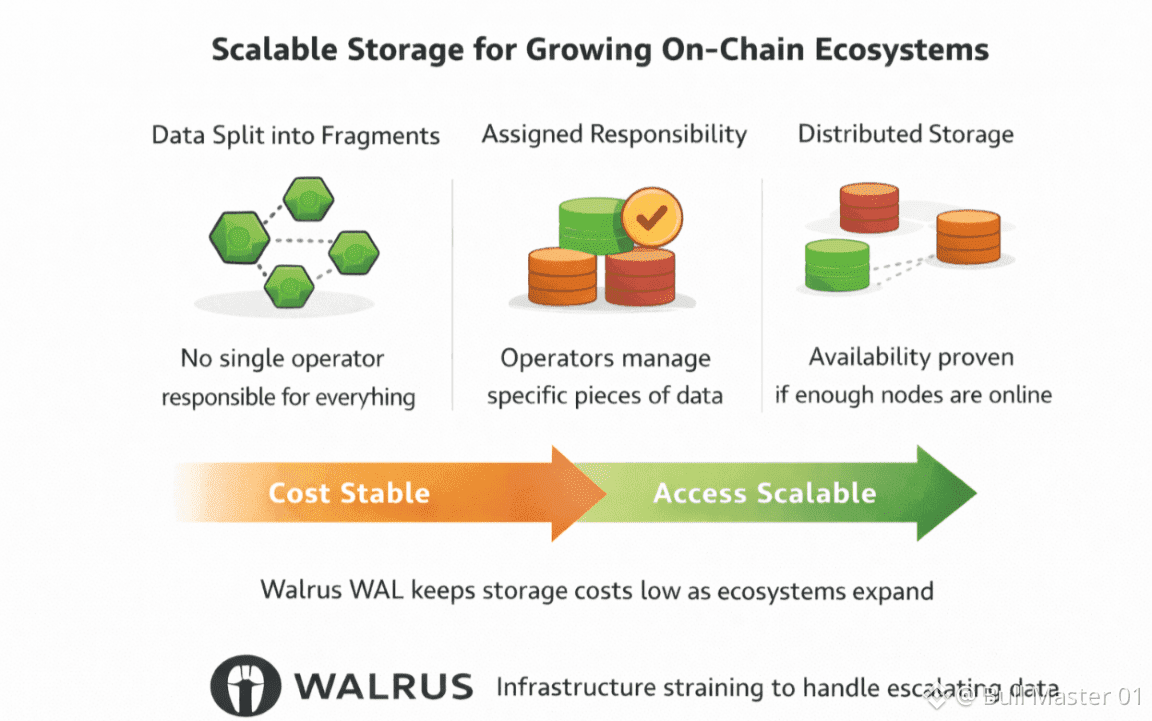
Walrus uses advanced erasure coding techniques to achieve cost efficiency, redundancy, and fault tolerance. Instead of fully replicating each file across nodes, the protocol breaks data into small coded pieces known as “slivers.” These slivers are distributed across multiple storage nodes. Even if many nodes go offline or fail, the original data can be reconstructed from a subset of slivers.
This approach has several advantages:
Cost Efficiency: Achieves storage cost roughly five times the data size significantly lower than full replication models.
High Availability: Data remains retrievable even if a large portion of storage nodes fail or go offline.
Scalability: As the network grows, individual nodes handle smaller slivers, improving performance and reducing cost per node.
This technology often referred to as “RedStuff” in community documentation enables Walrus to compete with traditional centralized cloud solutions in both performance and economics.
WAL Token Economics, Staking, & Governance
The native token of the Walrus protocol is WAL, a multi-purpose utility token that powers the network’s economic security and utility. The WAL token plays several roles:
1. Payments for Storage
Users pay in WAL to store data for a fixed period. These payments are structured to maintain stable costs in fiat terms, protecting users from volatility. Tokens paid upfront are distributed gradually over time to storage node operators and stakers as compensation, ensuring predictable rewards.
2. Staking and Security
Storage nodes must stake WAL to participate in the network. This creates economic skin in the game — nodes with higher stakes are more likely to be selected and earn rewards. Poor performance or downtime can result in slashing of staked tokens, reinforcing reliability.
3. Delegation
Holders can delegate WAL to trusted storage nodes, earning a share of rewards. Delegators and nodes share risks and rewards, fostering an aligned ecosystem where reliability is rewarded.
4. Governance
WAL holders are able to participate in on-chain governance, voting on parameters such as pricing, staking rules, slashing conditions, and upgrades. This ensures the protocol evolves with community consensus.
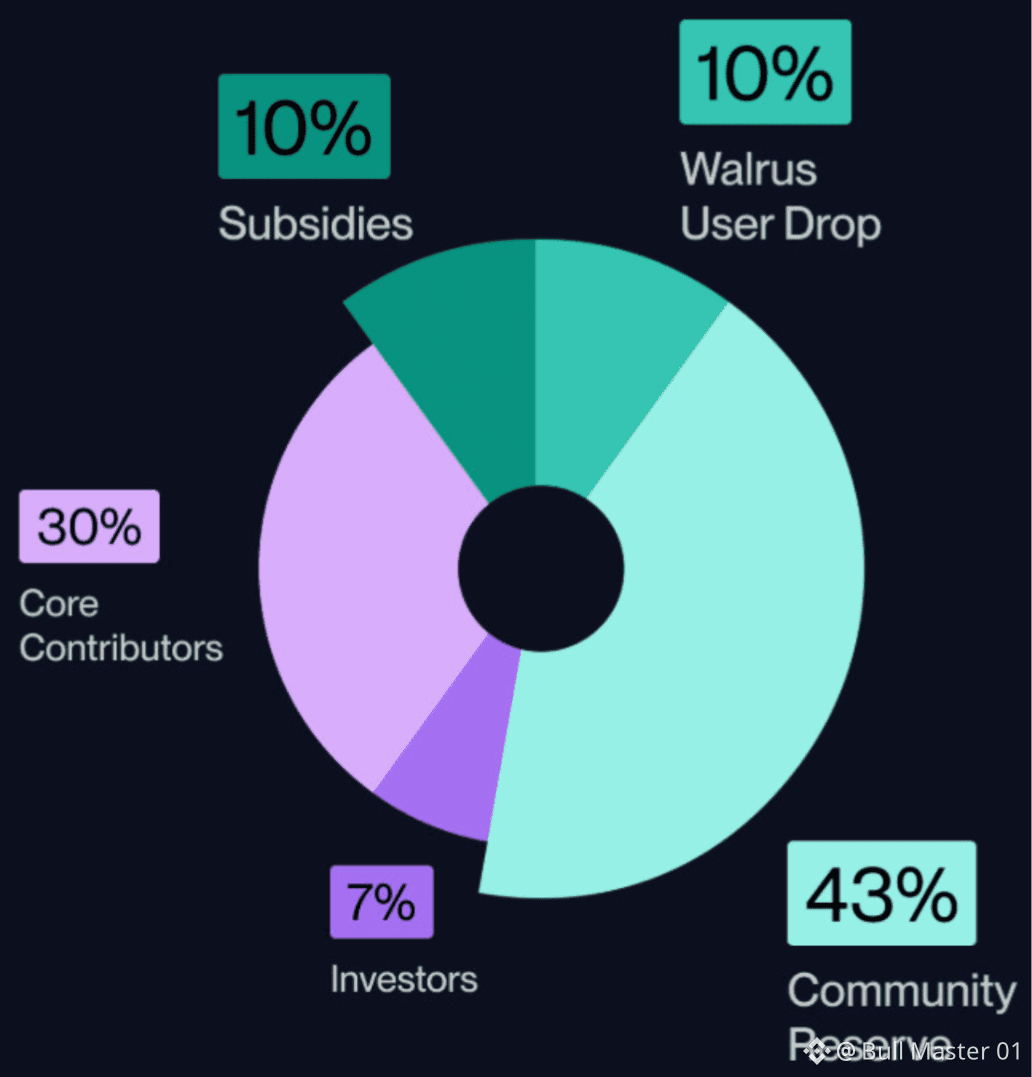
Tokenomics & Distribution
Walrus started with a total supply of 5 billion WAL tokens, distributed to align incentives across community, developers, and early supporters:
43% Community Reserve: Long-term ecosystem support, grants, developer incentives, and events.
10% User Drop: Targeted to early users and ecosystem participants as a community incentive.
10% Subsidies: To bootstrap adoption by making early storage cheaper.
30% Core Contributors: For foundational development and operations.
7% Investors: Strategic and venture investors supporting growth.
This distribution ensures community control and long-term sustainability, reducing risk of centralized token control and enabling organic ecosystem growth.
Mainnet Launch & Ecosystem Momentum
The Walrus mainnet officially launched on March 27, 2025, marking a major milestone for the protocol. With the mainnet live, all core features — including programmable storage, WAL payments, and staking — became operational.
Since launch, Walrus has seen rapid ecosystem growth:
Developers are building tools, SDKs, and integrations that leverage Walrus storage directly.
Community activity continues around staking, governance participation, and utility building.
Decentralized website hosting (“Walrus Sites”) enables fully decentralized web pages directly on Walrus and Sui.
Real-world partnerships and integrations are emerging, and the protocol’s public testnet introduced advanced operations like deletable blobs, APIs, explorers, and staking dashboards to encourage adoption among developers.
Unique Positioning & Future Relevance
What sets Walrus apart from other decentralized storage solutions like Filecoin or Arweave is its blend of programmability, cost efficiency, and on-chain integration. Instead of serving merely as an archival layer, Walrus enables storage to be a composable Web3 primitive — usable within smart contracts, dApps, AI systems, and dynamic applications.
Recent developments also point toward enhanced relevance:
Integration with AI data stacks and on-chain governance mechanisms expands Walrus’s role beyond storage into infrastructure for verified AI data ecosystems.
Community-driven growth via airdrops, ecosystem incentives, and token holder participation continues to build decentralized participation and adoption.
Conclusion A Foundation for Web3 Storage
Walrus is more than a storage protocol; it’s a foundation for decentralized data availability and programmable asset storage. Its technical design, powered by erasure coding and smart contract logic on Sui, positions it to scale efficiently, provide robust reliability, and enable new classes of decentralized applications. With mainnet live, a strong tokenomics structure, and growing developer interest, Walrus represents a major step toward unlocking scalable, decentralized storage that is both usable and economically sound in the Web3 era.