


Dusk Foundation is gaining fresh attention as blockchain adoption moves toward regulated financial markets and real‑world asset (RWA) tokenization, highlighted by new developments that reinforce its strategic positioning. Founded in 2018 with the explicit goal of bridging traditional finance and decentralized technology, Dusk has continued to evolve its privacy‑first, compliance‑driven blockchain to meet institutional requirements — and recent news shows that this evolution is accelerating.
A major development impacting Dusk’s relevance today is its collaboration with Chainlink and the regulated Dutch stock exchange NPEX to bring European securities onchain in a compliant and interoperable manner. According to a press release from November 13, 2025, Chainlink’s Cross‑Chain Interoperability Protocol (CCIP) will serve as the canonical layer for tokenized assets issued by NPEX on Dusk’s network. This integration not only enables secure cross‑chain settlement but also broadens access to regulated digital securities across ecosystems such as Ethereum and Solana via the Cross‑Chain Token (CCT) standard.
The importance of this update cannot be overstated. Regulated European securities — traditionally confined to legacy financial rails — are being connected to decentralized finance through interoperable standards and privacy‑preserving infrastructure. Dusk’s design allows these assets to be issued under strict regulatory frameworks while still supporting composability and secure settlement onchain, a combination that few blockchains can currently claim.
Alongside the interoperability news, Dusk has introduced significant infrastructure upgrades enhancing network performance and developer usability. Recent technical improvements, such as the optimization of DuskDS for settlement and data availability, blob transaction support, and streamlined interfaces for rollups and external chains, reflect the project’s shift toward practical deployment readiness. These upgrades are essential for achieving full DuskEVM compatibility and support confidential smart contracts with better speed and stability.
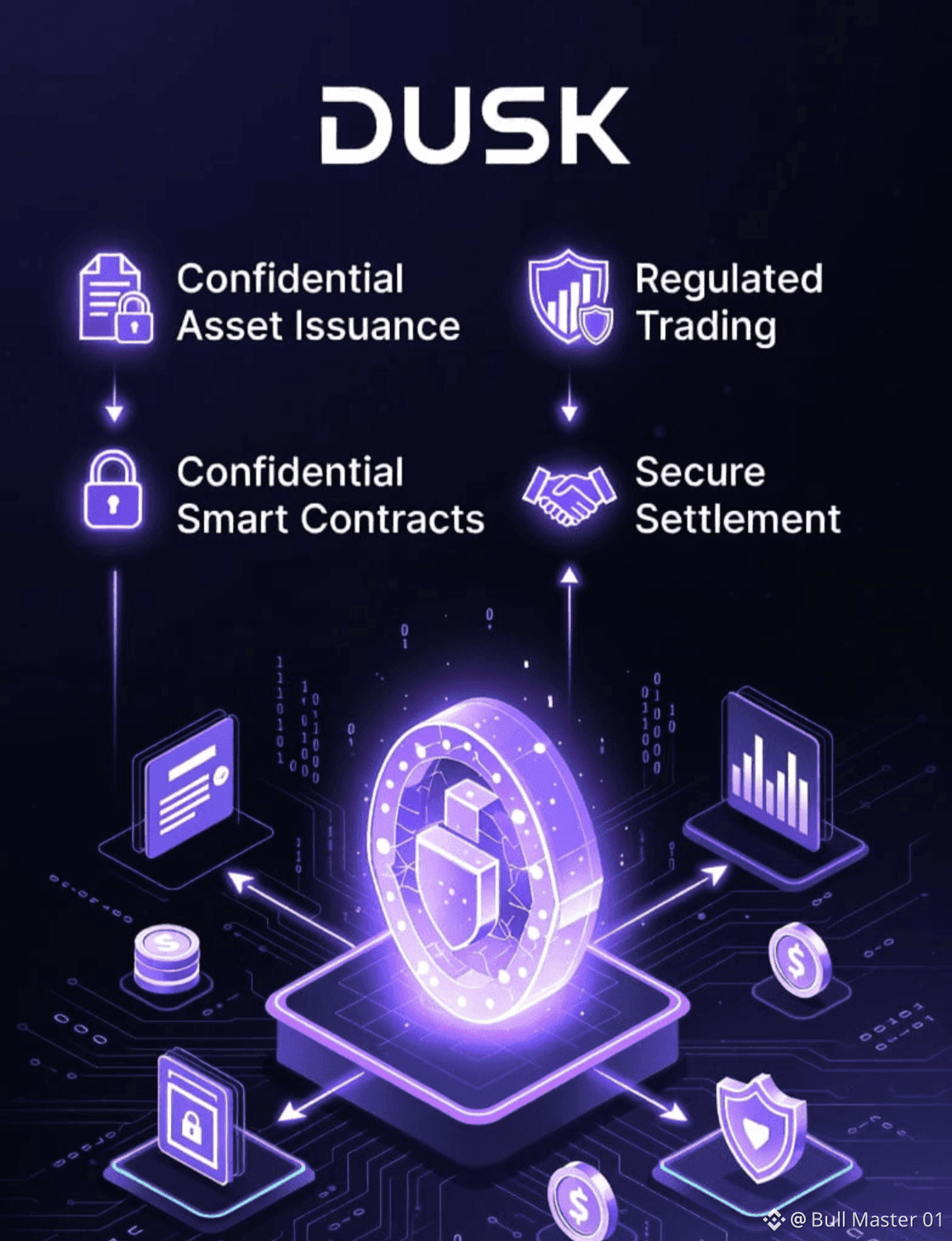
Dusk’s privacy approach remains a core differentiator in 2026’s blockchain landscape. The network uses zero‑knowledge proofs (ZKPs) and carefully designed transaction models to enable auditable privacy — meaning transaction details stay confidential by default but can be selectively disclosed to authorized parties when required for oversight or compliance. This architecture addresses the fundamental tension between transparency and privacy that has deterred institutional participation in public blockchains.
In addition to cryptographic upgrades, Dusk recently launched a two‑way bridge enabling native DUSK tokens to move between its mainnet and Binance Smart Chain (BSC), improving user access and interoperability without sacrificing security. This enhancement expands the ecosystem’s reach, allowing holders to use their tokens across broader DeFi applications and platforms while preserving the integrity of Dusk’s core protocol.
A noteworthy innovation from Dusk is Citadel, a decentralized zero‑knowledge proof KYC solution. Citadel allows users and institutions to manage personal data in a compliant yet private way. Instead of handling sensitive information repeatedly with different service providers, individuals can control what data they share and with whom, while regulatory entities still receive verified data when necessary. This solution demonstrates Dusk’s commitment to integrating privacy, usability, and compliance at a fundamental level.
From a market outlook perspective, Dusk’s roadmap and ecosystem development indicate a strong focus on deploying regulated finance infrastructure. According to recent trend analysis, several key milestones are expected to drive network adoption, including the launch of the NPEX trading dApp in Q1 2026 for compliant security token trading, continued proto‑Danksharding upgrades for scalability, and achieving DLT‑TSS regulatory approval to support fully compliant onchain securities. These milestones collectively increase Dusk’s appeal to institutional stakeholders and real‑world financial actors.
Despite the positive developments, the market has observed volatility in DUSK’s price, influenced by broader regulatory scrutiny and sector‑wide risk perceptions. For example, in mid‑2025 the token experienced sharp price movement amid new compliance guidelines, underscoring the sensitivity of regulated projects to evolving legal frameworks. However, the Dusk team responded by enhancing on‑chain governance, integrating more robust analytics, and increasing stakeholder participation in decision‑making — actions intended to align with global compliance standards and strengthen long‑term resilience.
The real value proposition of Dusk lies in its dual language capability: speaking both the traditional financial world’s regulatory language and the blockchain world’s technological language. Unlike most public blockchains that emphasize total transparency, Dusk acknowledges that regulated finance requires selective disclosure, where sensitive transaction data is protected but still verifiable by authorized parties. This dual capability positions Dusk to serve traditional institutions without forcing them to compromise on regulatory requirements.
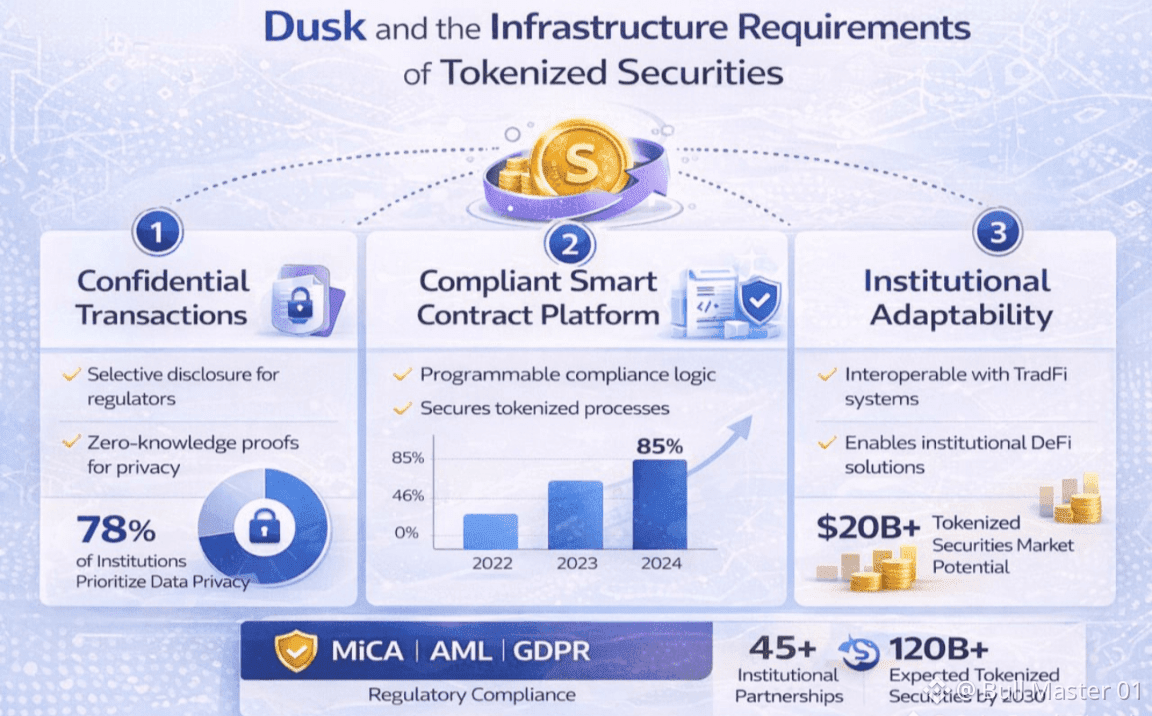
Institutional interest is also supported by independent security audits and ongoing development work, which affirm the project’s readiness for large‑scale deployment. Audits covering consensus, cryptography, and economic design have been completed, validating Dusk’s suitability for institutional use cases and offering confidence to prospective partners and developers.
In summary, today’s news and technical reports paint a picture of a project transitioning from early development to real‑world integration. Dusk Foundation is not just advancing privacy technology; it is embedding privacy, compliance, and interoperability into the core of financial blockchain infrastructure. Its partnership with Chainlink and NPEX, infrastructure upgrades, privacy innovations like Citadel, and expanding interoperability set Dusk apart as a practical choice for regulated asset issuance, compliant DeFi, and institutional blockchain adoption. As regulated markets explore tokenization and digital finance, Dusk’s framework — balancing confidentiality, auditability, and scalability — positions it as a compelling platform for the next generation of decentralized, real‑world financial systems.